
Review · SMITHSONIAN & MUSEUM TOURS
National Archives + National Portrait Gallery Tour 6ppl Max
Founding documents meet real-time storytelling. This semi-private tour pairs the National Archives with the Smithsonian’s National Portrait Gallery so you can see the Declaration of Independence and the Constitution up close, then shift gears to faces, art, and American ideas. I especially like that you start in the National Archives Rotunda with skip-the-line entry, so your time goes to seeing the documents, not wrestling your way through crowds.
You also get a guide-led pace that works, whether you’re a first-timer or you just want the best highlights without getting lost in museum rooms.
One thing to factor in: this tour is not offered for wheelchair users or people with walking disabilities, and it does involve a moderate amount of walking. Also, bring light on security—no large bags or suitcases, only handbags or small thin packs.
In This Review
- Key takeaways before you go
- National Archives Rotunda: Charters of Freedom up close
- Rubenstein Gallery and the Magna Carta: who counts as a citizen?
- National Portrait Gallery: a smooth Smithsonian flow you can actually enjoy
- Obama portraits, Warhol, and Presidential Faces: what the guide helps you see
- Lunder Conservation Center peek: art behind the scenes
- Price and value: what $166.15 buys you in DC
- Meeting on the National Mall: logistics that actually matter
- Security rules, quiet rooms, and what to pack light
- Closures, timing shifts, and what happens if a museum changes
- Who should book this National Archives + Portrait Gallery tour?
- Should you book it or build it on your own?
- FAQ
- How long is the National Archives + National Portrait Gallery tour?
- What group size is this tour?
- Where do we meet, and when does it start?
- Is the National Archives skip-the-line entry included?
- Are museum admission tickets included?
- What should I know about luggage and security?
Key takeaways before you go
- Skip-the-line at the National Archives helps you spend more time with the Charters of Freedom.
- Max 8 guests keeps the experience small and manageable.
- Two iconic Smithsonian sections flow together, so you’re not stuck jumping between scattered stops.
- Portraits + conservation access means you see American art in more than one way.
- Central meeting point on the National Mall makes it easy to plug into a day of DC sightseeing.
More Smithsonian halls, out of the weather
- Guided African American History Tour with Reserved Museum Entry
★ 4.5 · 1,180 reviews - Washington DC: Museum of the Bible General Admission
★ 4.8 · 494 reviews - Smithsonian Museum of Natural History – Exclusive Guided Tour
★ 5.0 · 446 reviews - African American History Tour with Museum of African American History Ticket
★ 4.5 · 390 reviews
National Archives Rotunda: Charters of Freedom up close
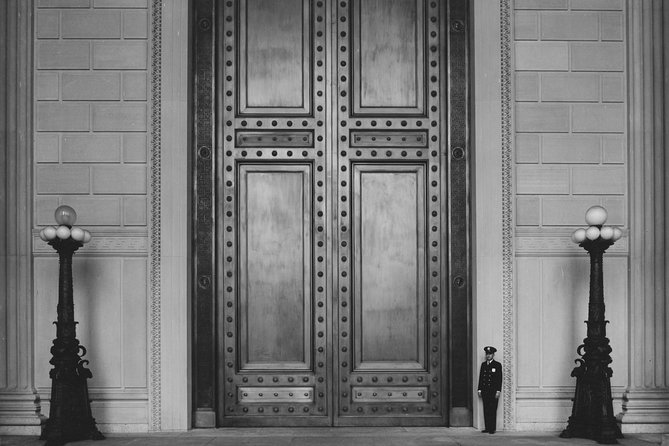
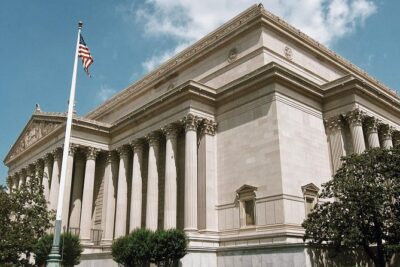
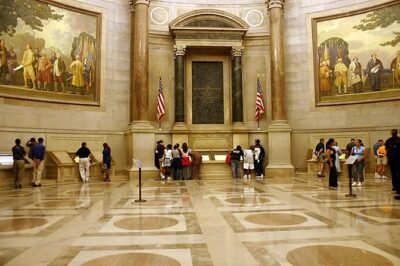
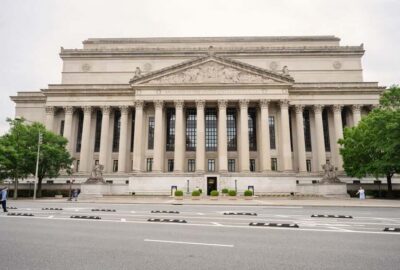
This is the part most people actually come for: the National Archives Museum, where the founding documents are housed. You’ll start with the original handwritten Charters of Freedom in the Rotunda, and the guide narrates the real-world circumstances that surrounded their creation and early use. It’s one of those moments where history stops being abstract and becomes physical.
Because this tour includes skip-the-line entry for the National Archives, you’re aiming to get inside efficiently and settle in before the room fills up. That matters here. If you arrive late or get stuck waiting, you lose the chance to see the documents calmly, and it turns into a sprint through security and crowds.
The Rotunda also gives you visual context. You’re not just staring at papers; you’re surrounded by museum displays and paintings that help connect the documents to the broader founding era. That’s a big reason this tour feels “guided” instead of just ticketed entry.
Rubenstein Gallery and the Magna Carta: who counts as a citizen?
After the Rotunda, you move into the Rubenstein Gallery, where the story broadens beyond US borders. Here, you’ll see a 1297 copy of the Magna Carta, presented in a way that connects long-running ideas about rights and citizenship to what becomes American governance. The guide’s framing helps you watch how concepts evolve—who is included, what equality means, and why rights show up in these documents.
This isn’t taught as a dry timeline. You’ll get the philosophical thread running from the founding period to older influences and political thinking. The guide ties the themes back to the Declaration’s famous wording—all men are created equal—and then asks the practical question: who actually fit into that promise at the time?
If you like history that answers the question behind the facts, this stop is a win. It turns the National Archives from a photo opportunity into a place where you understand the “why” behind the “what.”
National Portrait Gallery: a smooth Smithsonian flow you can actually enjoy
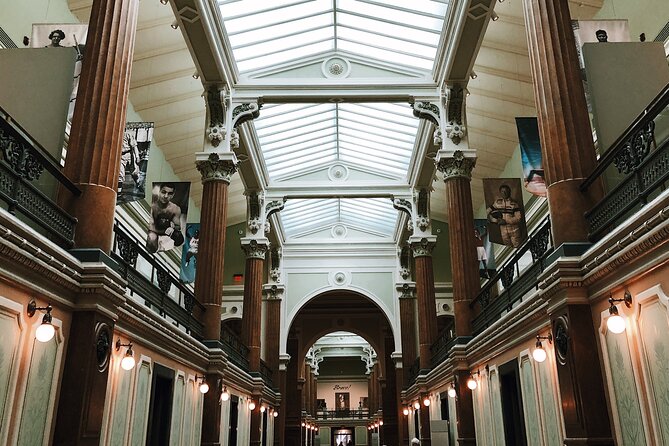
After a break, you head to the Smithsonian National Portrait Gallery, where the tour moves through a dual exhibition space connected to the Smithsonian American Art Museum. The nice part is the layout: the collections flow into each other, so you’re not constantly reorienting or wandering halls alone. Add the fact that you’re with a guide, and the day feels like a planned route rather than a self-guided maze.
You’ll spend about two hours here, and your guide focuses you on major attractions without rushing you through everything. You’ll also get time to pause at the Kogard Courtyard, which is one of those places that turns museum fatigue into a reset. It’s also a smart moment to grab a bite if you didn’t eat before you left the Archives area.
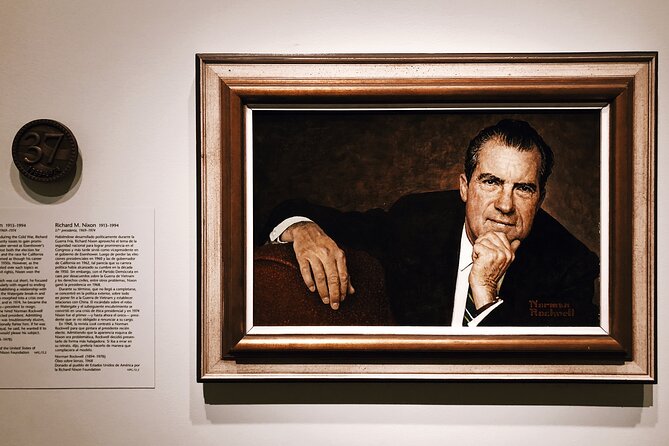
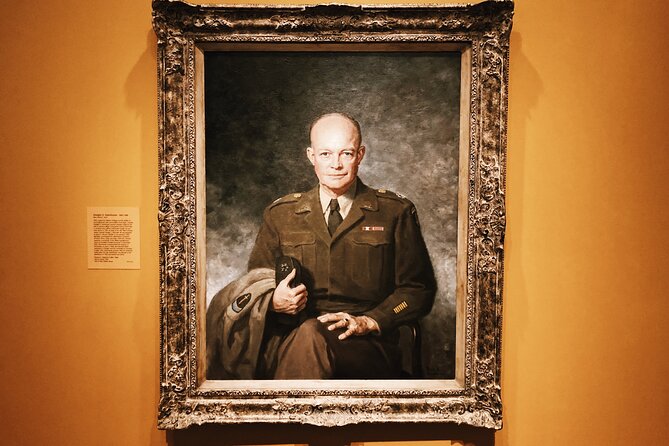
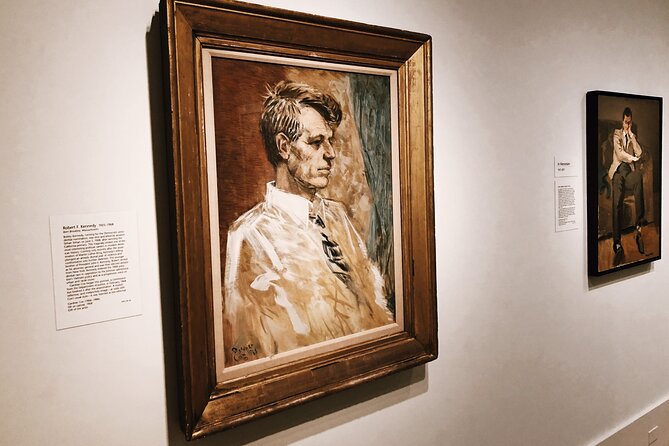
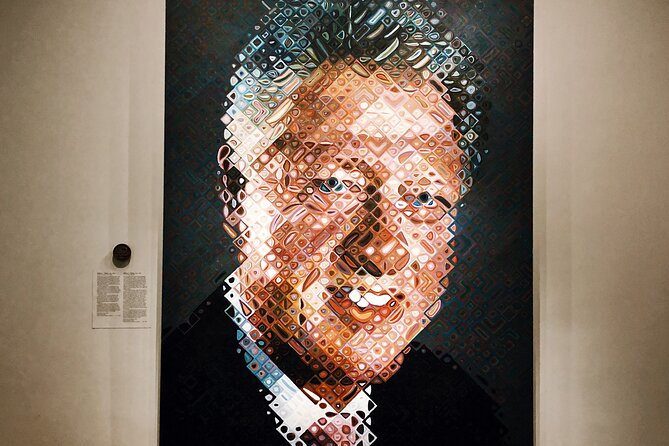
This stop is also where the tour starts showing you the faces of American history. That includes the Presidential Portrait Gallery, plus portraits and artworks of other notable Americans. You’ll encounter works in multiple formats—painting, sculpture, and video—so the “portrait” idea isn’t just framed as oil paintings in gilded frames.
Obama portraits, Warhol, and Presidential Faces: what the guide helps you see
One of the tour highlights is how it mixes recognizable names with art you might not expect. You’ll see the Obama Portraits, along with pieces by Andy Warhol and other works connected to American public life. Even if you already know the basics of the people involved, the value here is in what you notice when someone points out the story and the choices an artist made.
The Presidential Portrait Gallery is a natural anchor. You’ll learn the narratives around the presidents you see, and you’ll likely notice how portraits work like public messaging—how an image tries to shape how you remember a leader. That’s a useful skill for anyone wandering museums after this, because suddenly you’re reading the artwork instead of just looking at it.
Then you shift to broader American art through the Smithsonian’s other areas of the space. This is also where the tour gets less predictable in a good way. The guide’s route helps you catch “famous names” alongside the quieter rooms that make a museum feel alive.
The founding documents up close, more Archives visits

Lunder Conservation Center peek: art behind the scenes
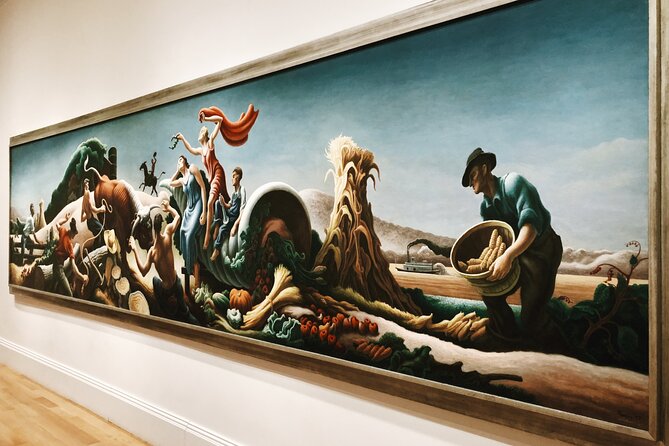
A standout feature of the Portrait Gallery portion is that you get a chance to peek inside the labs of the Lunder Conservation Center, part of the Luce Center of American Art. The tour doesn’t position it as a technical lecture. Instead, it frames conservation as part of the story of how art survives long enough for you to see it today.
You’ll hear about the kinds of work conservators do and what that means for the objects on display. Even if you’re not an art-world person, it’s an eye-opener. You start realizing that what you’re viewing is not just an artwork—it’s also a carefully maintained object that had to be handled, studied, and protected.
This behind-the-scenes angle is a nice counterweight to the founding-documents portion earlier in the day. By the end, you’re thinking about preservation in two forms: preserving rights on paper, and preserving art through conservation.
Price and value: what $166.15 buys you in DC
At $166.15 per person, you’re paying for three things: a guide, tight timing, and “less hassle.” The tour runs about 5.5 hours and includes a lunch break, which is not a small detail in DC. Museums can eat your day fast, so having the day chunked into two major Smithsonian-heavy stops is a real convenience.
You also get a skip-the-line benefit at the National Archives. Admission tickets for the stops are free as part of the tour setup, which matters for value. Since you’re not paying separate museum admission fees and you’re not waiting in the biggest line at the Archives, the price starts to make sense for a one-day, first-priority itinerary.
And you get a group size that stays friendly. This is listed as semi-private with a maximum of 8 guests, which is ideal for a guided experience—small enough for questions, large enough that you’re not stuck with one silent partner.
The tradeoff is simple: you’re booking a structured route. If you’re the type who wants total freedom to wander and linger anywhere for 45 minutes at a time, a guided schedule may feel a bit tight. But if you want the best arc of two top DC institutions, this is a solid deal for the time you get.
Meeting on the National Mall: logistics that actually matter
You meet at the National Archives Museum, 701 Constitution Ave. NW, Washington, DC 20408, and the tour starts at 10:00 am. The tour ends at the United States Capitol, so you’ll finish near Capitol Hill—helpful if you already planned to spend time that direction afterward.
There’s no hotel pickup or drop-off included. For that reason, I recommend planning your own transportation in advance. In a city like DC, that often means using a taxi or rideshare, then walking the final blocks when you’re closer.
The meeting point being on the National Mall is a win. If you’re staying nearby, you can build the tour into a larger day with minimal friction. If you’re coming from farther out, you’ll still find the meeting location close to public transportation.
Security rules, quiet rooms, and what to pack light
This tour runs rain or shine, so your day needs a plan for weather. I’d also treat security as part of the experience, not an optional inconvenience. The National Archives security rules matter: no large bags or suitcases, only handbags or small thin bag packs through security.
You’ll want to dress appropriately for entry into some sites on the route. If you’re unsure, go with “comfortable but not sloppy.” Think layers, walking shoes, and a small bag you can manage quickly at checkpoints.
Another practical detail: some rooms may be subject to quiet or restricted speaking rules. Your guide will explain before entering those areas, but you’ll still want to be ready to keep your voice down. That’s normal for places with strict conservation and display rules.
Also, even with skip-the-line access, some lines can form due to security. That’s not a reason to cancel. It just means your best strategy is to arrive ready to move and accept that DC security can be slow sometimes.
Closures, timing shifts, and what happens if a museum changes
Museums can have occasional closures or delayed openings. The tour notes that if the National Archives or other attractions delay by more than an hour from the tour start time, the operator provides an appropriate alternative—but refunds or discounts may not apply in those situations.
What this means for you: check the day-of conditions if you’re traveling on a tight schedule. Still, the tour is designed to run with the flow of museum operations, and you’re not left completely without a plan.
You may also see some collections vary along the year. That’s normal in Smithsonian spaces. The big ideas and the guided focus stay consistent, but specific works can shift.
Who should book this National Archives + Portrait Gallery tour?
I’d book this tour if you want a guided day that connects politics, rights, and identity through the way documents and portraits tell stories. It’s a good fit for first-timers to DC because it covers two of the strongest institutions on the National Mall without requiring you to map everything yourself.
It also works well for mixed ages. The day has clear anchors—Charters of Freedom, the Constitution, portraits of presidents, and conservation labs—so adults and teens both have something to latch onto. If you’re traveling with family or a small group and you want one “big day” that still feels manageable, this is a strong option.
On the flip side, you should skip it if walking is a problem for you or if you use a wheelchair, since the tour is not available for those needs. If you’re physically able and you can handle security with a small bag, you’ll likely enjoy the pacing.
Should you book it or build it on your own?
If your goal is to see the Declaration of Independence and the Constitution efficiently and then have someone steer you through the portrait galleries with meaning, I think this tour is worth booking. The combination of skip-the-line at the Archives, a small group size, and a guided route through the Portrait Gallery is the value. You’re paying to reduce hassle and to get better interpretation than you’d likely get alone.
If you already know exactly what you want to see at both museums and you enjoy self-paced wandering, you could build your own day. But you’d be doing more planning and spending more time figuring out what to prioritize.
My practical take: if you’re only in Washington for a limited number of days, this is one of the easiest “high-impact” bookings you can make.
FAQ
How long is the National Archives + National Portrait Gallery tour?
The tour lasts about 5 hours 30 minutes, including a lunch break.
What group size is this tour?
The tour is semi-private with a maximum of 8 travelers.
Where do we meet, and when does it start?
You meet at the National Archives Museum, 701 Constitution Ave. NW, Washington, DC 20408, and the start time is 10:00 am.
Is the National Archives skip-the-line entry included?
Yes. Skip-the-line entry to the National Archives is included.
Are museum admission tickets included?
Yes. Admission ticket is free as part of the tour setup for both stops.
What should I know about luggage and security?
No large bags or suitcases are allowed inside the museum. You should plan to carry only a handbag or small thin bag pack through security, and bring a mobile phone number (with country code) for day-of contact.
More Tour Reviews in Washington DC



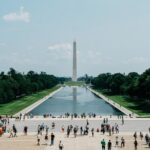

The Founding Documents Up Close




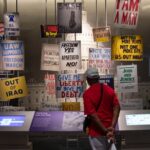
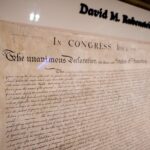
More Smithsonian Halls



Just Added: Fresh Washington DC Reviews
- Washington : Private Custom Walking Tour With A Guide (Private)★ 3.5 · 3 reviews
- 3-Hour Small Group Memorial Tour in Washington, D.C.★ 4.0 · 3 reviews
- Washington DC Private Guided Bus Day Tour with Step Off Guide★ 5.0 · 3 reviews
- Washington, DC: The Good Liar: Brian Curry★ 5.0 · 3 reviews
- DC Monuments Walking Tour: Small Group, Big Ideas★ 5.0 · 3 reviews
- Washington DC: Library of Congress Private Tour with Tickets★ 5.0 · 3 reviews
Smithsonian & Museum Tours, side by side.
 ★ 4.5Guided African American History Tour with Reserved Museum EntryFrom $891,180 reviews
 ★ 4.8Museum of the Bible General AdmissionFrom $34494 reviews
 ★ 5.0Smithsonian Museum of Natural History – Exclusive Guided TourFrom $89446 reviews
 ★ 4.5African American History Tour with Museum of African American History TicketFrom $90390 reviews
 ★ 4.5National Mall Tour with 10 Stops & U.S. Capitol or Museum EntryFrom $59331 reviews
 ★ 4.9African American History Tour & Museum EntryFrom $89312 reviews
 ★ 5.0Smithsonian Museums Walking Tour with Reserved Air & Space EntryFrom $79297 reviews
 ★ 4.5Capitol Combo: U.S. Capitol + Library Congress or Capitol MuseumFrom $79294 reviews
The lists this tour appears in