
Review · SMITHSONIAN & MUSEUM TOURS
Washington DC: Museum of the Bible General Admission
You’ll get 3,500 years of Bible in one building. The Museum of the Bible in Washington, DC is built for more than quiet looking. You move through hands-on displays, film, and special “experience” rooms, all starting with a head start that can make the whole day feel easier.
I like the early access at 9 AM (except Sundays), because it helps you get your bearings before the main crowd. I also enjoy the World of Jesus of Nazareth exhibit, which gives you useful context while still feeling interactive rather than like a lecture.
One possible drawback: the optional Washington Revelations flight simulator. It’s only 6 minutes, but if you’re prone to motion sickness or heights, it may not be worth the ticket upgrade.
In This Review
- Key things that make this visit work
- First impression: why this museum feels built for today
- Early access at 9 AM: the smart way to beat the crowd
- Where to check in: lobby security, then the ticket counter
- Your day inside: 7 floors, feature rooms, and plenty to read
- World of Jesus of Nazareth: start here if you want context
- Biblical artifacts and the translation story you can see
- The film and the 30-minute Hebrew Bible experience: plan to sit still
- Optional upgrade: Washington Revelations flight simulator (and why it’s a big deal)
- Food inside: you can’t bring it, but the cafe helps
- Time, energy, and what to realistically expect
- Price and value: $34 in a city of free museums
- Staff, building, and small details that shape the day
- Who should book this ticket, and who should skip it
- Should you book the Museum of the Bible general admission with early access?
- FAQ
- What’s included in the Museum of the Bible general admission ticket?
- Is early access included, and what time does it start?
- How long should I plan for the visit?
- What are the main feature experiences inside the museum?
- Can I upgrade my ticket for the Washington Revelations flight simulator?
- What are the height requirements for the Washington Revelations simulator?
- What safety or health concerns should I know about the flight simulator?
- Are food and drinks allowed inside the museum?
- Where do I pick up my ticket?
- Is the museum wheelchair accessible?
Key things that make this visit work
- Early entry at 9 AM: access is granted one hour before the general public opening, except Sundays
- World of Jesus of Nazareth: a focused exhibit that ties together story and setting
- A 12-minute film plus a 30-minute Hebrew Bible experience: timed features that keep the visit moving
- Rare artifacts and printed materials: you’ll see manuscripts, printed Bibles, books, and art across cultures
- Interactive stations beyond displays: multiple ways to learn, not just read labels
- Optional Flight Simulator upgrade: requires a 42 inch height minimum and isn’t for everyone
More Smithsonian halls, out of the weather
- Guided African American History Tour with Reserved Museum Entry
★ 4.5 · 1,180 reviews - Smithsonian Museum of Natural History – Exclusive Guided Tour
★ 5.0 · 446 reviews - African American History Tour with Museum of African American History Ticket
★ 4.5 · 390 reviews - National Mall Tour with 10 Stops & U.S. Capitol or Museum Entry
★ 4.5 · 331 reviews
First impression: why this museum feels built for today
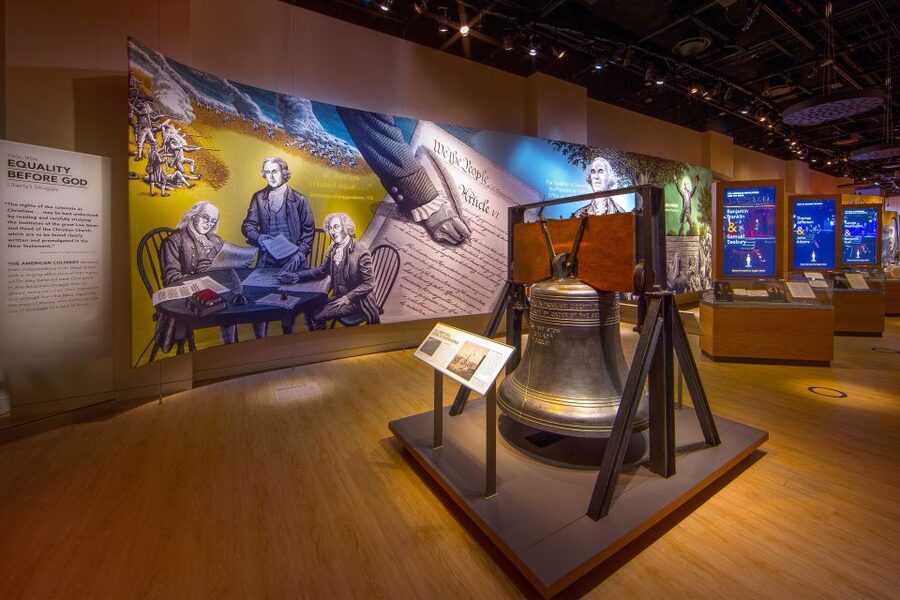
Washington, DC is stuffed with free museums. So when you pay for one, it should earn its spot. The Museum of the Bible does, mostly because it’s not trying to be a quiet archive. It’s a guided learning experience, with exhibits designed to feel modern—screens, audio, and staged storytelling—while still centering artifacts like manuscripts, printed Bibles, and period artwork.
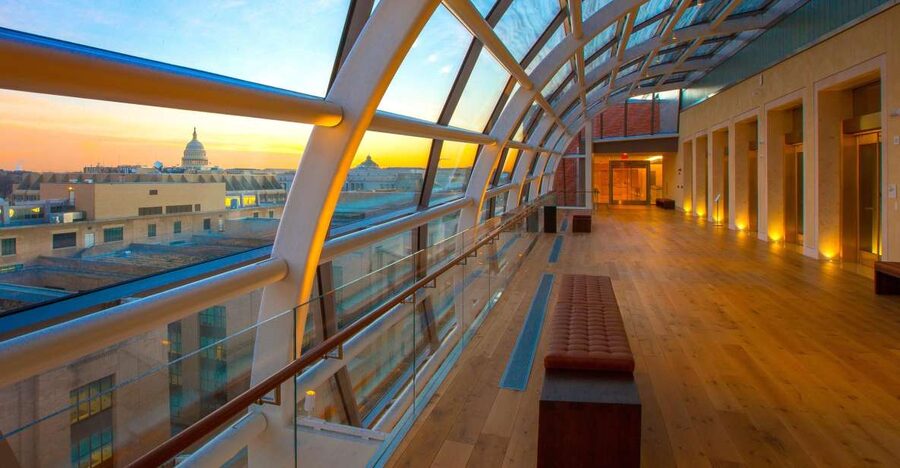
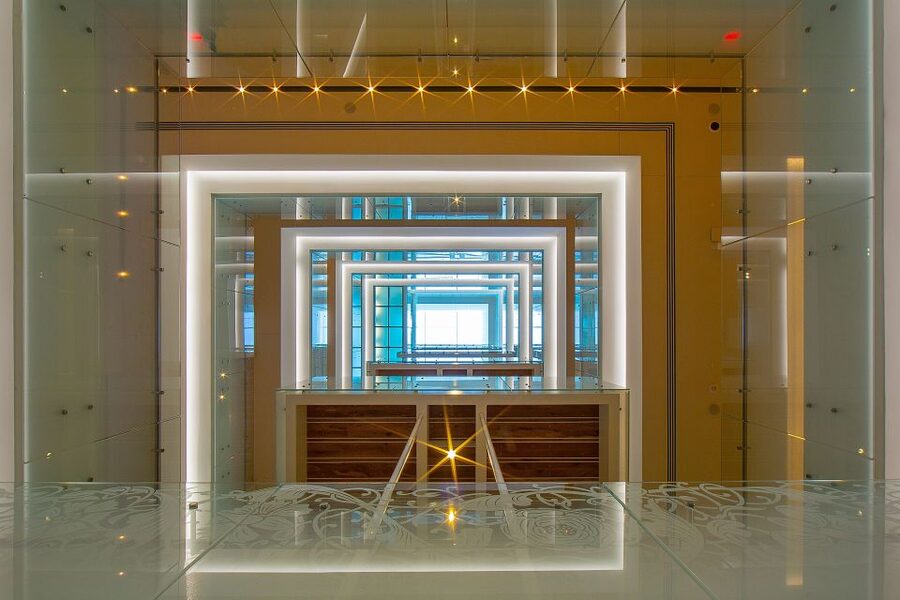
The building itself is part of the draw. More than one person has pointed out that the exterior doesn’t give you the scale of what’s inside. Once you’re through security and into the lobby, you get the sense you’re walking into a full-day attraction, not a quick stop.
I also like the museum’s practical “flow.” You’re given clear highlight rooms early on (like the film and the Hebrew Bible experience), so you’re not wandering in a fog for hours trying to decide what matters most.
Early access at 9 AM: the smart way to beat the crowd
This ticket comes with early access at 9 AM, one hour before the museum opens to the general public at 10 AM (with the clear exception of Sundays). That hour can change everything. Lines are usually shorter, the space feels calmer, and you can take photos and read labels without rushing.
Here’s how I’d use that early window: start with your biggest “must-sees” first, before you get tired. If you want the most out of the day, don’t wait until mid-afternoon to do the feature rooms. You’ll thank yourself when you’re still fresh and able to sit through the film and the timed 30-minute Hebrew Bible experience.
On Sundays, early access isn’t available. If your schedule forces a Sunday visit, arrive earlier anyway, but treat your day as if you’ll need to move slower. The museum still works well, it just won’t feel as smooth as an early-entry morning.
Where to check in: lobby security, then the ticket counter
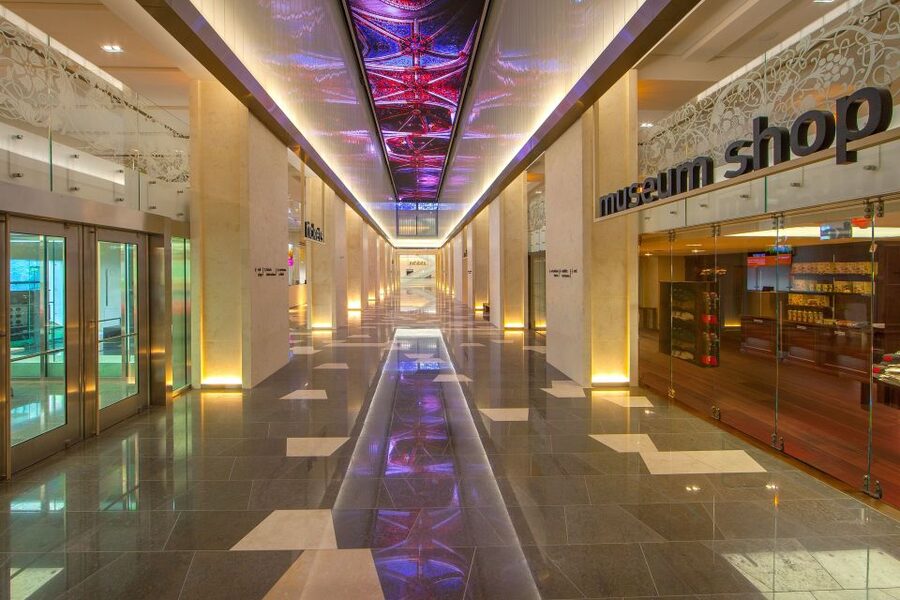
After you go through security, head to the ticket counter on the left-hand side of the museum lobby. That’s your simple checkpoint for getting sorted fast and moving into the exhibits.
If you’re pairing the museum with other DC sites, build in extra time for your whole morning routine. The museum is popular, and even with early access you’ll still want enough buffer to avoid a rushed start.
Also note the museum rules: food and drinks are not allowed. The good news is that the museum has a cafe, so you’re not stuck hungry, but plan to use their space rather than carrying snacks in.
Your day inside: 7 floors, feature rooms, and plenty to read
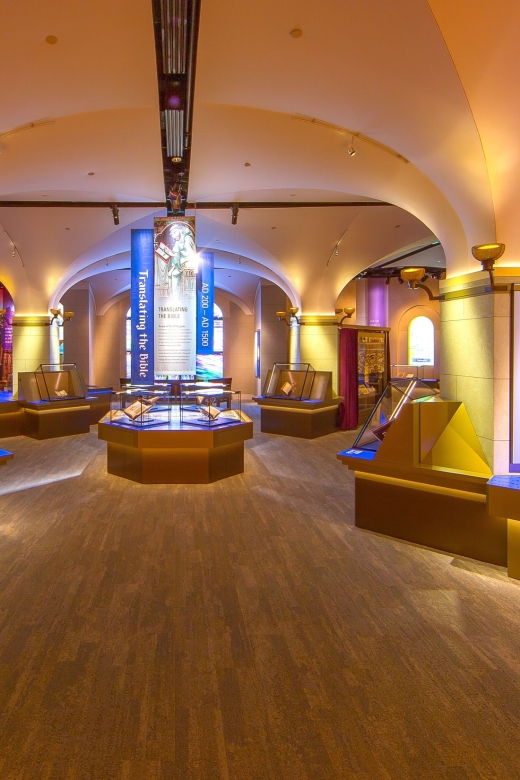
General admission gives you access to all floors—7 floors of displays and interactive stops—so you’re free to set your own rhythm. The museum includes both short-form and longer “experience” areas, which is helpful if you’re visiting with kids or if you want variety rather than one long gallery after another.
Two timed features anchor the visit:
- A 12-minute film that tells the story of how the followers of Jesus grew into a thriving community
- A 30-minute Hebrew Bible experience, where you encounter major narratives such as Noah’s ark, the burning bush, and the Passover
Even if you’re not religious, these sections help you understand the Bible as a set of texts shaped over centuries—not just one static book. And if you are religious, these rooms can feel like a structured overview before you start looking closely at artifacts and printed works.
In practice, I’d treat these timed features as your “spine.” Everything else is your choice: artifacts, translation-related exhibits, and hands-on stations that can take longer than you expect because they’re meant to be used, not just watched.




World of Jesus of Nazareth: start here if you want context
The World of Jesus of Nazareth exhibit is one of the best early picks because it sets context. Instead of only presenting objects, it helps you understand the world around the story. That matters because the Bible can feel abstract if you only see it as text.
I also like that this museum doesn’t rely only on one learning style. You get interactive presentations and clearly guided displays, so it’s easier to keep attention even if you’re visiting with teens or adults who don’t usually love museums.
If you’re trying to plan efficiently, do this exhibit earlier rather than later. When you’re later in the day, you can still enjoy the artifacts, but the context piece is what ties the rest together.
Biblical artifacts and the translation story you can see
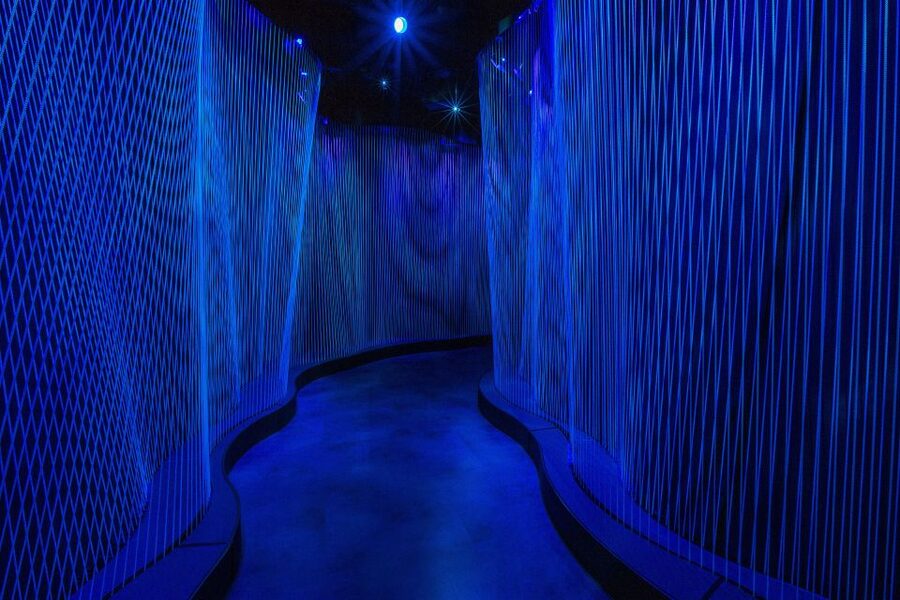
One reason this museum gets high marks is that it isn’t only about displaying old items behind glass. It’s about how the Bible moved through time, cultures, and languages. You can see biblical artifacts and manuscripts, printed Bibles, books, and art spanning a huge stretch of history.
I’ve found this kind of “translation as history” approach more useful than you’d expect. It turns a topic that often feels like a debate into something concrete: people making choices about language, formatting, printing, and distribution. A review also highlighted a translation-focused area and a printing-related section, which points to how much the museum emphasizes how texts were produced and shared.
And yes, you can even run into the kind of artifact moments people talk about most, like the Dead Sea Scrolls. If that’s on display during your visit, it’s the sort of stop that makes you slow down, because it’s hard to see items from that period and not feel the weight of time.
The film and the 30-minute Hebrew Bible experience: plan to sit still
Timed experiences can be a love-or-hate choice at museums. Here, they’re worth it because they give you a guided path. The 12-minute film helps explain the transition from early followers to a growing community. The 30-minute Hebrew Bible experience is structured around major narratives like Noah’s ark, the burning bush, and the Passover.
The practical upside: you’re not stuck choosing what to watch. The museum does that part for you. The experience rooms also break up the day. After an hour of reading labels and walking floors, sitting through a show can reset your attention.
The tradeoff: you should plan your schedule so you don’t arrive at these rooms when you’re already worn out. If you’re racing around to fit in other DC stops, you may find the experience rooms harder to enjoy.
Optional upgrade: Washington Revelations flight simulator (and why it’s a big deal)
You can upgrade to include the Washington Revelations Flight Simulator video. It’s a dazzling, multi-sensory tour where you “fly” past biblical references in and around Washington, DC, from the Lincoln Memorial area toward the Library of Congress.
It’s only 6 minutes, but the requirements are serious:
- Minimum height: 42 inches
- Not suitable for people who are pregnant or have back problems or heart problems
- Not suitable if you’re afraid of heights
- Not suitable if you have motion sickness
This isn’t just a minor warning label. Treat it like the main deciding factor. If you’re even slightly unsure, it may be better to skip the upgrade and keep your day focused on exhibits where you’re in control.
If you do take it, I’d still plan the simulator as a separate “event” rather than something you sprinkle in at the end. Do it when you’re comfortable with your body and your energy level.
Food inside: you can’t bring it, but the cafe helps
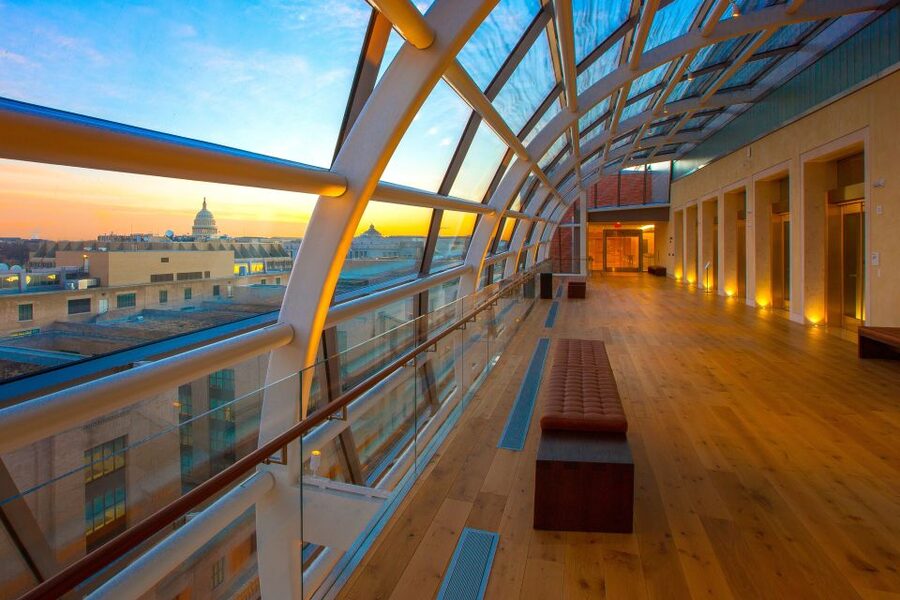
Food and drinks are not allowed inside the museum. That usually means no outside snacks, no bottled drinks, and no casual picnic mid-gallery.
The upside is that there’s a cafe on site. People have mentioned options like flatbread sandwiches, and they’ve described it as good enough to fuel the rest of the day. If you want to keep your energy steady, plan for a cafe stop rather than trying to make it through all seven floors without a break.
A practical tip: eat earlier than you think. When you delay, you may end up feeling rushed when the day is already full.
Time, energy, and what to realistically expect
This is a museum where you can easily overestimate how fast you’ll move. Even a “3-hour plan” tends to unravel once you start reading artifact captions, using interactive areas, and hitting the feature rooms.
My advice: give yourself most of the day. One day works best if you treat it like a full museum block, not a side quest. If you’re the type who reads carefully and likes to stop, you’ll probably want to plan for longer than you originally intended.
The good news is you won’t feel trapped. With 7 floors and plenty of interactive content, you can pace yourself. Take breaks when you need them. Use the feature rooms as your scheduled pauses so your day doesn’t turn into nonstop walking.
Price and value: $34 in a city of free museums
Admission is $34 per person. That sounds steep in a city where many top museums are free. So here’s how to judge value honestly.
You’re paying for:
- Access to 7 floors of artifacts and interactive exhibits
- A 12-minute film and a 30-minute Hebrew Bible experience
- Rare and display-worthy materials like manuscripts and printed Bibles
If you want a Bible museum that treats the topic as both history and cultural influence—and you like interactive exhibits—then the price can feel fair for a full-day experience.
If you’re only interested in a single theme or you hate museums with lots of reading, it may feel pricey. In that case, consider whether your interests match what the museum actually delivers.
And if you want to stretch value, use the early access hour to reduce the feeling of crowd pressure. Less waiting often means more time learning, which makes the ticket feel more worth it.
Staff, building, and small details that shape the day
What people consistently appreciate is staff support. You’ll find help at check-in and around the museum, and it makes a difference when you’re deciding where to go next.
Another recurring point: the museum is described as beautiful and bigger than it looks. That matters because it shapes your expectations. If you walk in thinking you’ll cover everything quickly, you’ll feel behind from the start. If you walk in expecting a full day, it feels like a planned route rather than a chase.
Also, the museum includes interactive add-ons beyond the big features. Reviews mention things like printing press-related content and recording-style experiences where people can share what the Bible means to them. Those small stops can make the visit feel personal rather than only educational.
Who should book this ticket, and who should skip it
This general admission ticket with early access is best for:
- People who like interactive museums with guided features
- Families with older kids who can handle exhibits and reading
- Visitors who want to see the Bible as a text that traveled through time, translation, and culture
- Anyone who would benefit from the calmer start of 9 AM early access
It may be a poor fit if:
- You get motion sickness or you’re cautious about the optional simulator
- You can’t handle timed show-style rooms and prefer only self-paced wandering
- You’re looking for a totally free or minimalist experience
If you’re unsure about the upgrade, don’t feel like you have to decide the second you walk in. Keep your day simple first, then see if you still want the extra event.
Should you book the Museum of the Bible general admission with early access?
Book it if you want a structured, full-day museum visit that combines artifacts with interactive storytelling—and you can take advantage of the 9 AM head start (not available on Sundays). The film and the 30-minute Hebrew Bible experience are strong anchors, and the 7 floors give you enough variety to keep attention from drifting.
Skip or reconsider if you mainly want a quick look, hate museums with a lot of reading and timed rooms, or know you’re likely to struggle with height or motion (especially if you’re thinking about the flight simulator upgrade).
If you want one clear rule: plan for time, arrive early when possible, and treat this as a main museum day in DC rather than a sprint.
FAQ
What’s included in the Museum of the Bible general admission ticket?
Your ticket includes general admission to the museum’s exhibits across 7 floors. It also includes early access privileges, except on Sundays.
Is early access included, and what time does it start?
Yes. Early access starts at 9 AM and is one hour before the museum’s general public opening at 10 AM. Early access is not available on Sundays.
How long should I plan for the visit?
The ticket is valid for 1 day. Since the museum spans 7 floors and includes feature experiences, plan a full day if you want to see and do a lot.
What are the main feature experiences inside the museum?
The museum includes a 12-minute film about the followers of Jesus growing into a community. It also includes a 30-minute Hebrew Bible experience with narratives such as Noah’s ark, the burning bush, and the Passover.
Can I upgrade my ticket for the Washington Revelations flight simulator?
Yes. You can upgrade to include the 6-minute Washington Revelations flight simulator video.
What are the height requirements for the Washington Revelations simulator?
To purchase the upgrade, you must be at least 42 inches (107 cm) tall.
What safety or health concerns should I know about the flight simulator?
The simulator option is not suitable for pregnant women, people with back problems or heart problems, people afraid of heights, or people who get motion sickness.
Are food and drinks allowed inside the museum?
No. Food and drinks are not allowed.
Where do I pick up my ticket?
After security, go to the ticket counter located on the left-hand side of the museum lobby.
Is the museum wheelchair accessible?
Yes, wheelchair access is listed as available.
More Tour Reviews in Washington Dc






More Smithsonian Halls




Just Added: Fresh Washington DC Reviews
- Washington : Private Custom Walking Tour With A Guide (Private)★ 3.5 · 3 reviews
- 3-Hour Small Group Memorial Tour in Washington, D.C.★ 4.0 · 3 reviews
- Washington DC Private Guided Bus Day Tour with Step Off Guide★ 5.0 · 3 reviews
- Washington, DC: The Good Liar: Brian Curry★ 5.0 · 3 reviews
- DC Monuments Walking Tour: Small Group, Big Ideas★ 5.0 · 3 reviews
- Washington DC: Library of Congress Private Tour with Tickets★ 5.0 · 3 reviews
Smithsonian & Museum Tours, side by side.
 ★ 4.5Guided African American History Tour with Reserved Museum EntryFrom $891,180 reviews
 ★ 5.0Smithsonian Museum of Natural History – Exclusive Guided TourFrom $89446 reviews
 ★ 4.5African American History Tour with Museum of African American History TicketFrom $90390 reviews
 ★ 4.5National Mall Tour with 10 Stops & U.S. Capitol or Museum EntryFrom $59331 reviews
 ★ 4.9African American History Tour & Museum EntryFrom $89312 reviews
 ★ 5.0Smithsonian Museums Walking Tour with Reserved Air & Space EntryFrom $79297 reviews
 ★ 4.5Capitol Combo: U.S. Capitol + Library Congress or Capitol MuseumFrom $79294 reviews
 ★ 4.0U.S. Capitol Tour with Library of Congress or Capitol MuseumFrom $64286 reviews
The lists this tour appears in