
Review · NATIONAL ARCHIVES TOURS
Skip-the-line National Archives Building Exclusive Guided Tour
Founding documents feel shockingly close. This small-group tour takes you into the National Archives Museum for an expert-led look at America’s paperwork—Declaration, Constitution, Bill of Rights—and then keeps going to related documents that shaped the wider story. It’s built to cut the usual chaos so you can spend your energy on the exhibits, not the line.
I especially like the up-close viewing of the core founding documents, plus the way your guide threads background details through the Rotunda and beyond. When I see guides praised by name—like Annemarie, Donna, Ryan, Kate, and Meghan—it’s usually because they don’t just point. They explain what you’re looking at, why it mattered, and how to connect one document to the next while the museum is busy.
One consideration: the tour moves at a set pace through specific rooms, and some areas have quiet or restricted rules for speaking. If you want maximum time to linger at every panel, you might feel a bit rushed, even with the skip-the-line advantage.
In This Review
- Key highlights worth knowing
- Skip-the-Line at the National Archives: What It Really Means
- Meeting Point at 701 Constitution Ave NW: Your Fast, Low-Stress Setup
- Stop 1: The National Archives Rotunda and the Core Freedom Documents
- Public Vaults Exhibits: Washington, Kennedy, and the Letters That Add a Human Scale
- Rubenstein Gallery: Magna Carta (1297) and the Long Shadow of Rights
- Your Guide Makes (or Breaks) the Experience
- Time, Pacing, and What You Might Miss Without a Guide
- Price and Value: Is $105.73 a Good Deal?
- Who This Tour Fits Best (and Who Might Prefer Different Plans)
- Should You Book This National Archives Guided Tour?
- FAQ
- How long does the National Archives skip-the-line guided tour take?
- Where does the tour start?
- What are the main documents and exhibits covered?
- Is admission included for the museum?
- How large is the group?
- Is this tour wheelchair accessible?
- Can I cancel for a full refund?
Key highlights worth knowing
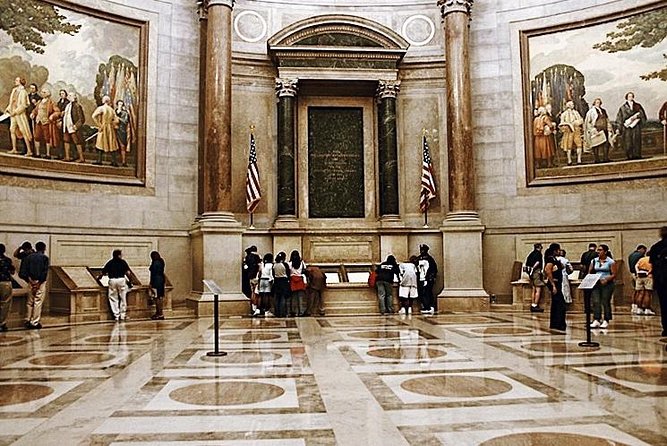
- Original documents in the Rotunda: See the Declaration, Constitution, and Bill of Rights in the museum’s signature space.
- Letters from major leaders: You’ll get face time with written documents tied to George Washington and John F. Kennedy.
- Big history spanning centuries: The tour includes the Magna Carta (1297) and shows how earlier rights traditions echoed forward.
- Small group flow (max 8): Less herd behavior means it’s easier to get oriented quickly and keep moving.
- Guides with strong storytelling: Names like Annemarie, Donna, Ryan, Kate, and Meghan come up often for a reason—clarity and engagement.
- Museum rules still apply: Even with skip-the-line access, some lines can form, and bag rules are strict.
The founding documents up close, more Archives visits
- VIP Best of DC with US Capitol + National Archives Reserved Entry
★ 4.5 · 2,491 reviews - National Archives Skip the Line Guided Tour Semi-Private 6ppl Max
★ 5.0 · 196 reviews - Washington DC: National Archives and US Capitol Guided Tour
★ 4.6 · 126 reviews - VIP National Archives Skip-The-Line Guided Tour 6 ppl Max
★ 5.0 · 126 reviews
Skip-the-Line at the National Archives: What It Really Means
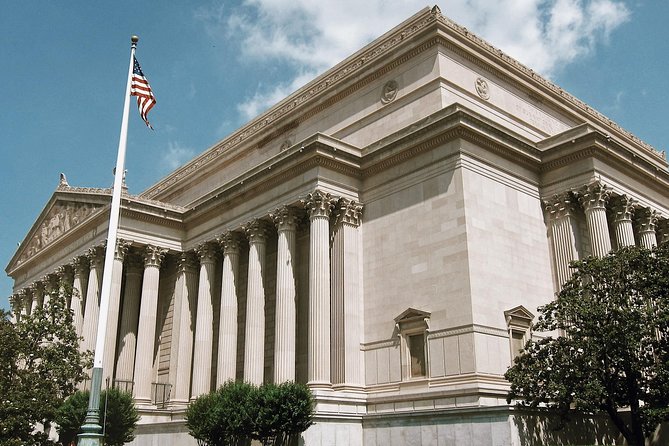
The National Archives is one of those Washington, DC stops where the building is famous, the content is famous, and the crowds are… also famous. This is why skip-the-line matters: you’re buying back time and reducing stress right at entry, so you can get to the documents faster.
That said, don’t assume it’s line-free. The museum notes that lines can still form on tours with skip-the-line or no-wait access due to security and crowd patterns. So think of this as: you’re usually better positioned, but you still need to be ready to queue if security checks are running slow.
The best payoff is what comes after you get inside. When you’re not stuck at the gate, you can actually pay attention once you reach the Rotunda and the adjacent galleries—where details matter and distractions multiply.
Meeting Point at 701 Constitution Ave NW: Your Fast, Low-Stress Setup
You’ll meet at the National Archives Museum, 701 Constitution Ave. NW, Washington, DC 20408. It’s near public transportation, which is handy because DC traffic can be unpredictable and parking is not the main event here.
Before you go, plan around two practical rules:
- No large bags or suitcases. Stick to a handbag or small thin bag pack that can go through security.
- Dress appropriately for entry into some sites. The museum is inside a working civic building, so it’s not a place to show up dressed for the beach.
From real trip planning logic, I’d also recommend arriving a little early. One of the strongest pieces of advice tied to this experience is simple: go early, because waiting can happen even when you’re trying to reduce it. Early arrival gives you buffer for security and lets you settle before the tour starts.
Stop 1: The National Archives Rotunda and the Core Freedom Documents
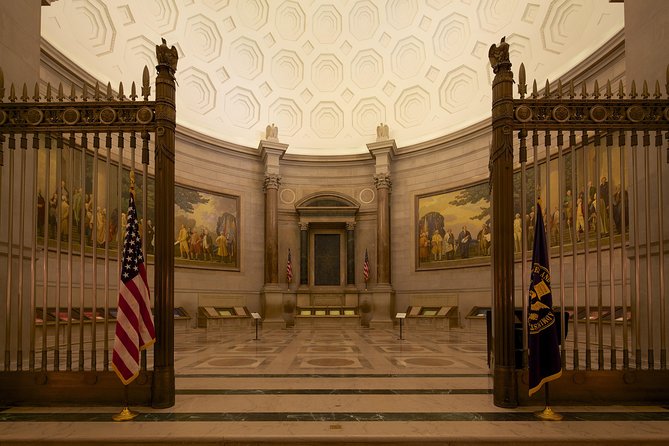
The tour’s main engine room is the National Archives Rotunda. This is where the museum feels most like a temple to American history. Your guide brings you through the space in a way that’s not just visual—it’s narrative.
Here’s what you should expect to focus on:
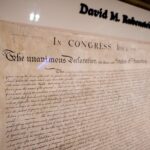
- The Declaration of Independence
- The U.S. Constitution
- The Bill of Rights
You’ll also hear how these documents connect to the founding statesmen and the political writing surrounding them, including references to the Federalist Papers and figures like Alexander Hamilton. The idea is that you’re not seeing documents in isolation. You’re seeing them as part of a chain: argument, structure, and then the rights framework that followed.
In the Rotunda area, your guide also helps you understand what you’re seeing when you look at original documents behind glass. It’s easy to feel like you’re staring at ink. With a good guide, you start noticing what makes each sheet different—what it’s doing, what questions it answered, and what problem it tried to fix.
The biggest value of this stop is also the most basic: the tour makes sure you get to the most important moments without wandering. The museum is impressive, but it can be information overload when you’re trying to self-guide.
Public Vaults Exhibits: Washington, Kennedy, and the Letters That Add a Human Scale

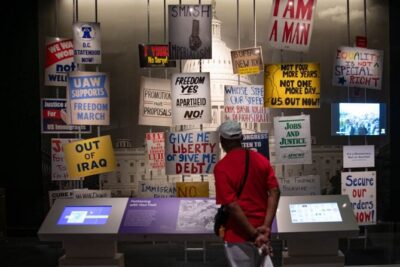
After the Rotunda, you move into the Public Vaults Exhibits area. This is where the tour becomes more personal. Instead of only big founding texts, you get historic letters and written evidence of decisions and leadership in action.
On this tour, you can look forward to seeing:
- Historic letters from George Washington
- Historic letters from John F. Kennedy
This part is especially effective if you’re the type who wants history to feel lived-in, not just stamped in a textbook. Letters show a different rhythm—tone, urgency, and the behind-the-scenes reality of leadership. You’re still in a museum environment, but the documents start to feel more like correspondence than artifacts.
The tour also includes the Emancipation Proclamation. Seeing it here matters because it moves the story forward into the 1800s and makes the rights narrative more than theory. It’s connected to the 1863 action that led to the abolishment of slavery. Your guide should give you enough context to understand what changed, not just what the proclamation says.
A practical note: this is the kind of museum area where people cluster. The tour format is designed to keep you moving without turning the experience into a stop-and-go scramble. When guides do their job well, you end up seeing what matters without repeatedly getting shoved around.
Worth lining up before you book this DC tour:
Rubenstein Gallery: Magna Carta (1297) and the Long Shadow of Rights

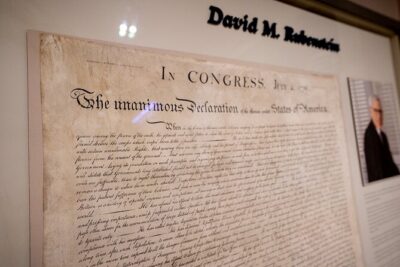
Then comes a twist that I love: the tour doesn’t stop with American founding dates. You’ll also examine documents tied to the Magna Carta of 1297, shown in the Rubenstein Gallery.
That might sound like a detour until you connect the dots. The point isn’t that the United States copied England word-for-word. It’s that ideas about governance, limits, and rights didn’t start in the 1700s. This older document provides a longer historical lens, helping you see how later systems can inherit earlier legal thinking.
From a visitor’s perspective, this is a smart inclusion because it protects you from a common museum problem: treating history as a series of unrelated eras. With the Magna Carta in the mix, the tour becomes more of a story arc—how societies argue about power and accountability over time.
If you’re a history buff, you’ll likely appreciate how the guide compares the Magna Carta’s themes to the freedom documents you saw earlier. If you’re not, you’ll still benefit because the guide’s job is to make the connection clear without drowning you in dates.
Your Guide Makes (or Breaks) the Experience
This is one of those tours where the guide is the main attraction. The documentation is the star, sure. But your guide decides whether you get an easy flow through the rooms or a confusing blur of information.
Across the experiences linked to this tour, certain guides show up with strong praise:
- Annemarie for storytelling, deep document knowledge, and ability to keep things fun while staying accurate.
- Donna for bringing structure to the tour and making how history develops feel easy to follow.
- Ryan for handling odd questions confidently and tying DC context into the museum story.
- Kate for keeping presentation lively and easy to understand.
- Meghan for engaging delivery, including family-friendly attention for kids.
Even if you don’t get one of those exact guides, the pattern is consistent: the best sessions don’t just recite facts. They give you the “why” behind each document and help you prioritize what to notice.
There’s also a helpful operational detail. Some rooms have quiet or restricted speaking rules. Your guide is expected to explain these rules before you enter those spaces, so you’re not surprised by museum etiquette. That keeps the experience respectful—and keeps you focused instead of wondering why everyone is whispering.
Finally, this tour is limited in group size. The maximum is 8 people per tour. That’s one of the main reasons guides can maintain momentum while still answering questions.
Time, Pacing, and What You Might Miss Without a Guide
The tour runs about 1.5 to 2 hours. That length is a sweet spot: long enough to get real context, short enough that you can still explore the rest of the museum after.
The trade-off is pacing. Some visitors love tours where the guide keeps moving efficiently, and others prefer slower wandering. In the notes tied to this experience, there are clear indications that the tour will guide your feet—point you toward key areas, and keep you from spreading out too much.
So here’s the practical advice: if you want to ask questions, do it when your guide pauses. If you hold back, the tour may feel like it’s rolling forward too fast in certain rooms. The most satisfying experience usually happens when you treat it like a guided walk-through with built-in stops, rather than a self-paced museum visit.
Also remember: some collections can vary along the year, and the museum can close certain areas occasionally. If opening is delayed by more than an hour from the tour start, the operator says they’ll provide an appropriate alternative. That’s rare, but it’s worth knowing that history museums are still governed by real-world operations.
Price and Value: Is $105.73 a Good Deal?
At $105.73 per person, you’re not paying pocket change. The value comes from three places that add up quickly in DC:
1) You’re paying for access and time savings. Skip-the-line help isn’t magic, but it reduces the biggest source of friction—waiting.
2) You’re paying for a guide who controls the route. The National Archives is too important to experience like a maze. A good guide helps you see the key documents and understand them.
3) The group is small. A maximum of 8 matters. Smaller groups tend to get more meaningful interaction and less crowd chaos.
There’s another detail that improves value: the experience lists admission as ticket free for the museum portion used on the tour. That doesn’t mean all museum areas are automatically free at all times, but it does suggest your museum visit is integrated into the experience rather than added later.
If you’re a serious history fan, this price starts to look reasonable because you’re effectively buying a high-quality interpretation service for two hours plus reduced friction. If you’re a casual museum visitor who only wants one quick look at the famous documents, you might find the cost harder to justify. But if you want the meaning behind what you’re seeing, the guided format is the point.
Who This Tour Fits Best (and Who Might Prefer Different Plans)
This tour is ideal if:
- You want to see the founding documents in a structured, guided way.
- You like learning the story behind the paper—especially with letters and speeches tied to real leaders.
- You’re going with a family and want a guide who can keep attention moving through the museum.
It also works well if you care about mobility support. The tour is listed as wheelchair friendly, and your guide is expected to manage the flow with that in mind. If you’re choosing a different option that changes what’s included, double-check what applies to your ticket type.
It might be less ideal if:
- You want to wander freely at your own speed and spend long stretches reading everything on your own.
- You’re sensitive to group pacing and prefer fewer “guided stops.”
Should You Book This National Archives Guided Tour?
Book it if you want a fast, focused route to the National Archives highlights, plus context that turns iconic documents into understandable stories. The small group size, the emphasis on the Rotunda and key galleries, and the track record of guides like Annemarie, Donna, Ryan, Kate, and Meghan make this feel like one of the best ways to use a limited amount of time in DC.
Skip it if you’re planning a mostly self-guided museum day and you’re happy looking at documents without interpretation. This tour’s value is the guidance—without it, you’ll still see great items, but you’re more likely to miss connections.
If you’re choosing only one “serious” history stop, this is a strong candidate.
FAQ
How long does the National Archives skip-the-line guided tour take?
It runs about 1.5 to 2 hours.
Where does the tour start?
The meeting point is the National Archives Museum at 701 Constitution Ave. NW, Washington, DC 20408.
What are the main documents and exhibits covered?
You’ll see the Declaration of Independence, the Constitution, and the Bill of Rights, plus historic letters from George Washington and John F. Kennedy, the Emancipation Proclamation, and the Magna Carta of 1297.
Is admission included for the museum?
The tour listing indicates admission ticket free for the museum portion used in the experience.
How large is the group?
The maximum group size is 8 people per tour.
Is this tour wheelchair accessible?
It’s listed as wheelchair friendly as part of the experience, with a note that this does not apply if you choose a specific semi-private option.
Can I cancel for a full refund?
Yes. You can cancel up to 24 hours in advance for a full refund. Canceling less than 24 hours before start time is not refunded.
More Skip the Line in Washington DC




More Tour Reviews in Washington DC






The Founding Documents Up Close



Just Added: Fresh Washington DC Reviews
- Washington : Private Custom Walking Tour With A Guide (Private)★ 3.5 · 3 reviews
- 3-Hour Small Group Memorial Tour in Washington, D.C.★ 4.0 · 3 reviews
- Washington DC Private Guided Bus Day Tour with Step Off Guide★ 5.0 · 3 reviews
- Washington, DC: The Good Liar: Brian Curry★ 5.0 · 3 reviews
- DC Monuments Walking Tour: Small Group, Big Ideas★ 5.0 · 3 reviews
- Washington DC: Library of Congress Private Tour with Tickets★ 5.0 · 3 reviews
National Archives Tours, side by side.
 ★ 4.5VIP Best of DC with US Capitol + National Archives Reserved EntryFrom $1292,491 reviews
 ★ 5.0National Archives Skip the Line Guided Tour Semi-Private 6ppl MaxFrom $105196 reviews
 ★ 4.6National Archives and US Capitol Guided TourFrom $53126 reviews
 ★ 5.0VIP National Archives Skip-The-Line Guided Tour 6 ppl MaxFrom $59126 reviews
 ★ 5.0National Archives Skip-the-Line Guided TourFrom $5985 reviews
 ★ 5.0National Archives + American History Museum Tour 8ppl MaxFrom $16680 reviews
 ★ 4.9National Archives Skip the Line Tour Semi-Private 6ppl MaxFrom $11176 reviews
 ★ 4.5Skip the Line National Archives and US Capitol TourFrom $5351 reviews
The lists this tour appears in