
Review · SMITHSONIAN & MUSEUM TOURS
250th: National Archives & American History Museum Guided Tour
History can be hard to pin down. This tour gives it a clear path, turning big names and real objects into stories you can actually use. I especially like the guided narrative approach at the Smithsonian Museum of American History, where artifacts are explained in a way that makes the U.S. feel less like a textbook and more like a lived experience.
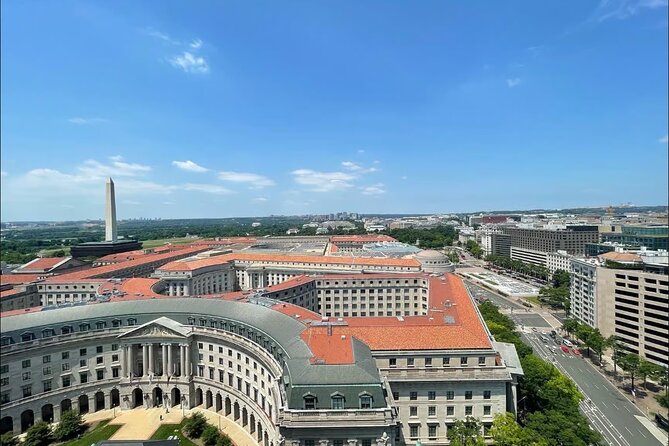
I also like the extra stop that most people miss: the guided entrance up to the Old Post Office Pavilion. The payoff is a standout view, including a look down Penn Ave from the postal tower area, and it pairs nicely with the later VIP-style Archives entry through the route the guide uses.
One possible drawback: the whole thing is only about 3 hours, with roughly 1 hour 30 minutes at the Smithsonian and about 40 minutes inside the Archives. If you like to linger on exhibits or read every label, you’ll probably wish you had more time.
In This Review
- Key highlights at a glance
- The best part: a guided storyline that makes DC make sense
- Smithsonian National Museum of American History: the five stops that do the heavy lifting
- The Star-Spangled Banner you can actually see
- Jefferson’s Writing Desk and the idea of portable power
- Gunboat Philadelphia: early naval warfare as physical evidence
- Julia Child’s Kitchen: postwar change through everyday life
- John Bull Locomotive: how railroads changed the map
- National Archives Museum and the Old Post Office Pavilion: that VIP feeling, explained
- Why the Old Post Office stop matters
- Skip-the-line: saving stress so you can enjoy the content
- Pacing and group size: what max 6 travelers actually changes
- Price and value: is $75 a fair deal in Washington DC?
- Who this tour is perfect for (and who should think twice)
- Practical tips for your 2:00 pm start
- Should you book this guided experience?
- FAQ
- How long is the 250th National Archives & American History Museum Guided Tour?
- What does the tour cost?
- Where does the tour start and where does it end?
- What time does the tour start?
- Is skip-the-line access included?
- Is admission included for the National Archives?
- Do I pay admission for the Smithsonian stop?
- What language is the tour offered in?
- How big is the group?
- Is there free cancellation?
Key highlights at a glance
- Skip-the-line access into the National Archives Museum with a guided walkthrough
- Old Post Office Pavilion top visit for a city view that’s a real contrast to museum halls
- Smithsonian stop that’s built around major objects, from an original national anthem flag to classic steam tech
- A small group capped at 6 travelers, which helps questions and keeps the pace human
- A guide-led story arc that connects early America, industrial growth, and postwar culture
More Smithsonian halls, out of the weather
- Guided African American History Tour with Reserved Museum Entry
★ 4.5 · 1,180 reviews - Washington DC: Museum of the Bible General Admission
★ 4.8 · 494 reviews - Smithsonian Museum of Natural History – Exclusive Guided Tour
★ 5.0 · 446 reviews - African American History Tour with Museum of African American History Ticket
★ 4.5 · 390 reviews
The best part: a guided storyline that makes DC make sense
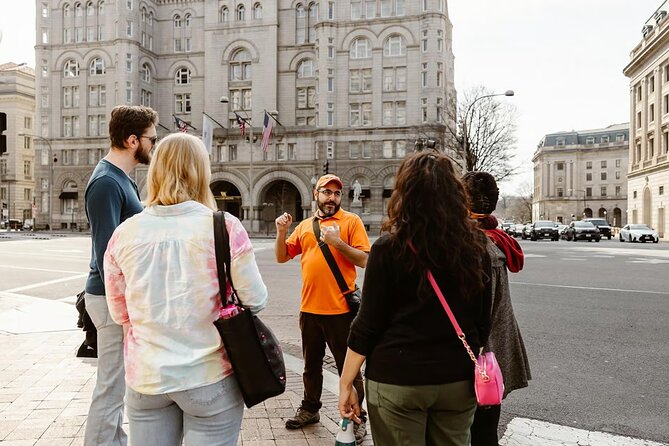
DC has an odd way of overwhelming you. You walk into a museum and suddenly you’re surrounded by decades of material, with no easy way to tell what connects to what. This tour fixes that by treating history like a thread: you move through two major sites, and each stop adds a new piece of the bigger picture.
You start at the Smithsonian National Museum of American History (1300 Constitution Ave. NW) at 2:00 pm, and the structure matters. The tour doesn’t ask you to wander. It tells you what to look at and why it matters, so you spend your limited time on the most meaningful objects and moments.
Smithsonian National Museum of American History: the five stops that do the heavy lifting
At the Smithsonian, you get about 1 hour 30 minutes of focused time. That’s not enough to see everything in the building, and that’s exactly the point. You’re guided to specific artifacts that act like anchors, so your brain leaves with a clear set of connections instead of a pile of facts.
Here’s what the tour highlights, and what each object teaches you beyond the label:
The Star-Spangled Banner you can actually see
The original Star-Spangled Banner is the starting emotional beat. It’s the flag that inspired the U.S. national anthem during the War of 1812. When you stand in front of it (through a guided explanation), it’s not just patriotism. It becomes a concrete way to understand how symbols carry stories, and how conflict turns into lasting national identity.
What I like about this approach: it’s not only history of a war. It’s history of how Americans remembered and repeated meaning through song and imagery.
Jefferson’s Writing Desk and the idea of portable power
Next is Jefferson’s writing desk, described as the small portable desk where Thomas Jefferson drafted the Declaration of Independence. The “portable” detail is what makes this stop click. You’re reminded that big political change doesn’t just happen in grand halls. It happens through documents created by specific people, under real constraints, with tools that fit a life in motion.
This is also a great moment for questions, because the desk naturally invites discussion about process: how writing becomes policy, how drafts become documents, and how ideas become official.
The founding documents up close, more Archives visits



Gunboat Philadelphia: early naval warfare as physical evidence
Then you’ll see Gunboat Philadelphia, a Revolutionary War vessel recovered from Lake Champlain. The tour frames it as rare physical evidence of early American naval warfare and the fight for independence.
Even if you don’t love military history, this is a smart stop. A ship recovered from a lake is a rare thing: it’s not just a story, it’s a surviving artifact. That makes the past feel less abstract and more testable.
Julia Child’s Kitchen: postwar change through everyday life
The tour pivots from early America to postwar culture with Julia Child’s Kitchen, where she filmed The French Chef. This works because it reframes “history” as not only politics and battles. It’s also changing tastes, new media, and how everyday people adopted ideas they first encountered through TV.
If you’ve ever wondered why culture spreads so fast, this stop gives you a good angle: media turns personal curiosity into shared public conversation.
John Bull Locomotive: how railroads changed the map
Finally, you’ll see John Bull Locomotive, one of the oldest surviving steam locomotives in the world. The tour connects it to how railroads powered industrial growth, westward expansion, and economic transformation.
This is the tech-to-economy bridge. You’re not only seeing an old engine; you’re seeing the infrastructure that made movement, goods, and jobs possible at a new scale. It’s a strong ending for a museum segment because it explains why the U.S. grew the way it did.
National Archives Museum and the Old Post Office Pavilion: that VIP feeling, explained
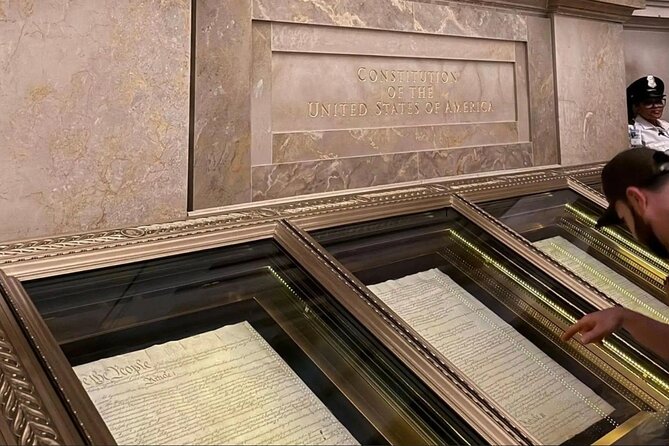
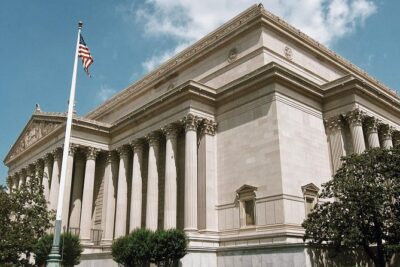
After the Smithsonian, you move to the National Archives Museum for a skip-the-line, guided entry. The timed focus here is shorter, about 40 minutes, so the guide has a job: get you oriented fast and help you make sense of what you’re seeing without rushing past the key parts.
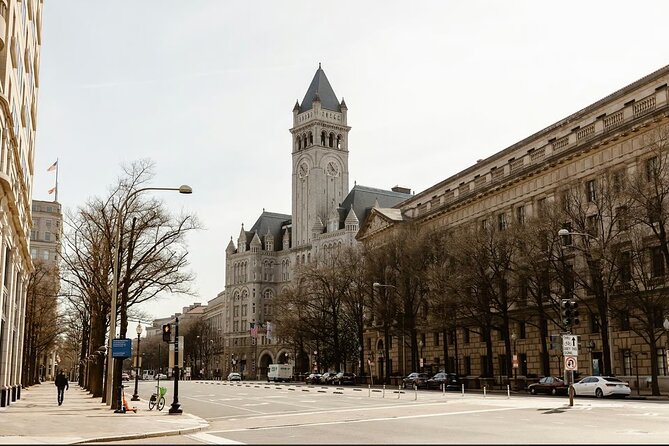
The tour also includes a guided entrance up to the Old Post Office Pavilion. From there, you get a standout DC perspective, including a view down Penn Ave that shows how the city’s layout supports its role as a political and national stage. It’s a rare combo: big artifacts inside, then city context outside, in the same outing.
Why the Old Post Office stop matters
This isn’t filler. It’s the “put it on the map” moment. Museums can stay trapped in closed rooms. A view from the tower adds scale: you see distance, direction, and the feel of the National Mall area as a real urban system. That makes later museum explanations land better.
Also, if you care about photos, this is where your camera usually comes alive. Not because it’s flashy, but because it gives context you can’t get from street level.
Skip-the-line: saving stress so you can enjoy the content
The Archives part includes skip-the-line access, which is a practical win. DC museum time is valuable, and lines can swallow your energy. When you avoid that stall, you stay present for the guide’s flow, and you’re more likely to remember what you learned instead of just how long you waited.
Pacing and group size: what max 6 travelers actually changes
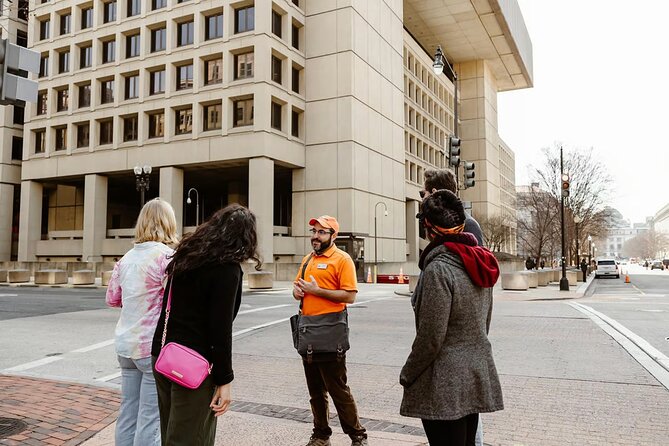
This tour caps at 6 travelers, and that matters more than you might think.
In small groups:
- the guide can slow down when you ask a question
- the tour feels less like a conveyor belt
- kids (and adults) are more likely to stay engaged because the conversation stays human
That small-group feel is a big reason why families often enjoy this kind of outing. The best museum tours don’t just broadcast facts. They keep people paying attention long enough to connect the dots.
The overall length is about 3 hours, so it’s realistic for a first afternoon in DC or a day when you want to hit major sites without turning your schedule into a sprint.
Price and value: is $75 a fair deal in Washington DC?
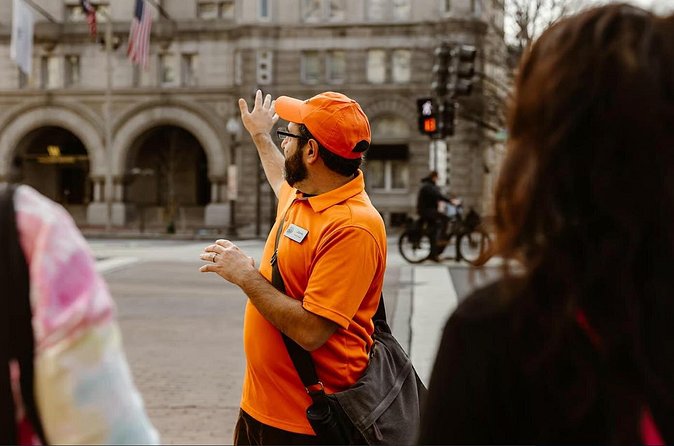
At $75 per person for roughly 3 hours, the value is strongest when you look at what’s bundled.
Included:
- Guided entry into the National Archives via the skip-the-line route
- Guided access to the Old Post Office Pavilion top area
- A walking tour with a local guide
Not included:
- Gratuity
Stop 1 is at the Smithsonian Museum of American History, and the tour notes admission is free for that segment. That means your money mostly pays for the guide’s time and the specialized entry experiences at the Archives and the Old Post Office Pavilion.
So the fair way to think about it is: you’re paying to reduce wasted time and to get a focused guide who helps you understand what you’re looking at in two major DC locations.
If you’re the type who reads every label and likes to roam, you might feel the time pressure. If you want the best use of a limited afternoon, this price usually lands as reasonable—especially in a city where self-guided museum hopping can eat hours without a clear outcome.
Who this tour is perfect for (and who should think twice)
This is a great pick if you fit one of these categories:
- First-time DC visitors who want a guided anchor route rather than random wandering
- History lovers who appreciate explanations tied to specific artifacts
- Families, since the guide style can keep kids listening and make the storytelling easy to follow
- People short on time who still want highlights at both the Smithsonian and the National Archives
Think twice if:
- you want to spend long stretches inside museums reading everything
- you dislike a guided pace
- you prefer to plan your own stop-by-stop path and linger at your favorite corners
The good news: the tour’s format is built to deliver a meaningful “greatest hits plus context” result in a small window.
Practical tips for your 2:00 pm start
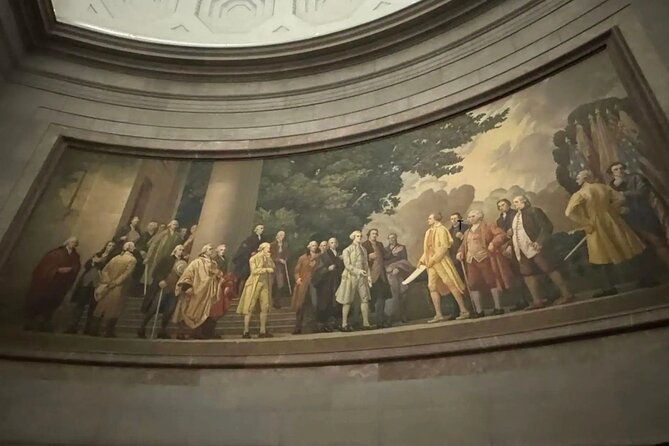
A few simple moves will make your afternoon smoother.
- Arrive a bit early at the Smithsonian meeting point so you can get oriented before the group starts moving.
- Wear comfortable walking shoes. This is a walking tour that combines museum time with an exterior view stop.
- If you’re visiting during busy seasons, use the small-group size and skip-the-line entry wisely. That access is what makes the schedule work.
- Bring a phone for photos and quick notes, but also plan to listen. The guide’s explanations are the main value here.
If you like to plan ahead, note that this type of tour is often booked about 47 days in advance on average. If you’re traveling during peak weeks, don’t wait until the last minute.
Should you book this guided experience?
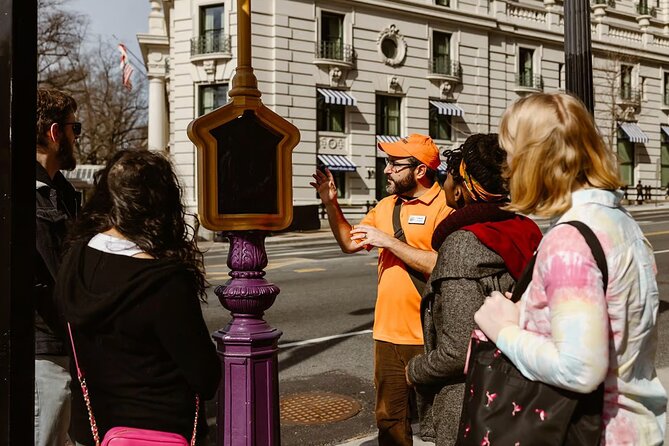
I think it’s worth booking if you want DC history with structure, not chaos. You get a strong Smithsonian highlights sequence (from the Star-Spangled Banner to Jefferson’s portable desk, then forward through ships, food media, and steam technology). Then you shift into a practical, time-saving skip-the-line Archives experience paired with a view from the Old Post Office Pavilion top that helps the whole day click.
Skip it if you hate guided pacing or you know you’ll want hours in the galleries. In that case, self-guided visits might fit you better.
Overall, if you want a guided afternoon that’s easy to follow, good for questions, and built around major artifacts plus a memorable city view, this is a smart use of time in Washington DC.
FAQ
How long is the 250th National Archives & American History Museum Guided Tour?
It runs for about 3 hours (approximately).
What does the tour cost?
The price is $75.00 per person.
Where does the tour start and where does it end?
It starts at the Smithsonian National Museum of American History (1300 Constitution Ave. NW) and ends inside the National Archives Museum (701 Constitution Ave. NW).
What time does the tour start?
The start time is 2:00 pm.
Is skip-the-line access included?
Yes. Skip-the-line access into the National Archives Museum is included.
Is admission included for the National Archives?
Yes. Admission for the National Archives part is included.
Do I pay admission for the Smithsonian stop?
The Smithsonian stop is described as free for admission.
What language is the tour offered in?
The tour is offered in English.
How big is the group?
The maximum group size is 6 travelers.
Is there free cancellation?
Yes, you can cancel for a full refund up to 24 hours before the experience’s start time.
More Tour Reviews in Washington DC






The Founding Documents Up Close





More Smithsonian Halls




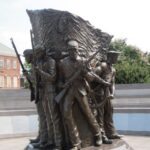
Just Added: Fresh Washington DC Reviews
- Washington : Private Custom Walking Tour With A Guide (Private)★ 3.5 · 3 reviews
- 3-Hour Small Group Memorial Tour in Washington, D.C.★ 4.0 · 3 reviews
- Washington DC Private Guided Bus Day Tour with Step Off Guide★ 5.0 · 3 reviews
- Washington, DC: The Good Liar: Brian Curry★ 5.0 · 3 reviews
- DC Monuments Walking Tour: Small Group, Big Ideas★ 5.0 · 3 reviews
- Washington DC: Library of Congress Private Tour with Tickets★ 5.0 · 3 reviews
Smithsonian & Museum Tours, side by side.
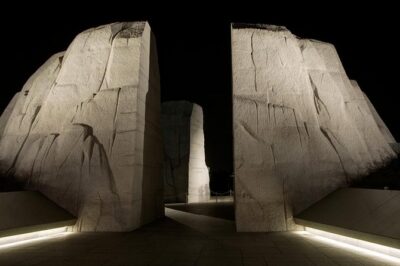 ★ 4.5Guided African American History Tour with Reserved Museum EntryFrom $891,180 reviews
 ★ 4.8Museum of the Bible General AdmissionFrom $34494 reviews
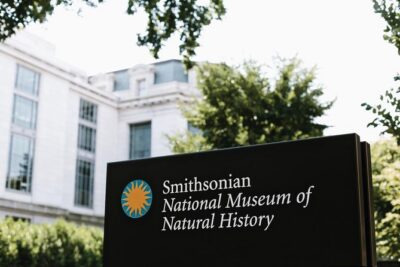 ★ 5.0Smithsonian Museum of Natural History – Exclusive Guided TourFrom $89446 reviews
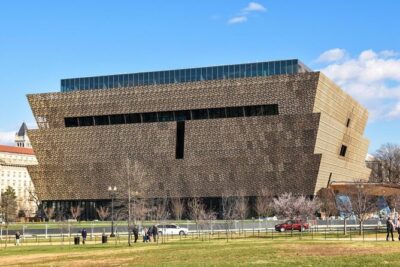 ★ 4.5African American History Tour with Museum of African American History TicketFrom $90390 reviews
 ★ 4.5National Mall Tour with 10 Stops & U.S. Capitol or Museum EntryFrom $59331 reviews
 ★ 4.9African American History Tour & Museum EntryFrom $89312 reviews
 ★ 5.0Smithsonian Museums Walking Tour with Reserved Air & Space EntryFrom $79297 reviews
 ★ 4.5Capitol Combo: U.S. Capitol + Library Congress or Capitol MuseumFrom $79294 reviews
The lists this tour appears in