
Review · SPY & SCANDAL TOURS
Embassy Row Spy History Tour with a Former CIA Officer
Spooky in a smart way, not a jump-scare way. This Embassy Row Spy History Tour turns Washington’s sidewalks into a real-time lesson on suspicion, tradecraft, and key moments tied to US intelligence and international fallout. I especially like the mix of big events with small, practical details, and the fact that you’re not just watching history go by—you’re being asked to think like you might miss something at the wrong moment.
Two things I really appreciate: the interactive practice (you’ll try your hand at impersonal communication, spotting signals, and simulating a dead drop), and the focused storytelling around specific real-life sites like the Dupont Circle Hotel and Sheridan Circle. One thing to keep in mind: this is a 1 hour 30 minute walking tour with a moderate fitness expectation, and it requires good weather, so dress for the cold or heat and be ready to move between stops.
In This Review
- Key highlights to look for on Embassy Row Spy History Tour
- The “Spy History” angle that actually helps you watch the city
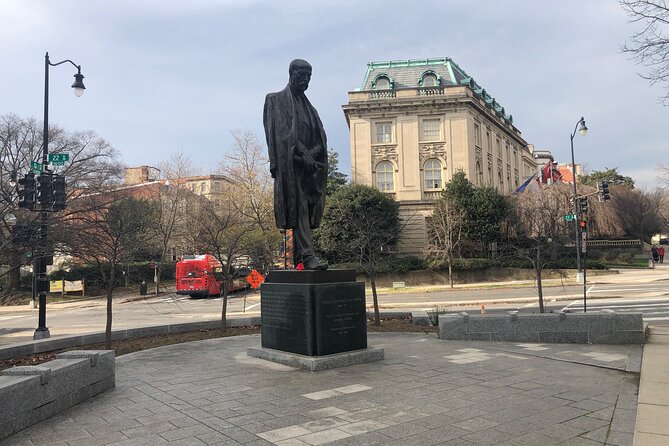
- Starting point: Rear Admiral Samuel Francis Dupont Memorial and why it’s a good launch
- Stop 1: Dupont Circle Hotel and a suspicious death story that sets the tone
- Stop 2: Revolutionary War spy activity plus a CIA tradition before deployment
- Stop 3: Sheridan Circle and the assassination of Orlando Letelier
- Stop 4: Impersonal communication practice—spot the signal and unload the dead drop
- The guides: personable, engaging, and good with real-world conditions
- Price and value: $75 for 90 minutes with real instruction
- Timing, group size, and mobile ticket: the practical stuff that affects your day
- Who should book this spy tour (and who might want to skip it)
- Should you book the Embassy Row Spy History Tour?
- FAQ
- FAQ
- How much is the Embassy Row Spy History Tour?
- How long is the tour?
- What language is the tour offered in?
- Where does the tour start?
- Where does the tour end?
- What’s included in the price?
- What is not included?
- How many people are in the group?
- Do I need a certain fitness level?
- What happens if the weather is bad?
Key highlights to look for on Embassy Row Spy History Tour
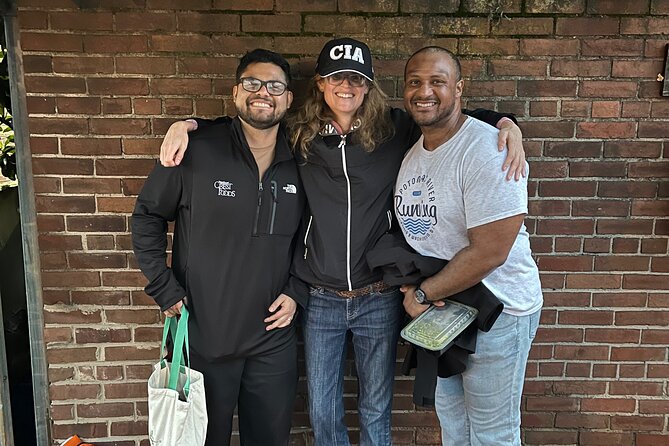
- Former CIA officer-led perspective that keeps the tradecraft grounded and practical
- Four major locations tied to real cases, including Dupont Circle Hotel and Sheridan Circle
- Impersonal communication practice where you hunt for the signal and handle a dead drop exercise
- Revolutionary War spy activity plus a tradition involving CIA officers before they deploy
- Small group size with a maximum of 25 people
- Interactive pacing that makes 90 minutes feel like more than the sum of its stops
Embassies and mansions off the circle, more walks
- Residences of the Presidents Walking Tour: Dupont and Kalorama
★ 5.0 · 31 reviews - Embassy Row: Architecture, Mansions & International Intrigue
★ 4.5 · 27 reviews - Outdoor Escape Room in Washington, D.C. – Adams Morgan
★ 5.0 · 17 reviews - Off the Beaten Path: 16th Street and Adams Morgan Neighborhood Tour
★ 5.0 · 12 reviews
The “Spy History” angle that actually helps you watch the city
Washington DC can feel like a museum you have to decode. This tour is different because it trains your attention. You’re walking with a former CIA officer, and the framing is always about cause and effect: what someone would notice, what they might ignore, and how small habits become risk.
I also like the way the tour is designed for attention span reality. You’re not trapped in one lecture room. In about 90 minutes, you move through multiple Embassy Row-adjacent stops, each one tied to a specific story beat. That means the history sticks because it’s anchored to places you can point at and mentally re-walk later.
Starting point: Rear Admiral Samuel Francis Dupont Memorial and why it’s a good launch
The tour starts at the Rear Admiral Samuel Francis Dupont Memorial in Washington, DC 20009, and it ends back at that same meeting point. That simple loop matters more than it sounds. It keeps the logistics easy, and it reduces the chance you get separated while everyone tries to find the exact corner in a city that loves complicated blocks.
From a visitor standpoint, the location is also convenient because it’s near public transportation. You’re less dependent on cabs or paid parking, and you can pair the tour with other nearby plans before or after without needing a second transport strategy.
Also: this tour issues a mobile ticket, which is exactly what I want on a walking tour. No paper fuss. Just show your ticket and go.
Stop 1: Dupont Circle Hotel and a suspicious death story that sets the tone
At the first stop, you’ll discuss a suspicious death that took place at the Dupont Circle Hotel. This matters because it’s not just a spooky headline. The way these cases are presented on the tour emphasizes how uncertainty works—how investigators have to operate when you cannot treat a death like a clean, closed box.
What I like here is that it sets the mental rules for the rest of the walk. You learn to ask better questions: what would look normal versus what would look forced, what details might be missed in real time, and how the environment around a place can shape what people assume.
A tour like this works best when it teaches you how to observe, not just what happened. Starting with something suspicious is a smart choice, because it gets you primed for ambiguity from minute one.
Stop 2: Revolutionary War spy activity plus a CIA tradition before deployment
The second stop shifts to earlier American history: spy activity during the Revolutionary War. This is more than trivia. It’s a bridge showing that the basic tension—information, secrecy, trust, and deception—has been part of conflict for a long time.
Then the story takes a more modern turn with a tradition of CIA officers before they deploy. The tour uses this to connect past and present thinking. Even without getting lost in details you can’t verify on the street, the theme is clear: intelligence work depends on routines, mindset, and readiness. You’re shown how people try to stay consistent when the stakes are anything but.
This stop is a good reminder that intelligence tradecraft isn’t only about dramatic maneuvers. A lot of it is disciplined behavior: how someone prepares mentally, how they approach risk, and how they keep judgment steady when conditions change.
Spies, scandals and back rooms, a few more
Stop 3: Sheridan Circle and the assassination of Orlando Letelier
Next comes a major international assassination story: the assassination of Orlando Letelier at Sheridan Circle. If you want one stop that feels the most historically weighty, this is the one.
Letelier’s case is often discussed in terms of political violence and international consequences, and on this tour it’s used to show how information and security failures can ripple outward. The story framing pushes you to consider not only what happened, but what it reveals about the environment around power—who was vulnerable, who had reason to worry, and how public space can become part of a private operation.
One practical takeaway from a stop like this is that you’ll start noticing that these places were never neutral. They were part of the risk map. That’s the sort of detail I find helpful on a city walk: you see a landmark, and then your brain automatically asks what the landmark would be used for in someone else’s plan.
Stop 4: Impersonal communication practice—spot the signal and unload the dead drop
This is where the tour turns from education into skill practice. You’ll practice impersonal communication, with a prompt that asks you to spot the signal and then unload the dead drop.
Don’t expect a movie-style action scene. This exercise is about attention and procedure. It’s the kind of activity that makes you realize how much of tradecraft is about being methodical while pretending you’re not doing anything at all.
I like this stop because it forces a change in your role. Instead of being a spectator, you become the person who could miss something. You learn how easy it is to get distracted by your own assumptions. If a signal is subtle, your job is to notice it anyway. If a dead drop is handled casually, your job is to recognize when it isn’t.
The best part? You get to try it in a low-stakes setting. Even if you’re not a naturally observant person, the activity trains your focus, and you leave with a clearer idea of what “impersonal” actually means in practice: communication that tries to hide itself inside normal movement.
The guides: personable, engaging, and good with real-world conditions
The experience is operated by Spyher, and the guides you may meet can vary. Still, the tour’s style shows up repeatedly: personable, engaging, and able to keep energy up while you’re standing and listening outdoors.
One recurring note from the guide experience is that guides like Rosanna bring clear, informative storytelling with a friendly conversational tone, and that Anja (for one group) was particularly engaging and upbeat. I also appreciate when a guide can handle real weather rather than act like everyone will magically be comfortable. DC can get cold, and the tour structure still works because the guidance stays focused and active.
If you’re hoping for a tour that feels human—not stiff—this is the one to pick.
Price and value: $75 for 90 minutes with real instruction
At $75 per person for about 1 hour 30 minutes, the price is not bargain-bin, but it can be solid value when you think about what you’re buying.
You’re paying for three things that usually cost more if you do them separately:
- A former CIA officer perspective (rare in normal walking tours)
- A route that ties together multiple specific sites with a coherent story thread
- Hands-on practice with impersonal communication and a dead drop exercise, not just facts
Also, the group is capped at 25 travelers, which usually helps the experience feel more interactive and less like a lecture you can barely hear. When tours cost more than average, I want to see evidence that the format uses that money to create something you can’t easily replicate on your own. Here, the interactive element and the guided attention do that job.
If you’re comparing to generic “history of DC” walks, this is sharper and more focused. If you’re comparing to full-day intelligence-themed experiences, the time commitment stays short and manageable.
Timing, group size, and mobile ticket: the practical stuff that affects your day
On average, this is booked about 14 days in advance, so if you’re traveling in peak season or on a tight schedule, booking early is smart. It’s also a good sign that the tour sells at a steady pace—90 minutes is an easy slot to fit into a DC itinerary.
The tour is offered in English and you’ll receive confirmation at time of booking. The mobile ticket format means you can keep everything on your phone.
Physical logistics are straightforward: the tour requires a moderate physical fitness level. That’s normal for a city walk with multiple stops. If you have mobility limitations, you’ll want to consider whether standing and moving between stops for 90 minutes will work for you.
And yes, service animals are allowed. If that matters for you, plan around the usual outdoor tour comfort needs (temperature, leash handling, and crowd spacing).
Who should book this spy tour (and who might want to skip it)
This tour is a great fit if you like:
- Real-world storytelling tied to real places in DC
- Spy themes that focus on attention, procedures, and decision-making
- Interactive learning where you get to practice something instead of only listening
It may be less ideal if you want a purely academic lecture, or if you dislike walking outdoors in cold or heat. Since it requires good weather, your day needs at least a little flexibility.
If you’re coming to Washington with a short list of must-dos and you don’t want one more generic museum stop, I’d put this high on the list. It’s contained, themed, and different from what most visitors pick.
Should you book the Embassy Row Spy History Tour?
If you want a DC tour that trains your eyes and gives you a hands-on taste of tradecraft, I think you should book it. The standout strength is the combination of specific, place-based stories (Dupont Circle Hotel and Sheridan Circle) with an activity that makes you think about signal spotting and dead drops. That mix is what turns the experience from interesting into memorable.
Book it if:
- You’re curious about intelligence history with practical emphasis
- You like interactive formats and small-group pacing (max 25)
- You can handle a moderate walking duration in changing weather
Skip it if:
- You hate outdoor activities or don’t want any walking
- You’re looking for a long, museum-style deep chronology without exercises
FAQ
FAQ
How much is the Embassy Row Spy History Tour?
It costs $75.00 per person.
How long is the tour?
The duration is about 1 hour 30 minutes.
What language is the tour offered in?
The tour is offered in English.
Where does the tour start?
The tour starts at the Rear Admiral Samuel Francis Dupont Memorial, Washington, DC 20009, USA.
Where does the tour end?
It ends back at the same meeting point where it started.
What’s included in the price?
All fees and taxes are included.
What is not included?
Bottled water is not included.
How many people are in the group?
The tour has a maximum of 25 travelers.
Do I need a certain fitness level?
You should have a moderate physical fitness level.
What happens if the weather is bad?
This tour requires good weather. If it’s canceled due to poor weather, you’ll be offered a different date or a full refund.
More Tour Reviews in Washington DC






Spies, Scandals and Secrets






Dupont Circle and Embassy Row





Just Added: Fresh Washington DC Reviews
- Washington : Private Custom Walking Tour With A Guide (Private)★ 3.5 · 3 reviews
- 3-Hour Small Group Memorial Tour in Washington, D.C.★ 4.0 · 3 reviews
- Washington DC Private Guided Bus Day Tour with Step Off Guide★ 5.0 · 3 reviews
- Washington, DC: The Good Liar: Brian Curry★ 5.0 · 3 reviews
- DC Monuments Walking Tour: Small Group, Big Ideas★ 5.0 · 3 reviews
- Washington DC: Library of Congress Private Tour with Tickets★ 5.0 · 3 reviews
Spy & Scandal Tours, side by side.
 ★ 5.0The “Madams of DC” Guided Walking TourFrom $3074 reviews
 ★ 4.5Washington DC Political Scandals and True Crime Night-Time TourFrom $5545 reviews
 ★ 4.5Embassy Row: Architecture, Mansions & International IntrigueFrom $4927 reviews
 ★ 5.0Socialites and Spies of Georgetown Walking TourFrom $3024 reviews
 ★ 5.0Georgetown Spy History Tour with a Former CIA OfficerFrom $8518 reviews
 ★ 5.0White House at Night: Scandals, Murder, Politics Adults Only TourFrom $3913 reviews
 ★ 5.0DC Spy History Walking TourFrom $4912 reviews
 ★ 4.0House of Cards: Political Puzzle Quest in Washington DCFrom $710 reviews
The lists this tour appears in