
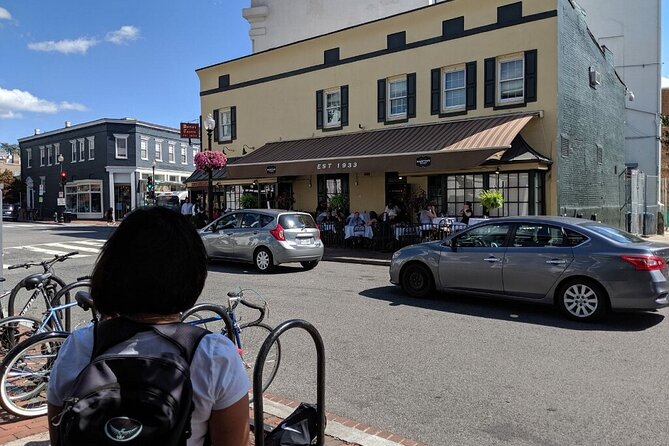
Review · GEORGETOWN TOURS
Georgetown Spy History Tour with a Former CIA Officer
Georgetown turns into a spy puzzle. This 1.5-hour walking tour turns familiar streets into a real-world lesson on how spy work worked in the WWII and Cold War years. You get to pair the sights with stories told by a former intelligence officer, and you can ask questions as you go.
What I really like is the chance to spot details you’d miss on your own. The walking route is designed so you notice the little clues behind how people communicated, moved, and stayed unseen, rather than just hearing facts at a stop-and-go pace.
One thing to plan for: this is an outdoor, on-your-feet experience with a moderate walking requirement. You’ll want solid shoes and water, and the tour depends on good weather, so cold or rain can change the day.
In This Review
- Key things I’d pencil into your day
- From Oak Hill Cemetery to Martin’s Tavern: your Georgetown spy route
- What makes the guide approach feel different
- WWII and Cold War spy stories you can actually picture
- The hands-on part: signal sites and dead drops (conceptually)
- What you’ll see in Georgetown: “spy sites,” not just famous landmarks
- Timing, pace, and group size: how the experience actually feels
- Price and value: is $85 worth it?
- Practical tips so the day goes smoothly
- Who this Georgetown spy history walk is best for
- Should you book the Georgetown Spy History Tour with a former intelligence officer?
- FAQ
- What is the duration of the Georgetown Spy History Tour
- How much does the tour cost
- Where does the tour start and end
- What’s included in the ticket price
- Are snacks included
- What language is the tour offered in
- What is the cancellation policy if weather affects the tour
Key things I’d pencil into your day
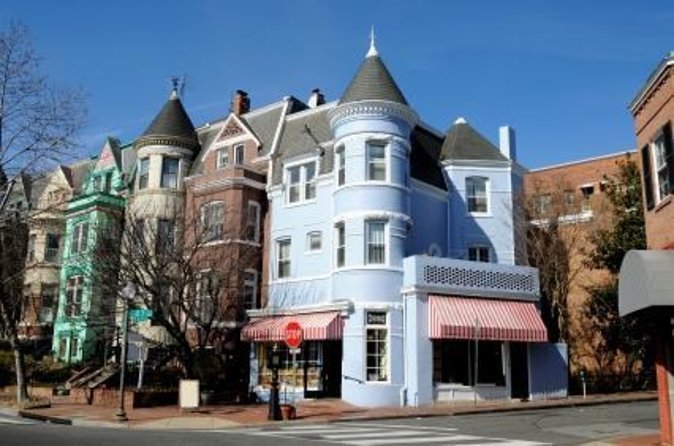
- Ask-it-anything style Q&A with a former intelligence officer as you walk
- WWII and Cold War spy sites tied to real Georgetown streets and homes
- Hands-on tradecraft moments, including reading a signal site and a dead drop concept
- A guided eye for hidden details, not just a list of famous addresses
- Small group pace with a maximum of 25 travelers
- Simple start-to-finish logistics, beginning near Oak Hill Cemetery and ending near Martin’s Tavern
Cobblestones and canal, more of Georgetown
- Ghosts of Georgetown & The Exorcist Steps Walking Tour
★ 5.0 · 610 reviews - Georgetown Foodie Culinary Tour & Neighborhood Walk
★ 5.0 · 437 reviews - Gastronomic Georgetown Walking Food Tour
★ 4.5 · 373 reviews - Historic Georgetown: History, Gossip, & Architecture Walking Tour
★ 5.0 · 321 reviews
From Oak Hill Cemetery to Martin’s Tavern: your Georgetown spy route
This tour gives Georgetown a second life. Instead of seeing the neighborhood as pretty streets and big front porches, you see it as a place where timing, location, and communication mattered. The tour starts outside Oak Hill Cemetery at 3001 R St NW, Washington, DC 20007, and it ends about 0.7 mile away outside Martin’s Tavern at 1264 Wisconsin Ave NW, Washington, DC 20007.
The walk length matters. At roughly 1.5 hours, you’re not doing a marathon, but it’s also not a sit-down lecture. You’ll be moving through Georgetown long enough to get your bearings, then slowing down when your guide wants you to look at something specific. That rhythm is a big part of why this tour works: you get the story, then you get the street view that makes the story make sense.
If you’re thinking about chaining this with other Georgetown stops, treat it like a “spine” through the area. The ending near Martin’s Tavern is convenient for grabbing a drink or snack afterward, since the tour itself does not include snacks.
What makes the guide approach feel different

A lot of history walks sound like a slideshow in motion. This one feels more like a conversation that happens to be attached to buildings.
The big draw is the Q&A. You’re not stuck waiting until the end. If something doesn’t add up, or you want context like how covert communications were handled without modern gadgets, you can ask in real time. That keeps the tour from becoming one-way storytelling and turns it into you learning how to think like someone working under pressure.
This guide’s background also shapes the tone. The focus isn’t on movie-style gadgets. It’s on the mindset: how professionals reduce risk, how they think about what can go wrong, and how they handle information when direct contact would be dangerous. In other words, you get the practical psychology behind tradecraft, not just spy trivia.
One small detail I appreciate: your guide uses Georgetown itself as the teaching tool. You aren’t just standing and listening. You’re meant to notice things—street layouts, house locations, and the logic of where people could observe or pass messages safely.
WWII and Cold War spy stories you can actually picture
Georgetown is full of official-sounding history, but the tour puts the spotlight on a different angle: how residents and places connected to spy activity during WWII and the Cold War.
You’ll hear about the people who lived here—leaders, heroes, and traitors—and how those roles shaped what happened around them. That mix matters. It’s easy to talk about spy work as if everyone involved was either purely heroic or purely villainous. This approach shows how complicated it could be, with individuals making choices shaped by fear, duty, ideology, or advantage.
You’ll also cover communication methods and why “impersonal communication” was such a big deal. The point isn’t just that people used coded messages. It’s that they tried to build systems where the risk of direct exposure dropped. In spy work, risk isn’t a buzzword—it’s the whole game.
When you connect those ideas to actual locations in Georgetown, the neighborhood becomes a case study. You start to understand why certain spots would be attractive for observation, why certain routines could be safer than direct contact, and why an ordinary-looking place could still play a role.
The hands-on part: signal sites and dead drops (conceptually)
One of the most memorable segments is the practical-thinking exercise. You’ll hear about the theory of using a signal site and then you’ll get a chance to test that theory in the real world—at least at the level the tour can safely do on a public street.
You’ll be guided through how signals function as communication tools without requiring a direct face-to-face exchange. The lesson is about interpretation: how someone might determine whether something relevant has changed, and how that can reduce uncertainty when you can’t confirm everything directly.
Then comes the dead drop concept. You won’t be staging anything unsafe, but the tour explains how a dead drop approach works in principle—leaving and retrieving information without meeting the person who set it. It’s a powerful mental exercise because it forces you to consider distance, timing, and what counts as confirmation.
This is also where the Q&A becomes extra valuable. If you’ve ever wondered how a system avoids mistakes, you can ask. A good answer here isn’t just historical; it’s about risk management. That’s the thread that connects WWII-era tradecraft to Cold War procedures.
Spies, scandals and back rooms, a few more


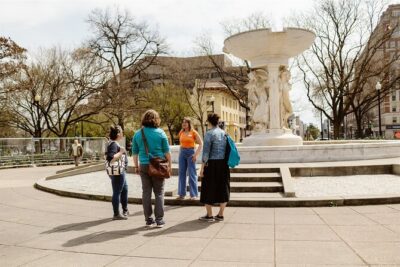

What you’ll see in Georgetown: “spy sites,” not just famous landmarks
This is a walking tour that uses select spy sites in Georgetown, plus the surrounding context that makes the locations meaningful. That’s a key difference from classic sightseeing tours that focus on big monuments.
You’ll visit points around the neighborhood where the history is tied to how espionage could operate among ordinary streets. It includes places linked to WWII and Cold War stories, and it’s structured so you can connect the dots between what your guide explains and what you can see.
Here’s what to do to get the most out of it:
- Pay attention when your guide tells you to look closely. They’ll point out details tied to the story.
- Don’t rush photos. If you take pictures while your guide is explaining the logic of a spot, you might miss the clue that makes the photo useful.
- Ask one question you genuinely care about, not a generic one. The best Q&A often comes when you ask how something would work in practice, not just what happened.
If you like puzzles, this tour scratches that itch. You leave with a different way of seeing Georgetown.
Timing, pace, and group size: how the experience actually feels

The tour runs about 1 hour 30 minutes and is limited to a maximum of 25 travelers. That small cap makes a difference. In a group this size, you can keep a sense of conversation without the guide shouting over everyone, and you can move at a pace that allows stops to be meaningful.
Starting outside Oak Hill Cemetery also helps set the vibe. You’re in a real Washington location right away, and you can get moving without long preamble. The end near Martin’s Tavern makes it easy to plan your next step: you’ll be done in time for an easy evening plan in Georgetown.
One timing note: this tour can be booked about 22 days in advance on average, which suggests it’s popular. I’d reserve early if your dates are fixed, especially during peak travel weeks.
Price and value: is $85 worth it?

At $85 per person, you’re paying for more than a standard neighborhood walk. You’re paying for:
- A 1.5-hour guided experience focused on WWII and Cold War spy history
- The perspective of a former intelligence officer
- Interactive moments where you test the concepts, like signal sites and dead drops
- Plenty of chances to ask questions as you walk
If you normally think of history tours as a bundle of dates and names, this is different. The value comes from instruction plus interaction. You don’t just hear about how communication worked—you’re guided through the logic of it.
What’s not included is snacks, so plan to have a water bottle and something simple afterward. The walking nature also means you’ll get more value if you show up ready to pay attention and keep moving.
For me, that’s the core value question: will you enjoy learning like a guided puzzle, with real dialogue? If yes, the price doesn’t feel out of line. If you want a purely scenic stroll, you might prefer a classic Georgetown walk instead.
Practical tips so the day goes smoothly

This tour is built for people who are comfortable walking in the neighborhood. It’s rated for moderate physical fitness, and it’s outdoors, so weather matters.
Do this:
- Wear walking shoes. You’ll be on your feet for the whole session.
- Bring water, especially in warmer months.
- Dress for the weather. If it’s cold, layer up and plan for a bit of time outside.
- Keep your expectations realistic. You’re covering Georgetown on foot, not touring inside multiple buildings.
Good to know:
- It’s in English.
- You’ll get a mobile ticket.
- Service animals are allowed.
If the weather is poor, the tour can be canceled due to conditions, and you’ll be offered a different date or a full refund. That’s one of the few things that can disrupt plans, so build a little flexibility if you can.
Who this Georgetown spy history walk is best for
This tour is a strong match if you like:
- Real spy history tied to real places
- Walking tours where you learn how to see, not just what to see
- Interactive Q&A with a guide who can answer and explain
It’s also a good fit for groups of friends who enjoy the genre—people who like espionage stories but want them treated seriously. The vibe tends to attract like-minded espionage lovers, which means your questions won’t feel random.
If you’re traveling with kids, this could be fun, but you should think about attention span and how long you want to stand and walk outdoors. The tour is casual and easy going in tone, but it’s still history-on-foot with a moderate walking requirement.
Should you book the Georgetown Spy History Tour with a former intelligence officer?
Book it if you want Georgetown to feel like a puzzle you can solve with your own eyes. The combination of an expert background, lots of Q&A, and a hands-on style exercise makes it more than a typical neighborhood walk.
Skip it if you hate walking, dislike outdoor tours, or want a purely relaxed sightseeing route with no instruction. Also, if you’re the type who needs lots of indoor time during a cold or rainy day, this may feel like too much weather exposure.
If you do book, go in ready to ask questions and look closely when the guide slows you down. That’s where the tour turns from interesting into unforgettable.
FAQ
What is the duration of the Georgetown Spy History Tour
The tour lasts about 1 hour 30 minutes.
How much does the tour cost
The price is $85.00 per person.
Where does the tour start and end
It starts outside Oak Hill Cemetery at 3001 R St NW, Washington, DC 20007, and it ends about 0.7 mile away outside Martin’s Tavern at 1264 Wisconsin Ave NW, Washington, DC 20007.
What’s included in the ticket price
You get a 1.5-hour walking tour focused on WWII spy sites and history in Georgetown.
Are snacks included
No, snacks are not included.
What language is the tour offered in
The tour is offered in English.
What is the cancellation policy if weather affects the tour
You can cancel for free up to 24 hours in advance for a full refund. The tour requires good weather; if it’s canceled due to poor weather, you’ll be offered a different date or a full refund.
More Tour Reviews in Washington DC






Spies, Scandals and Secrets






More of Georgetown





Just Added: Fresh Washington DC Reviews
- Washington : Private Custom Walking Tour With A Guide (Private)★ 3.5 · 3 reviews
- 3-Hour Small Group Memorial Tour in Washington, D.C.★ 4.0 · 3 reviews
- Washington DC Private Guided Bus Day Tour with Step Off Guide★ 5.0 · 3 reviews
- Washington, DC: The Good Liar: Brian Curry★ 5.0 · 3 reviews
- DC Monuments Walking Tour: Small Group, Big Ideas★ 5.0 · 3 reviews
- Washington DC: Library of Congress Private Tour with Tickets★ 5.0 · 3 reviews
Georgetown Tours, side by side.
 ★ 5.0Ghosts of Georgetown & The Exorcist Steps Walking TourFrom $39610 reviews
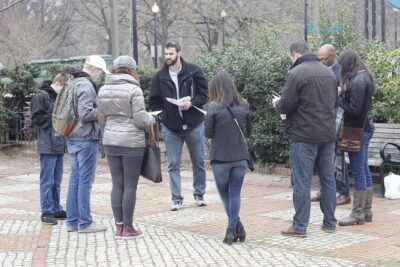 ★ 5.0Georgetown Foodie Culinary Tour & Neighborhood WalkFrom $79437 reviews
 ★ 4.5Gastronomic Georgetown Walking Food TourFrom $84373 reviews
 ★ 5.0Historic Georgetown: History, Gossip, & Architecture Walking TourFrom $49321 reviews
 ★ 4.5Tastes of Georgetown Food & History Small Group Walking TourFrom $129203 reviews
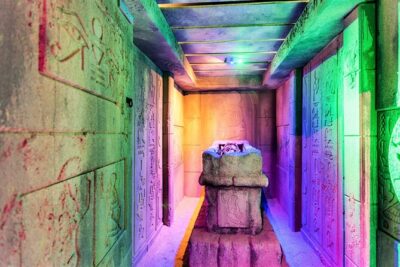 ★ 5.0The Escape Game DC: 60-Minute Adventure in GeorgetownFrom $38135 reviews
 ★ 4.7D.C.: Ghosts of Georgetown & The Exorcist Steps Haunted TourFrom $39129 reviews
 ★ 4.5Potomac Cruise and Georgetown Walking TourFrom $71106 reviews
The lists this tour appears in