
Review · DUPONT CIRCLE & EMBASSY ROW
Dupont Circle and Embassy Row Architectural Walking Tour
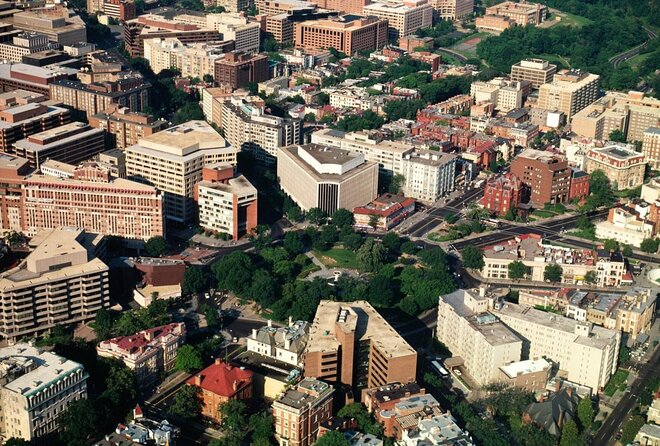
Dupont Circle is a perfect walking starter. This small-group, fully narrated architectural stroll connects historic mansions to today’s diplomatic world, with stops that feel equal parts DC neighborhood and world stage.
I love the architecture-to-people approach, where each building’s style links to the families who lived there. I also like ending at The Phillips Collection, the first modern art museum in the United States, so your tour naturally flips from stone-and-stucco stories to something creative.
One possible drawback: the pace is brisk. You’re outside for most stops, with brief photo moments, so if you prefer lingering at one spot for a long time, you’ll want to plan extra time afterward.
In This Review
- Key Things You’ll Notice on This Tour
- Why Dupont Circle and Embassy Row Works in Two Hours
- Dupont Circle: The Launchpad for DC’s Social Power
- Embassy Row Mansions: Spotting Styles Without a Lecture
- The Embassy Stories: When Millionaire Houses Become Diplomacy
- Sheridan Circle, Kalorama, and the Odd Turns You’ll Remember
- Woodrow Wilson House and the Spanish Steps: Two Very Different Kinds of Pause
- The Phillips Collection Finish: A Perfect End-Point, Not Just a Museum
- Price and Value: What $48 Buys You (and What It Doesn’t)
- Guides, Pace, and How to Get the Best Experience
- Who Should Book This Tour (and Who Might Skip It)
- Should You Book the Dupont Circle and Embassy Row Tour?
- FAQ
- How long is the Dupont Circle and Embassy Row architectural walking tour?
- Where does the tour start and end?
- What is the price per person?
- Is the tour offered in English?
- How big is the group?
- Are admissions included for the stops?
- Can I cancel for a refund?
- Are service animals allowed?
Key Things You’ll Notice on This Tour
- A tight route with big variety: Dupont Circle, Embassy Row, embassies, a few side neighborhoods, and an art-museum finish
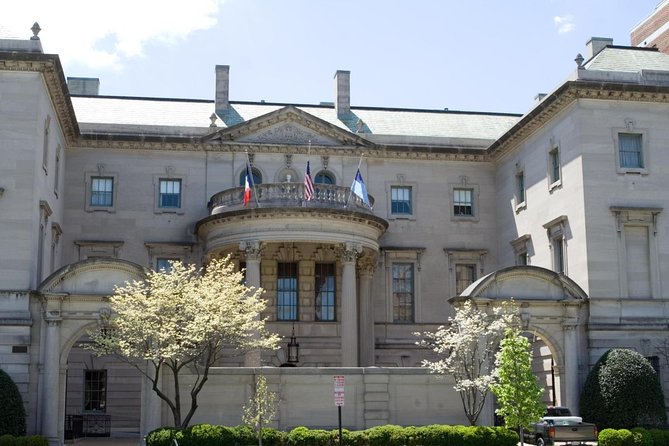
- Architecture styles as a guide: Neo-classical, Beaux-Arts, Queen Anne, and more, translated into plain English
- Real names, real characters: stories tied to famous Washington residents and international diplomacy
- Short, effective stops that keep the narrative moving without turning into a slog
- Fun guide energy, often highlighted in standout reviews like Sam and Mark
Embassies and mansions off the circle, more walks
- Residences of the Presidents Walking Tour: Dupont and Kalorama
★ 5.0 · 31 reviews - Embassy Row: Architecture, Mansions & International Intrigue
★ 4.5 · 27 reviews - Outdoor Escape Room in Washington, D.C. – Adams Morgan
★ 5.0 · 17 reviews - Off the Beaten Path: 16th Street and Adams Morgan Neighborhood Tour
★ 5.0 · 12 reviews
Why Dupont Circle and Embassy Row Works in Two Hours
Washington DC has a lot of “look, don’t touch” sightseeing. This tour is different because it turns what you see into a story you can follow while walking. You start at Dupont Circle and gradually shift into Embassy Row, where the architecture changes but the theme stays the same: power, money, aspiration, and politics—now repurposed for diplomacy.
The format matters. You get a local guide who keeps things moving for about two hours, and the group stays small (up to 20). That makes it easier to ask questions and catch those “wait, what am I looking at?” details—especially when the tour leans into architectural styles rather than just dates.
Dupont Circle: The Launchpad for DC’s Social Power
Most tours just pass Dupont Circle. Here, it’s treated like a beginning worth paying attention to.
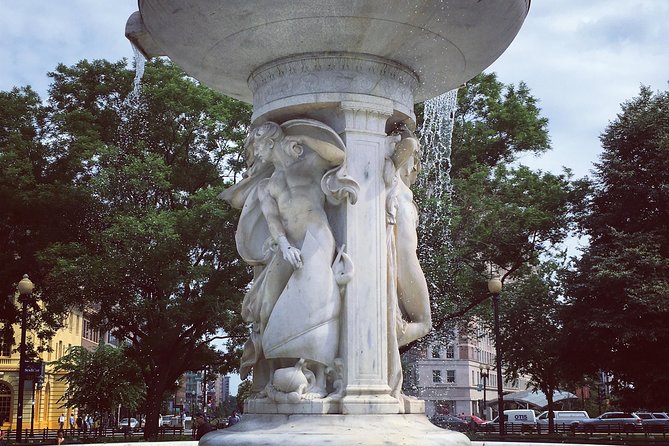
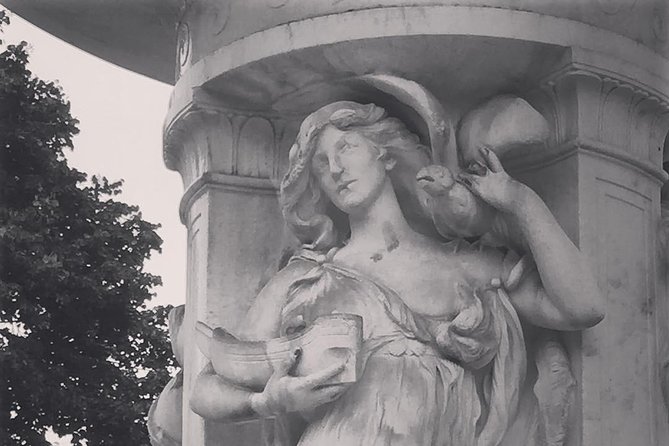
You’ll meet at the center of it all: Dupont Circle, with its photogenic fountain right in the middle. It’s one of those DC scenes that looks classic on a postcard and even better at street level, because the surrounding buildings frame the space the way they were meant to.
From there, the guide sets context fast. You’ll hear why the area became such a fashionable address and how it shaped the social map of Washington. That context is key. Without it, Embassy Row can look like a random parade of impressive doors. With it, you start spotting patterns: what people wanted to signal, how they wanted to be seen, and how the city’s role grew around them.
Practical tip: this is a great place to orient yourself—grab a quick photo, then let the walk carry you into the mansion era.
Embassy Row Mansions: Spotting Styles Without a Lecture
Embassy Row is famous for its diplomacy. But the charm here is that you’ll understand the housing history behind it.
As you walk along Embassy Row, you’ll see properties that span major architectural styles—Neo-classical, Beaux-Arts, Queen Anne, and others. The guide’s job is to translate those labels into what you can actually see: window shapes, façade details, proportions, and the overall “message” each style sends.
This is also where the tour gets personality. You’ll hear stories tied to people who were social climbers, power brokers, and even infamous characters in the Washington orbit. Names like Alice Roosevelt Longworth and Evalyn Walsh McLean come up, along with the famous Hope Diamond connection tied into the wider embassy stories later.
What I like for your planning: the Embassy Row portion is long enough (about an hour) to feel like you’re actually moving through a neighborhood, not sprinting between landmarks. It gives you time to look up, notice details, and still hear the human backstory.
The Embassy Stories: When Millionaire Houses Become Diplomacy
The tour doesn’t stop at “here’s an embassy building.” It asks the better question: how did these spaces change roles over time?
One highlight is the stop by the Embassy of Indonesia, where you’ll hear a story tied to opulence and the Hope Diamond’s legacy. That link might sound surprising at first, but it works because the guide is constantly returning to the theme: Washington’s elite built these impressive homes, then later many were repurposed—embassies, clubs, and other institutions.
You’ll also make time for Anderson House, described as the headquarters for the Nation’s oldest patriotic organization. Even if you don’t know what’s inside, the exterior presence is commanding. It’s a reminder that these aren’t just pretty façades—they’ve been civic and organizational spaces for a long time.
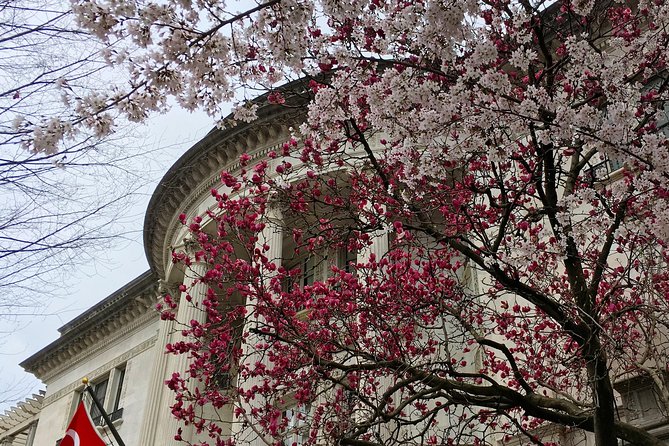
Then you’ll reach the Residence of the Turkish Ambassador. The tour highlights how music legend Ahmet Ertegun got his start. That’s the kind of detail that turns an architectural walk into an “I didn’t expect that” DC experience.
If you’re hoping to go inside places: the tour is mainly set up for exterior viewing and narration. Still, the guide energy can make even a curbside story feel vivid, and the timing at each stop is short by design.
DC at walking pace, more routes




Sheridan Circle, Kalorama, and the Odd Turns You’ll Remember

This route doesn’t keep you trapped on the main avenue. You get a few clever side stops that break up the mansion stretch.
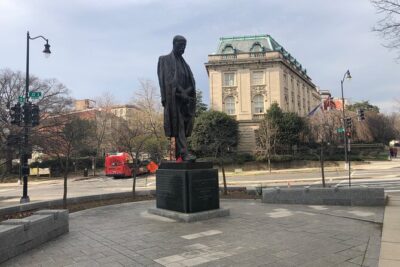
Sheridan Circle is one of them. You’ll see the Civil War monument and hear the bizarre backstory tied to its creator—designed by the sculptor of Mount Rushmore. That’s one of those DC moments where you start realizing the city is full of “how did that end up here?” surprises.
Next comes Kalorama, a quieter residential neighborhood off Embassy Row. The name itself gets explained (beautiful view in Greek), and the mood shift is noticeable as the buildings and streets feel less ceremonial and more lived-in. You’ll hear how influential characters landed here, and why the area was attractive for people with status.
And along the way, keep your eyes peeled for the smaller references the guide threads in—like the Spanish Steps and a local curiosity sometimes referred to as the Hobbitt House, connected to painter Edward Lind Morse. These aren’t big ticket monuments, but they’re the details you’ll likely talk about later because they’re so distinctly DC.
Woodrow Wilson House and the Spanish Steps: Two Very Different Kinds of Pause
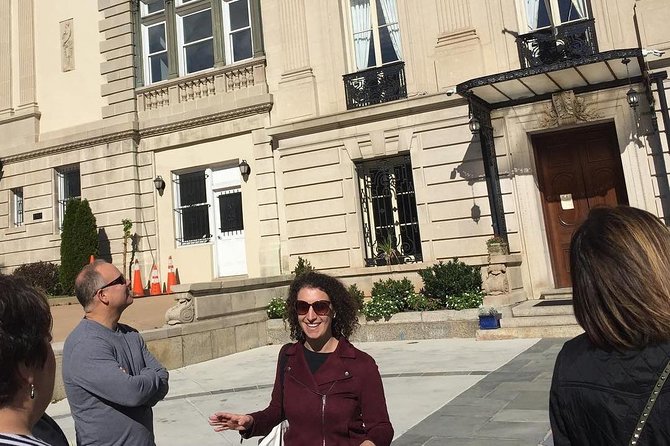
After the Embassy Row energy and the residential calm, the tour takes you past the former home of President Woodrow Wilson. It’s described as his home after the presidency. The stop is brief, and admission is noted as not included—so don’t count on full access here as part of the tour. Treat it as a moving-history moment from the sidewalk.
Then you hit one of the most charming “wait, what?” spots: Washington’s own Spanish Steps. It’s a modest version of the famous European landmark, but it matters because it creates a quiet oasis feel in the middle of the city. Even if you’ve seen the European original, the DC version lands differently because it’s tucked into a more compact street environment. The guide usually points out what to look for so you don’t miss the effect.
If you’re taking photos: the Spanish Steps area is one of the spots where you might want to slow down and frame your shot. The tour keeps moving, but you’ll have a short window to get it.
The Phillips Collection Finish: A Perfect End-Point, Not Just a Museum
The tour closes at The Phillips Collection at 1600 21st St NW. You’ll see the red brick exterior as part of the walk, and the museum is described as the first modern art museum in the United States.
This ending works well because it gives you an off-ramp from architecture appreciation into art appreciation. You finish on a cultural note, not a transit scramble. If you’ve got museum energy after the tour, you can stay and continue exploring. If you don’t, you’ve still got a satisfying capstone because modern art at a museum that early is a strong “last thought” for a DC day.
One practical point: the tour ends here, so build in time for your own next step. Nearby streets can be busy, and you’ll likely want a bit of breathing room after the walk.
Price and Value: What $48 Buys You (and What It Doesn’t)
At $48 per person for about two hours, you’re paying mostly for the guide’s time and the storytelling structure. Many of the stops are free in terms of admission, and several are outside or brief viewing points—so your money is going toward interpretation, not ticketed attractions.
That can be great value, especially in DC, where you can easily burn a whole day bouncing between paid sites. Here, the route stitches together multiple themes—architecture styles, social power, and diplomacy—so you get a “whole neighborhood” education for a single price.
The one caution on value is what’s not included: the Woodrow Wilson House stop notes admission not included. If you want to go beyond the sidewalk view there, you may need to plan that separately.
Guides, Pace, and How to Get the Best Experience
The best part of this tour isn’t the route on paper. It’s how the guide performs it.
In excellent reviews, guides like Sam and Mark are repeatedly praised for storytelling and keeping energy up while moving the group at a pace that still feels fun. Ellory and Natalie come up for making architecture details click, and Christine is mentioned for humor that lands without derailing the facts. Carolyn also gets credit for sharing both engaging stories and architectural details.
One practical takeaway: if you’re the kind of person who likes to ask questions, this tour format makes it easier because the group stays small. If you’re more quiet, you’ll still get guided attention to specific details, and a guide might even use supplemental pictures to help you visualize how people lived. That’s a small touch, but it helps a lot.
For your comfort: wear good walking shoes. This is a city neighborhood with stops and starts, and even if the route isn’t described as a marathon, it’s still a proper two-hour walk.
Who Should Book This Tour (and Who Might Skip It)
Book it if:
- You want DC history told through buildings, not just through plaques.
- You like short walking days with a clear start and end.
- You’re curious about Embassy Row but don’t want a “passport” style tour with no narrative.
You might skip or add something extra if:
- You want long interior access to embassies or specific buildings. This tour leans toward exterior viewing and narration.
- You want to park yourself at one spot for a long time, because the stops are intentionally brief to keep the story flowing.
Should You Book the Dupont Circle and Embassy Row Tour?
Yes—if you want a smart use of time in DC and you like your sightseeing guided by real stories tied to architecture. It’s a strong value at $48, it covers a lot of ground without feeling rushed-bad, and the ending at The Phillips Collection gives you a satisfying final chapter.
If you’re short on time and you want one walking experience that links neighborhood wealth, diplomatic repurposing, and architecture styles into a single narrative, this is a very practical choice. Add it to your plan early in your trip so you’ll start noticing details across the city afterward.
FAQ
How long is the Dupont Circle and Embassy Row architectural walking tour?
The tour runs for about 2 hours.
Where does the tour start and end?
It starts at Dupont Circle (Washington, DC 20036) and ends at The Phillips Collection, 1600 21st St NW, Washington, DC 20009.
What is the price per person?
The price is $48.00 per person.
Is the tour offered in English?
Yes, it’s offered in English.
How big is the group?
The tour has a maximum of 20 travelers.
Are admissions included for the stops?
Many stops are free, and admission for the Woodrow Wilson House is noted as not included. The Phillips Collection stop is listed as free.
Can I cancel for a refund?
Yes. You can cancel up to 24 hours in advance for a full refund.
Are service animals allowed?
Yes, service animals are allowed.
DC on Foot: More Walks






More Tour Reviews in Washington DC






Dupont Circle and Embassy Row






Just Added: Fresh Washington DC Reviews
- Washington : Private Custom Walking Tour With A Guide (Private)★ 3.5 · 3 reviews
- 3-Hour Small Group Memorial Tour in Washington, D.C.★ 4.0 · 3 reviews
- Washington DC Private Guided Bus Day Tour with Step Off Guide★ 5.0 · 3 reviews
- Washington, DC: The Good Liar: Brian Curry★ 5.0 · 3 reviews
- DC Monuments Walking Tour: Small Group, Big Ideas★ 5.0 · 3 reviews
- Washington DC: Library of Congress Private Tour with Tickets★ 5.0 · 3 reviews
Dupont Circle & Embassy Row, side by side.
 ★ 5.0Residences of the Presidents Walking Tour: Dupont and KaloramaFrom $2731 reviews
 ★ 4.5Embassy Row: Architecture, Mansions & International IntrigueFrom $4927 reviews
 ★ 5.0Outdoor Escape Room in Washington, D.C. – Adams MorganFrom $7517 reviews
 ★ 5.0Off the Beaten Path: 16th Street and Adams Morgan Neighborhood TourFrom $4812 reviews
 ★ 5.0Embassy Row Spy History Tour with a Former CIA OfficerFrom $758 reviews
 ★ 4.0Adams Morgan Food TourFrom $786 reviews
 ★ 4.5Dupont Circle Food TourFrom $846 reviews
 ★ 5.0Historic Embassy Row & Dupont Circle (2 Hr Walking Tour)From $395 reviews
The lists this tour appears in