
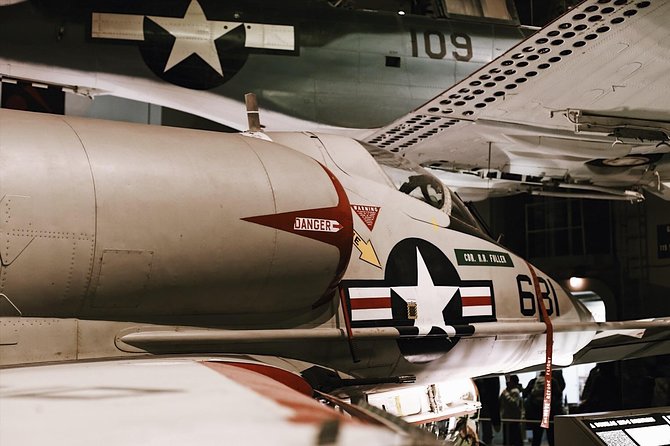
Review · SMITHSONIAN & MUSEUM TOURS
The Smithsonian National Air & Space Museum Exclusive Guided Tour
Moon landings and moon boots in one guided walk. This Smithsonian Air & Space tour is built to get you moving past crowds and straight to the most famous artifacts, with an expert guide translating flight and space history into plain human stories. One extra twist: the museum is mid-renovation, so what you see depends on what’s currently open.
What I like most is the chance to focus on original hardware you’d otherwise rush past, including Buzz Aldrin’s spacesuit, moon boots, and moon rocks—plus the Apollo 11 and other breakthrough pieces. I also love the format choice: pick a small group or private tour and you get more time for questions instead of playing museum maze alone.
The main consideration is the construction reality. Some exhibits described in marketing may not be on display at any given time, and the guide adjusts the route accordingly—so you’ll want to check the museum’s current list before you go.
In This Review
- Key Points You Should Know Before You Go
- Why Pay for a Tour When the Smithsonian Is Free?
- Renovations at Air & Space: How That Changes Your Expectations
- The 2.5-Hour Plan: How the Guided Walk Moves
- Getting Through Security and Packing Right
- Wright Flyer to the Early Flight Era: Where the Story Starts
- The Main Event: Apollo 11 Spacesuit, Moon Boots, and Moon Rocks
- From Mercury to Skylab to Hubble: The Technology Timeline That Clicks
- How the Guide Changes Everything (From Tim to Rebecca to Ryan)
- The Gift Shop Add-On: Freeze-Dried Ice Cream (Optional)
- Value and Fit: Who This Tour Works Best For
- Pair This With the Rest of Your DC Day
- Should You Book This Smithsonian Air & Space Guided Tour?
- FAQ
- Where does the tour start?
- How long is the guided tour?
- Is museum admission included in the tour price?
- What’s included with the tour?
- Is the tour in English?
- Can I pick a morning or afternoon start time?
- What do I need to bring for the ticket?
- Are large bags allowed inside the museum?
- What if exhibits are closed due to construction?
- Can I get a full refund if I cancel?
Key Points You Should Know Before You Go
- Guaranteed timed entry into one of DC’s top museums, so you’re not guessing at walk-up access
- Original space and flight artifacts in a tight 2.5-hour route, not a slow museum “wander”
- Small-group or private options for more personal attention (and less waiting around)
- Renovation-aware itinerary that changes based on what’s open right now
- Storytelling that works for kids and adults, with guides who keep the group engaged
- Astronaut-style add-on available at the gift shop: freeze-dried ice cream (optional, own expense)
More Smithsonian halls, out of the weather
- Guided African American History Tour with Reserved Museum Entry
★ 4.5 · 1,180 reviews - Washington DC: Museum of the Bible General Admission
★ 4.8 · 494 reviews - Smithsonian Museum of Natural History – Exclusive Guided Tour
★ 5.0 · 446 reviews - African American History Tour with Museum of African American History Ticket
★ 4.5 · 390 reviews
Why Pay for a Tour When the Smithsonian Is Free?
At face value, $89.67 per person sounds steep—until you remember how this works. The museum itself is free to enter, but this tour is what you pay for: a guided route, a guide who keeps things on track, and the benefit of guaranteed entry to a popular stop during busy times.
Think of it like this. If you show up unguided, you can spend 2.5 hours standing in lines, backtracking, and reading labels in slow motion. With a guide, you get the “why it matters” behind the displays, plus a plan for seeing the big names: Wright brothers’ aviation milestones, the Space Race, moon landings, and what being an astronaut looks like today.
Renovations at Air & Space: How That Changes Your Expectations
The Air & Space Museum is undergoing major construction for years, which means you should expect some exhibits to be inaccessible or temporarily off view. The tour is designed for that. Your guide uses what’s available during your visit and builds the highlights around the current gallery situation.
That’s actually a smart approach. This museum is huge, and even a perfectly planned self-guided day can miss key objects when rooms close or move. If you want to fine-tune your expectations, use the museum’s current “what’s on view” page before you lock in your day. The tour won’t promise everything you’ve seen online, but it will aim you at the best version of the collection that’s currently open.
The 2.5-Hour Plan: How the Guided Walk Moves
You meet at 600 Independence Ave SW, Washington, DC 20560, and the tour ends back at the meeting point. You’re in the museum for about 2 hours 30 minutes (approx.), and the pacing matters. The guide doesn’t just point; they keep you moving between major artifacts and the stories that connect them.
Because the route is tight, you’ll get the most from this tour if you treat it like a guided “greatest hits” session, not a deep research day. If you’re the type who loves to linger for 30 minutes per room, add time on your own after the tour to go back and slow down.
Also keep your expectations realistic about security. The museum has rules that affect how you enter: no large bags or suitcases. Plan on bringing only a handbag or a small, thin pack that’s easy to get through screening.
Getting Through Security and Packing Right
This tour is timed, so you’ll want to show up ready to go. Bring what you need, skip bulky stuff, and wear appropriate dress for entry where required.
A few practical points that make the day smoother:
- Bring a mobile phone number (including country code) since you’ll need it for the tour setup and mobile ticket
- Use public transit-friendly timing since the meeting point is near transit
- Expect a moderate amount of walking and standing for the full route
- Some areas inside the museum may have quiet or restricted rules—your guide will tell you before you enter
These small things matter because the museum environment can slow you down fast if you’re stuck behind security with a heavy bag.




Wright Flyer to the Early Flight Era: Where the Story Starts
A good flight story begins before rockets. This tour’s aviation opening covers the journey from early, human-powered ingenuity to powered flight and the test-and-learn culture that shaped everything after.
You can expect to encounter the Wright Flyer (original)—a huge moment because it represents the first successful heavier-than-air powered flight. Your guide connects that breakthrough to what came next: planes that expanded range, improved reliability, and pushed speed and design boundaries.
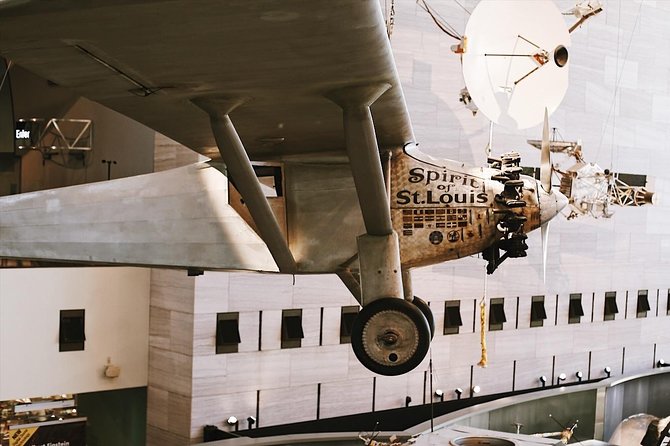
The early flight stop(s) also set up names that feel bigger than life when they’re right there in front of you, like Charles Lindbergh’s Spirit of St. Louis and the legacy of Amelia Earhart. Even if you’ve studied these figures before, the guided framing helps you understand the stakes: distance, navigation, risk, and the pressure of being first.
And then there’s speed testing. If the available exhibits line up for your date, you may see Chuck Yeager’s Bell X-1, which ties the museum’s “flight evolution” theme to real engineering breakthroughs and the Space Race mindset that followed.
The Main Event: Apollo 11 Spacesuit, Moon Boots, and Moon Rocks
This is where most people’s eyes go first—and it’s exactly why a guided tour helps. When you see objects tied to moon landings, it’s easy to turn it into a “wow” moment and stop there. A good guide adds the context: what the artifact represents, what it took to make it work, and how it changed the world.
On this tour, you’re positioned to see Neil Armstrong’s Apollo 11 spacesuit (original) and also Buzz Aldrin’s spacesuit. You may also encounter the Apollo 11 module, plus moon boots and moon rocks.
That combination hits hard. Spacesuits and boots are the technology you can almost touch with your imagination. Moon rocks are the science reward—proof, not just a dream. Having a guide explain the function of each object keeps the experience from turning into a photo-only stop.
Your guide also talks through the human side: what astronauts do and what training and mission life looks like today. If you’re curious how the museum turns personal, this is one of the places where it happens.
From Mercury to Skylab to Hubble: The Technology Timeline That Clicks
After you get the moon moments, the tour shifts into a clear timeline: mission by mission, step by step. The goal is simple—help you connect the dots between the Space Race headlines and the hardware that made each mission possible.
If available on your date, you may see:
- John Glenn’s Mercury capsule (original)
- Lunar Module (backup) as part of the moon landing story
- Hubble Telescope (test vehicle) plus references to Hubble space suits
- Skylab, America’s 1st space station (backup)
- Space Shuttle’s mid deck (model)
Even with renovations happening, this sequence is useful because it shows how space systems evolve. It’s not just “one mission.” It’s an engineering chain: capsules lead to docking and operations, which lead to space stations, which build the tools needed for later telescope work and beyond.
If you enjoy science through objects, you’ll probably find yourself making mental links. The guide’s job here is to keep those links accurate and explain why each “next step” mattered.
How the Guide Changes Everything (From Tim to Rebecca to Ryan)
The biggest pattern in the experience is the guide’s style. The museum has the artifacts. The guide gives them direction.
In the feedback, names like Rebecca, Tim, Ryan, Meghann/Meghan, Christopher, Paul, Leigh, and Brenda show up with a similar theme: energetic storytelling, smart pacing, and an ability to make questions feel welcome. Some guides also work especially well with kids and mixed ages, keeping the group moving without turning it into a lecture.
You can use that to your advantage when you plan. If you have any choice over the tour option or scheduling, lean toward the version that offers a small group or private tour when possible. The more personal the group, the easier it is for the guide to respond to your interests—aviation fans get their moments, space fans get their moments, and families get explanations that match their curiosity level.
And during a museum-wide chaos moment (construction schedules, crowd spikes, or even unexpected changes), a capable guide is what keeps the day feeling smooth.
The Gift Shop Add-On: Freeze-Dried Ice Cream (Optional)
Yes, you can buy freeze-dried ice cream in the gift shop. It’s not included in the tour price, so you’ll treat it as a fun extra, not part of your “must do” budget.
But it’s a nice finishing touch because it turns the astronaut life theme into something playful. If you’ve already spent 2.5 hours staring at suits, boots, and mission hardware, the snack fits the mood—especially for families.
Value and Fit: Who This Tour Works Best For
At $89.67 per person for about 2.5 hours, you’re paying for three things:
- A guaranteed entry plan when demand is high
- Time saved by not hunting the museum highlights blindly
- Context you won’t get from labels alone
You’ll likely get the best value if:
- You’re short on time in Washington, DC and want a high-impact museum day
- You care about space history but don’t want to spend hours deciding what’s worth your energy
- You’re traveling with kids or a mixed-interest group and want someone to keep attention
- You prefer asking questions in real time instead of reading quietly
You may like the private or small-group format even more if you’re the kind of person who wants to pause, ask, and get a straight answer without the group rushing you along.
Pair This With the Rest of Your DC Day
Once you finish, you’re back at the meeting point, which puts you in a practical spot for continuing your sightseeing. The tour is structured enough that you’ll still have energy for nearby Washington highlights afterward—especially if you treat the museum like the “anchor stop” and plan lighter walking after.
If you’re visiting during a renovation-heavy period, build in some buffer time. You might want to come back to any exhibit rooms that were accessible during your guided route and spend extra minutes there after the tour.
Should You Book This Smithsonian Air & Space Guided Tour?
If your goal is to see the museum’s biggest, most meaningful objects without wasting time, I’d say yes. The guided route plus guaranteed entry is the core value, and the guide’s storytelling is what turns artifacts into understanding.
Book it if you:
- Want Apollo and moon landing highlights with clear context
- Prefer a structured plan instead of a self-guided guess-and-check day
- Are okay with the fact that construction can change what’s on display, and you’re fine with the tour adapting
Skip it or rethink it if you:
- Plan to spend most of your day at museums soaking up every label with no schedule
- Are traveling with large bags that you don’t want to carry through tight security rules
- Expect every single famous exhibit to be open at all times (this museum’s renovation makes that unrealistic)
FAQ
Where does the tour start?
The meeting point is 600 Independence Ave SW, Washington, DC 20560, USA.
How long is the guided tour?
The tour runs for about 2 hours 30 minutes (approx.).
Is museum admission included in the tour price?
The included tour is a guided museum tour, while admission is noted as free (tour price is for the guided experience).
What’s included with the tour?
You get a guided museum tour with a guide, a duration of 2.5 hours, and the tour is noted as wheelchair friendly in general (but not for the SAVE! BOOK SEMI-PRIVATE option). A “tour guide exclusively for you” detail depends on which option you choose.
Is the tour in English?
Yes, the tour is offered in English.
Can I pick a morning or afternoon start time?
Yes, you can choose between morning or afternoon start times.
What do I need to bring for the ticket?
You’ll need to provide a mobile phone number (including country code). You’ll also receive a mobile ticket.
Are large bags allowed inside the museum?
No. No large bags or suitcases are allowed. Only handbags or small thin bag packs go through security.
What if exhibits are closed due to construction?
The museum is under massive construction, and many exhibits may not be on display. The tour adjusts based on what’s available during your visit, and you can check the museum’s updated list on their website.
Can I get a full refund if I cancel?
Yes—this experience has free cancellation. You can cancel up to 24 hours before the start time for a full refund.
More Tour Reviews in Washington DC






More Smithsonian Halls





Just Added: Fresh Washington DC Reviews
- Washington : Private Custom Walking Tour With A Guide (Private)★ 3.5 · 3 reviews
- 3-Hour Small Group Memorial Tour in Washington, D.C.★ 4.0 · 3 reviews
- Washington DC Private Guided Bus Day Tour with Step Off Guide★ 5.0 · 3 reviews
- Washington, DC: The Good Liar: Brian Curry★ 5.0 · 3 reviews
- DC Monuments Walking Tour: Small Group, Big Ideas★ 5.0 · 3 reviews
- Washington DC: Library of Congress Private Tour with Tickets★ 5.0 · 3 reviews
Smithsonian & Museum Tours, side by side.
 ★ 4.5Guided African American History Tour with Reserved Museum EntryFrom $891,180 reviews
 ★ 4.8Museum of the Bible General AdmissionFrom $34494 reviews
 ★ 5.0Smithsonian Museum of Natural History – Exclusive Guided TourFrom $89446 reviews
 ★ 4.5African American History Tour with Museum of African American History TicketFrom $90390 reviews
 ★ 4.5National Mall Tour with 10 Stops & U.S. Capitol or Museum EntryFrom $59331 reviews
 ★ 4.9African American History Tour & Museum EntryFrom $89312 reviews
 ★ 5.0Smithsonian Museums Walking Tour with Reserved Air & Space EntryFrom $79297 reviews
 ★ 4.5Capitol Combo: U.S. Capitol + Library Congress or Capitol MuseumFrom $79294 reviews
The lists this tour appears in