

Review · GEORGETOWN TOURS
The History of Black Georgetown
Georgetown’s story hides in plain buildings. This Black Georgetown walking tour uses real neighborhood stops to connect you to stories tied to the port, the university, and the people who shaped community life afterward. You’ll walk past landmark architecture and then hear what’s underneath the brickwork—history that usually gets skipped on a standard sightseeing loop.
I especially love the way it spotlights the slave trade at the port, then connects that to later institutions and everyday community anchors you can still visit today. I also love the human pace of the tour: small-group attention, and Katie brings careful pacing and extra details without turning it into a lecture.
One consideration: this is a mostly outdoors, on-your-feet experience (about 2 to 2.5 hours), and it runs best with good weather. If walking for that long is hard for you, plan ahead.
In This Review
- Key highlights you’ll care about
- Black Georgetown: why this tour feels different from typical DC walks
- Starting at 3206 O St NW: Healy Hall and Patrick Healy’s legacy
- Pomander Walk: the story behind Bell’s Court and Georgetown alley life
- Thomas Sweet: a halfway break that makes the tour easier to enjoy
- Row houses at 3146 O St NW: holding pens and the people behind the work
- Emma Brown, Mount Zion, and the work of community-building
- Ending at the cemeteries: Mount Zion and Female Union Band Society
- Price, pacing, and small-group value in real life
- What to expect from the guide’s style
- Logistics: walking shoes, weather, and getting there
- Should you book the History of Black Georgetown tour?
- FAQ
- How long is the History of Black Georgetown tour?
- How much does the tour cost?
- Where does the tour start and end?
- What language is the tour offered in, and do I get a ticket on my phone?
- What stops are included on the route?
- Is there a break for refreshments or a restroom stop?
- How big is the group?
- What if the weather is bad, or I need to cancel?
Key highlights you’ll care about
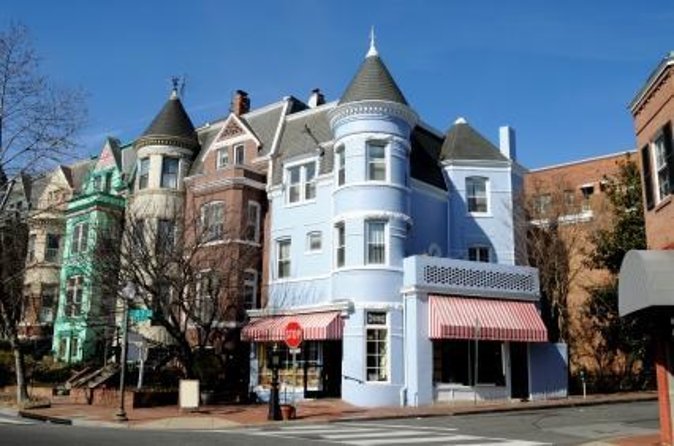
- Slave trade at the port context tied directly to neighborhood locations you can see
- Healy Hall and Patrick Healy: gothic architecture linked to Georgetown’s only Black President
- Bell’s Court / Pomander Walk story: alleyway communities and close-knit life in DC
- Thomas Sweet as a practical mid-tour break for refreshment and a bathroom stop
- Holding pens row houses: a stop that puts the “past” into physical space
- Ending at Mount Zion and Female Union Band Society Cemeteries for a meaningful final note
Black Washington told properly, more heritage walks
- Guided African American History Tour with Reserved Museum Entry
★ 4.5 · 1,180 reviews - African American History Tour with Museum of African American History Ticket
★ 4.5 · 390 reviews - Washington, DC: African American History Tour & Museum Entry
★ 4.9 · 312 reviews - Washington DC: Walking Tour and African American Museum
★ 4.6 · 157 reviews
Black Georgetown: why this tour feels different from typical DC walks
Georgetown gets framed as an elegant place of presidents, politics, and old-money charm. This tour shifts the focus to the people whose labor and lives shaped Georgetown—and whose community built institutions that still exist. The effect is simple but powerful: you start noticing different kinds of landmarks. Not just big names. Real addresses, churches, parks, and burial grounds.
You’ll also get something you can’t “photo” as easily: context. The guide ties what you’re seeing to broader patterns, including the slave trade connected to the port, and then shows what came after—education, worship, organizing, and remembrance. It’s the kind of history that helps the city make sense, not just history that fills time.
Starting at 3206 O St NW: Healy Hall and Patrick Healy’s legacy
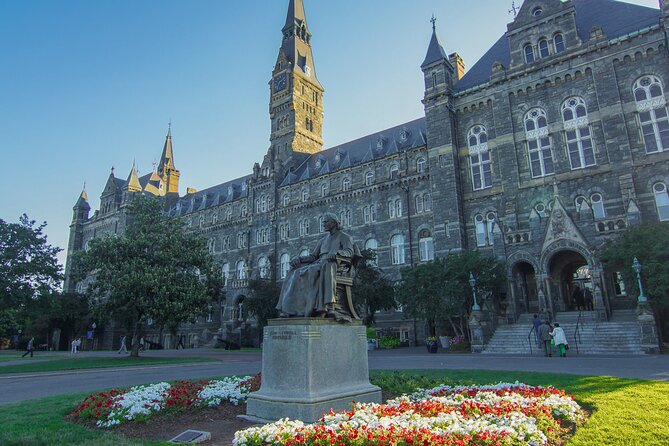
Your walk begins at 3206 O St NW, at Healy Hall, with its gothic-style look that feels like it belongs to old-world university campuses. What makes this stop more than pretty architecture is the reason it exists in this spot: it was built at the direction of, and named for, Patrick Healy, Georgetown University’s only Black President.
This is a good first stop because it sets the tour’s rhythm. You’re not starting with abstract history. You’re starting with a named person and a building that still stands. You get a clear message right away: the Black story in Georgetown isn’t limited to one era or one category of site.
Practical tip: Healy Hall is a quick stop (about 10 minutes), so don’t expect deep immersion here. Use it to get your bearings and learn how the guide will “read” each next location.
Pomander Walk: the story behind Bell’s Court and Georgetown alley life

Next up is Pomander Walk, which used to be known as Bell’s Court. This is where the tour leans into the kind of DC history that’s easy to walk past without noticing. The space is tied to Alexander Graham Bell, but the more important story is how places like this reflected the alleyway communities that existed in DC—tight, close-knit life shaped by segregation and limited options.
What I like about this stop is that it expands your view of Georgetown beyond the big-street postcard. You learn to think about how people actually lived, where they gathered, and how community formed even when access was restricted.
There’s also a nice pacing beat here (around 10 minutes). You get a story, then you move on before your attention gets tired.
Thomas Sweet: a halfway break that makes the tour easier to enjoy
After the first stretch of walking and stories, the tour gives you a built-in reset at Thomas Sweet, about halfway through. This stop is there for refreshment and a bathroom break, with roughly 15 minutes set aside.
This matters more than you might think. A history tour can feel heavy if you don’t have a chance to get water, use the restroom, and reset your energy. If you’re going straight from a busy day in DC, this pause keeps the rest of the walk from feeling rushed or uncomfortable.
Bring a small layer too. Even when the weather is fine at the start, Georgetown streets can cool down while you’re walking.
Cobblestones and canal, more of Georgetown
Row houses at 3146 O St NW: holding pens and the people behind the work
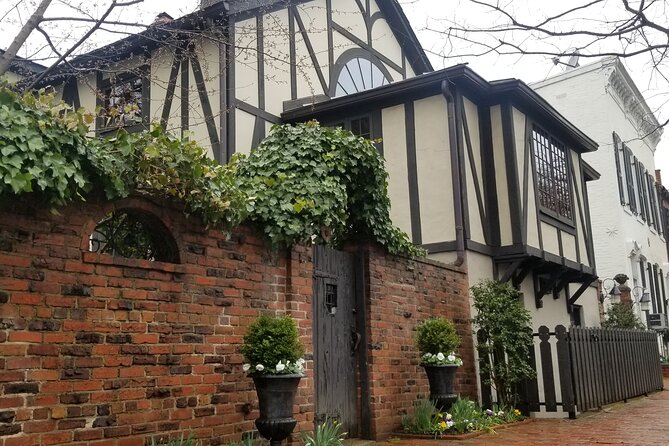
One of the most sobering stops comes next at 3146 O St NW. The row houses there were used as holding pens for enslaved people. The tour connects the physical location to what these spaces meant, and it also includes a story about what happened later: the pens were torn down by an Irish entrepreneur who had spent their own childhood as an indentured servant in the West Indies.
You’ll feel the weight of this stop because it is specific. It doesn’t stay at the level of general history. It asks you to look at a building and understand that it played a role in real suffering.
A fair heads-up: this is the sort of location where you’ll want to listen closely, but you might also find it emotionally intense. If you prefer lighter storytelling, consider whether this topic is something you want on your itinerary that day. For most people, it’s precisely why the tour is worth it.
The stop is brief (around 10 minutes), which helps keep the moment from dragging, but it still leaves room for the guide to explain what you’re looking at.
Emma Brown, Mount Zion, and the work of community-building
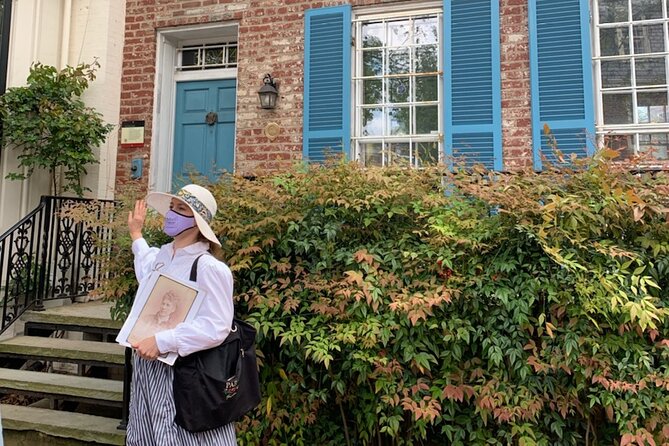
As you continue, the tour shifts toward people and institutions—teachers, worship, and community organizing. One notable stop is the house of Emma Brown, described as one of the first Black teachers in DC to reach the level of Principal. That detail matters because it points to leadership, not only survival.
Then you move to Mount Zion United Methodist Church, one of the oldest Black congregations in Georgetown. This stop is about continuity: the same kind of community backbone that helped people endure also helped people organize, teach, worship, and stay connected across generations.
After that comes Rose Park, identified as a site of political rallies and community gatherings for the Black community in Georgetown. It’s a reminder that history isn’t only buildings and dates. It’s also people showing up, speaking out, and building shared power in public spaces.
These stops are each short (about 10 minutes each where listed), so you get a series of snapshots rather than one long, slow scene. That can be a plus: you finish the tour with a clearer map of what existed where and why.
Ending at the cemeteries: Mount Zion and Female Union Band Society
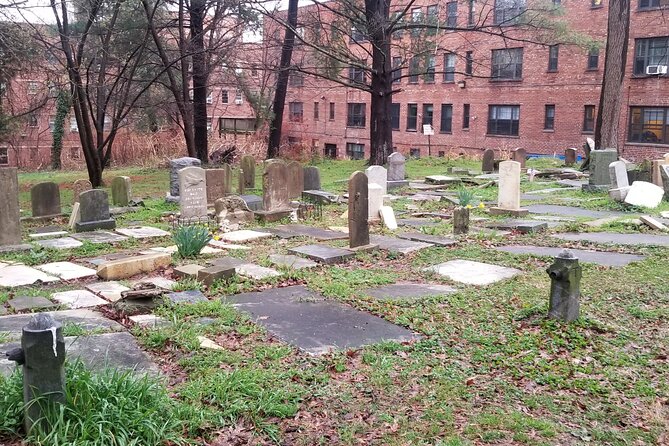
The walk culminates at the Mount Zion and Female Union Band Society Cemeteries, ending around 2501 Mill Rd NW. This is described as the oldest cemetery in Georgetown, and it contains the remains of enslaved and free Black citizens.
This ending changes how you feel about the earlier stops. You start thinking about the full timeline: people were taken, held, and forced into systems. Then, generations later, the community built schools and churches, gathered in parks for organizing, and created lasting places of remembrance. Ending at a cemetery gives the tour a grounded conclusion you don’t get from a typical “points of interest” walk.
If you visit DC often, this is exactly the kind of route that makes the city feel new. Even locals tend to learn something they didn’t know they were missing.
Price, pacing, and small-group value in real life
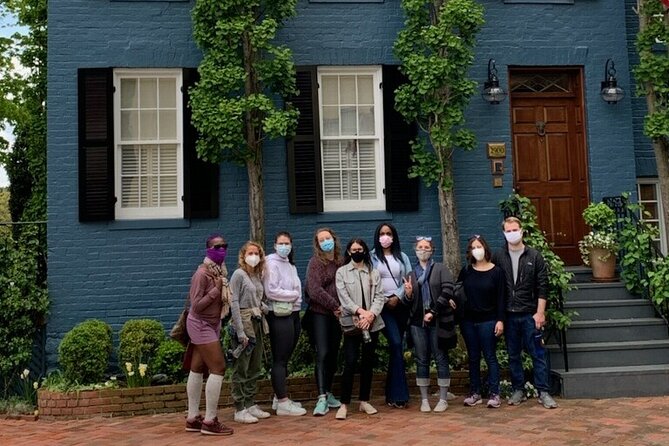
At $30 per person for roughly 2 to 2.5 hours, this tour is a good value if you like walking with a guide who’s doing real interpretation—not just rattling facts. The key is the combination of time + focus. You’re paying for a guided experience that covers over two hours of historic information, not for entry tickets.
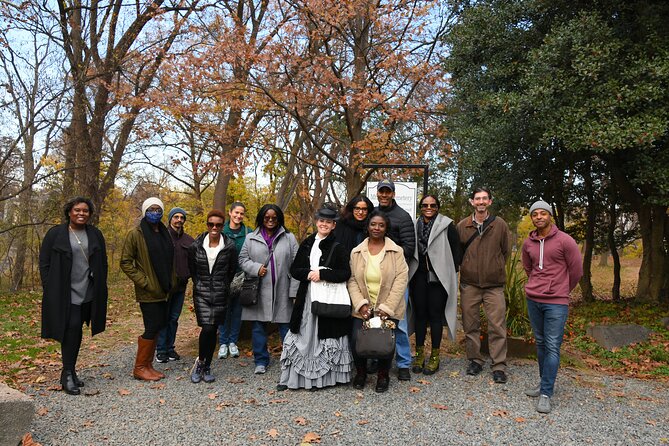
The tour also uses a mobile ticket, it’s offered in English, and it runs with a maximum of 20 travelers. That size usually helps the guide keep the conversation moving and the stories clear, especially when the subject matter gets heavy.
One more practical clue: this tour tends to get booked ahead (on average around 47 days). If your dates are fixed, don’t wait until the last minute. Georgetown walking space is popular, and small-group history tours can fill up.
What to expect from the guide’s style
The guide, Katie, is highlighted for being personable and well-prepared, with good pacing and extra details that add color without losing the thread. You’ll feel the difference between a guide who only knows the topic and a guide who can guide your attention—what you notice, what you connect, and what you remember later.
That’s why the tour works even when you’re not a hardcore history person. It gives you a story thread you can actually hold onto while you walk.
Logistics: walking shoes, weather, and getting there
This is a walking tour with a moderate fitness level requirement. If you can comfortably do an urban walk for a couple hours, you should be fine. Still, wear shoes you trust. Georgetown sidewalks and curbs can be a bit uneven, and you don’t want foot pain to steal your attention.
The tour is near public transportation, so getting there usually isn’t the problem. What matters more is the weather. The experience requires good weather, and if it gets canceled due to poor conditions, you’ll be offered a different date or a full refund.
Service animals are allowed, and the tour requires good weather, so plan to dress for what you’ll actually feel outdoors, not just what the forecast says at first glance.
Should you book the History of Black Georgetown tour?
I think you should book this if you want Georgetown to feel real, not polished-over. It’s not trying to be dramatic for drama’s sake. It’s focused on specific places—Healy Hall, Pomander Walk, holding-pen row houses, community anchors like Mount Zion, Rose Park, and the cemeteries that close the story.
You might skip it if you’re looking for a lighter, purely scenic stroll. This walk includes slavery-era subject matter connected to the port and holding pens, and it ends in a cemetery, so it’s meant to be thoughtful.
If you’re balancing a first DC trip with lots of famous stops, this tour is a smart counterweight. It helps you see Georgetown as a community with a long, complicated story—and it gives you names, addresses, and context you’ll carry long after you leave the neighborhood.
FAQ
How long is the History of Black Georgetown tour?
It runs about 2 hours to 2 hours 30 minutes.
How much does the tour cost?
The price is $30.00 per person.
Where does the tour start and end?
The tour starts at 3206 O St NW, Washington, DC 20007, USA. It ends at Mount Zion and Female Union Band Society Cemeteries, 2501 Mill Rd NW, Washington, DC 20007, USA.
What language is the tour offered in, and do I get a ticket on my phone?
The tour is offered in English, and it includes a mobile ticket.
What stops are included on the route?
The tour includes stops such as Healy Hall (3206 O St NW), Pomander Walk (Pomander Walk NW), Thomas Sweet for a refreshment and bathroom break, row houses at 3146 O St NW, the house of Emma Brown, Mount Zion United Methodist Church, Rose Park, and the Mount Zion and Female Union Band Society Cemeteries.
Is there a break for refreshments or a restroom stop?
Yes. There’s a half-way stop at Thomas Sweet for refreshment and a bathroom break.
How big is the group?
The tour has a maximum of 20 travelers.
What if the weather is bad, or I need to cancel?
The experience requires good weather. If it’s canceled due to poor weather, you’ll be offered a different date or a full refund. You can cancel up to 24 hours in advance for a full refund.
More Tour Reviews in Washington DC






More of Georgetown




Black Washington, Told Properly





Just Added: Fresh Washington DC Reviews
- Washington : Private Custom Walking Tour With A Guide (Private)★ 3.5 · 3 reviews
- 3-Hour Small Group Memorial Tour in Washington, D.C.★ 4.0 · 3 reviews
- Washington DC Private Guided Bus Day Tour with Step Off Guide★ 5.0 · 3 reviews
- Washington, DC: The Good Liar: Brian Curry★ 5.0 · 3 reviews
- DC Monuments Walking Tour: Small Group, Big Ideas★ 5.0 · 3 reviews
- Washington DC: Library of Congress Private Tour with Tickets★ 5.0 · 3 reviews
Georgetown Tours, side by side.
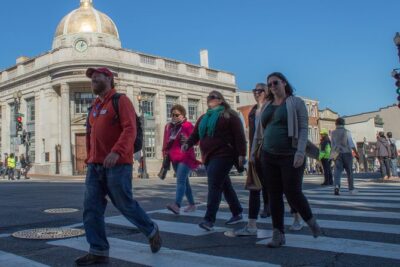 ★ 5.0Ghosts of Georgetown & The Exorcist Steps Walking TourFrom $39610 reviews
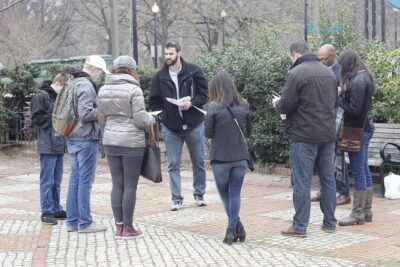 ★ 5.0Georgetown Foodie Culinary Tour & Neighborhood WalkFrom $79437 reviews
 ★ 4.5Gastronomic Georgetown Walking Food TourFrom $84373 reviews
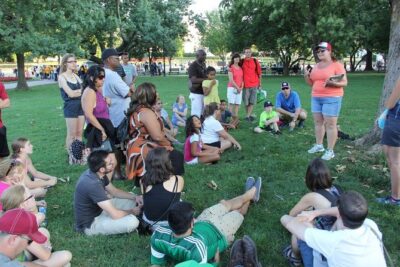 ★ 5.0Historic Georgetown: History, Gossip, & Architecture Walking TourFrom $49321 reviews
 ★ 4.5Tastes of Georgetown Food & History Small Group Walking TourFrom $129203 reviews
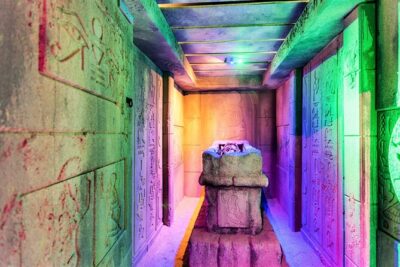 ★ 5.0The Escape Game DC: 60-Minute Adventure in GeorgetownFrom $38135 reviews
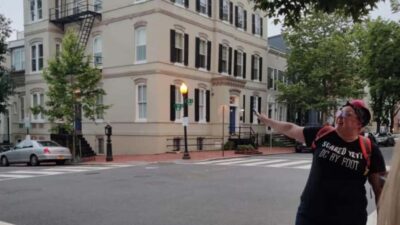 ★ 4.7D.C.: Ghosts of Georgetown & The Exorcist Steps Haunted TourFrom $39129 reviews
 ★ 4.5Potomac Cruise and Georgetown Walking TourFrom $71106 reviews
The lists this tour appears in