
Review · BLACK WASHINGTON HERITAGE TOURS
Harlem Renaissance in DC Walking Tour
Few neighborhoods tell stories this fast.
This Harlem Renaissance in DC Walking Tour connects the dots between Harlem’s sound and Washington’s Black arts scene, with a guide who brings the era to life. I especially like the way you move through real performance places instead of staring at plaques, and how the walk flows from theaters and jazz rooms to a street-stall classic break. One thing to consider: it’s a moderate walk with a good pace, so come ready to keep moving for about two hours.
Along the way, I like that the experience keeps history grounded in specific people and venues. You’re not just learning big names; you’re seeing where the music, opera, poetry, and activism played out on these actual blocks. If you’re hoping for long sitting breaks or slow strolling, this may feel a bit brisk—plan to bring questions and use the time.
In This Review
- Key Things I’d Tell a Friend Before You Go
- Entering the Story: Harlem Renaissance Meets Washington, DC
- The Start at Howard Theatre: Where African American Performance Had a Stage
- Right Proper Brewing Company and the Pool Hall Origins of Jazz
- 1910 Vermont Ave NW and Lilian Evanti’s Opera Legacy
- Bohemian Caverns and Lincoln Theatre: The U Street Black Broadway Era
- Bohemian Caverns
- Lincoln Theatre
- Ben’s Chili Bowl Break: A Classic Stop Without a Rush
- 1901 14th St NW: Where Billie Holiday Was a Favorite
- 1461 S St NW and the Saturday Nighter’s Club: Poetry and Social Justice
- Ending at Georgia Douglas Johnson’s House: The Halfway House Finish
- What You’ll Learn (and What the Tour Does Well)
- Walking, Timing, and Comfort: How to Set Yourself Up
- Who This Tour Fits Best
- Value Check: Is $30 Worth It?
- Should You Book This Harlem Renaissance in DC Walking Tour?
- FAQ
- How long is the Harlem Renaissance in DC Walking Tour?
- What does the $30 ticket include?
- Do I need to buy food during the Ben’s Chili Bowl stop?
- Where does the tour start?
- Where does the tour end?
- What language is the tour offered in?
- Is the tour only for certain fitness levels?
- How big is the group?
- FAQ
- What’s the general weather requirement?
- Is there free cancellation?
Key Things I’d Tell a Friend Before You Go
- Stop-to-stop stories across jazz, theater, opera, and poetry so the Harlem Renaissance shows up in more than one form
- Historic venues with documented roles in African American performance culture, including the Howard Theatre and U Street theaters
- Ben’s Chili Bowl is built in as a refreshment break (food and drink are on you)
- Small group size, up to 20 people, which helps you actually hear the guide
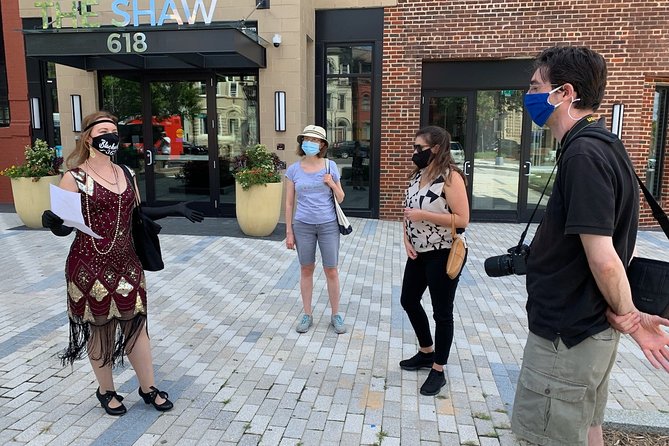
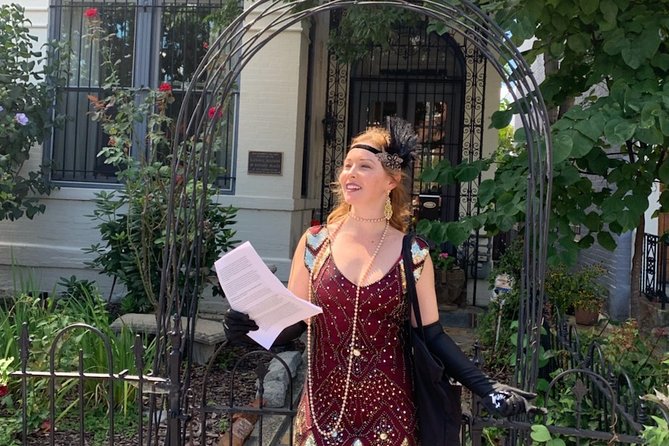
- Guide energy matters here, and Katie’s period costume and music help the timeline stick
- Good weather is required, so check the forecast and wear shoes you trust
Black Washington told properly, more heritage walks
- Guided African American History Tour with Reserved Museum Entry
★ 4.5 · 1,180 reviews - African American History Tour with Museum of African American History Ticket
★ 4.5 · 390 reviews - Washington, DC: African American History Tour & Museum Entry
★ 4.9 · 312 reviews - Washington DC: Walking Tour and African American Museum
★ 4.6 · 157 reviews
Entering the Story: Harlem Renaissance Meets Washington, DC
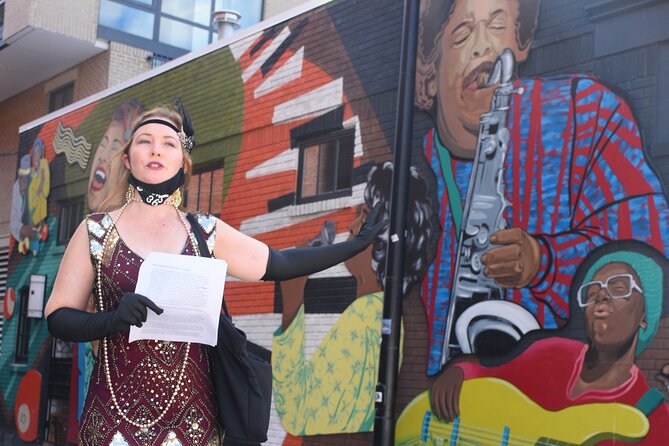
This tour works because it treats DC like more than a stopover. You start with Harlem’s influence, then you watch how that energy turns into stages, clubs, and gatherings around the city. The result is a walking history lesson with momentum.
You’ll spend about two hours on foot, moving between a cluster of performance-linked sites. Since the tour is in English and capped at 20 travelers, it feels more like guided storytelling than a crowded bus lecture.
The price is $30 per person, which is fair when you consider you’re getting guided time across multiple historic landmarks. Plus, several stops are listed with free admission tickets, so you’re not paying extra just to stand in front of the location and learn.
The Start at Howard Theatre: Where African American Performance Had a Stage
Your morning (or afternoon) begins at the Howard Theatre, 620 T St NW. This place matters because it was the first DC theater to offer a stage for African American performers, established in 1910. That one detail reframes what you’re about to see: you’re not just touring entertainment sites, you’re looking at doors that opened.
At this stop, you can expect context about how DC’s Black arts scene developed momentum early, and how venues like this created opportunities. It’s the kind of first stop that sets tone fast—by the time you leave, you’re already thinking about performance as community power.
Practical note: this start is also near public transportation, so it’s relatively easy to reach before you start walking.
Right Proper Brewing Company and the Pool Hall Origins of Jazz
Next you’ll head to the area tied to the former Frank Holliday’s Pool Hall, now the site of Right Proper Brewing Company. The hook here is the connection to Duke Ellington, who started dabbling in ragtime and jazz piano there.
What I like about this stop is that it shows jazz didn’t spring from nowhere. It grew through everyday places where people gathered, practiced, traded ideas, and tested new sounds. You’re essentially learning how a scene forms—then you’re watching how later venues build on that foundation.
Drawback to consider: if you love super hands-on experiences (like museums or indoor exhibits), this tour is about standing outside and connecting the story to the location. The learning is the main event.
1910 Vermont Ave NW and Lilian Evanti’s Opera Legacy
Stop three takes you to 1910 Vermont Ave NW, the former home of African American opera singer Lilian Evanti. The big storyline here is that she earned acclaim abroad, then returned to Washington, DC to make her mark on Black contributions to classical music.
This is a smart stop for anyone who thinks the Harlem Renaissance story is only about jazz clubs. Here, you get a reminder that the same cultural drive showed up in opera and performance arts too. It also helps your brain stretch the timeline: Harlem’s influence isn’t just a sound—it’s a reach across disciplines.
Because this is a residential location, you should keep expectations realistic: you’ll be learning from the sidewalk and the setting, not touring a museum room.
DC at walking pace, more routes

Bohemian Caverns and Lincoln Theatre: The U Street Black Broadway Era
Then the tour moves into what people often call Black Broadway—especially around U Street. Two stops in the same theme make this easy to follow.
Bohemian Caverns
You’ll visit Bohemian Caverns, described as a must visit during U Street’s era as DC’s Black Broadway. This is where the tour becomes very “street-level.” The venue’s importance isn’t just that it hosted shows; it’s that it functioned as a cultural magnet for a community that was building its own mainstream.
Lincoln Theatre
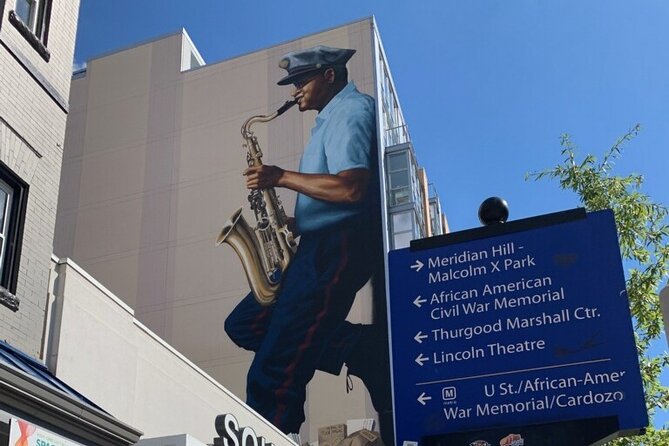
From there, you’ll move to the Lincoln Theatre, a major show house during the Black Broadway era. The guide connects the Lincoln Theatre’s stage power to the broader story of DC’s Black performers—how these theaters supported big productions and kept performance culture visible.
What I’d tell you to do here: ask your guide how these venues affected audiences and artists. The tour is great when you use the time to connect the dots in your own way.
Ben’s Chili Bowl Break: A Classic Stop Without a Rush
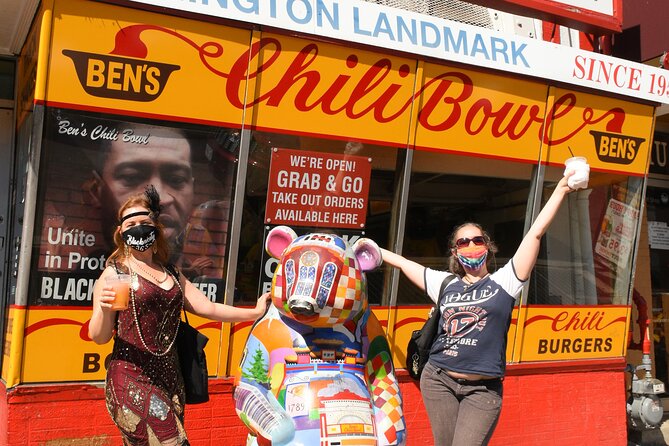
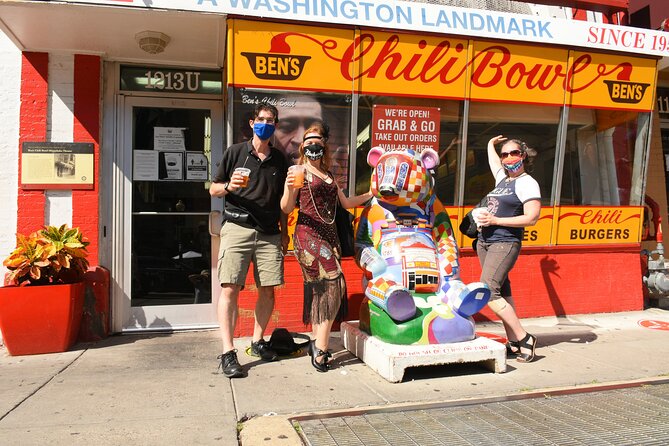
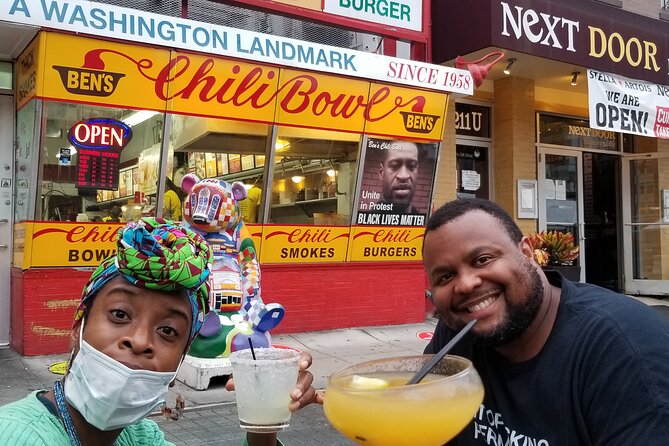
Midway through, you get a 25-minute break at Ben’s Chili Bowl. The tour includes the stop, but food and drink are not included, so you’ll buy what you want.
This place gets included for a reason: it’s an iconic eatery for three generations, and it’s been a destination for Presidents and tourists alike. Even if you don’t order the same things every time, it gives you a real pause that feels part of DC life—not just a pit stop.
Timing matters. With a set break window, you’ll want to decide quickly once you arrive. If you’re traveling with a group, move in sync so you don’t lose time and fall behind the tour.
1901 14th St NW: Where Billie Holiday Was a Favorite
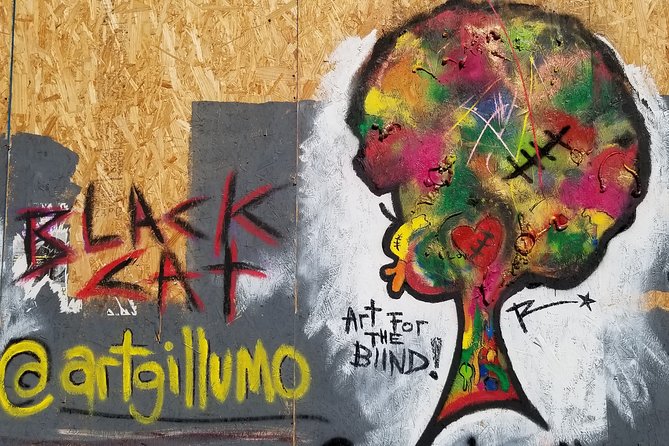
After the food break, you’ll head to 1901 14th St NW, the former site of Club Bali, described as a favorite performance spot of Billie Holiday.
This is one of those stops that can hit you even if you’re not a jazz historian. Holiday’s name anchors the era, and the fact that you’re standing on the site of a club ties the legend to the city’s day-to-day stages. It helps the whole tour feel less like a list of famous people and more like a chain of rooms that carried the sound forward.
Because this is a site-based stop, the details you get from your guide are what make it worthwhile. This is where small moments—like how the guide explains what the club scene was doing at the time—help you see the bigger pattern.
1461 S St NW and the Saturday Nighter’s Club: Poetry and Social Justice
The tour’s final stretch brings you to 1461 S St NW, a home where the Saturday Nighter’s Club would meet to discuss poetry, social justice, and Black culture.
This is a key shift. Up to this point, the story has leaned heavily toward performance venues and musicians. Here, you see that performance culture also fed conversation and organizing. Poetry and social justice aren’t side notes—they’re part of the same cultural ecosystem.
You’ll likely walk away with a better sense of how art and activism were tangled together in real meetings, not just in big speeches.
Ending at Georgia Douglas Johnson’s House: The Halfway House Finish
The tour ends at Georgia Douglas Johnson’s House, also known as the Halfway House. Finishing at a location tied to a writer and thinker makes sense for this theme, because it reinforces that the Harlem Renaissance influence was cultural and intellectual, not just musical.
If you’re planning dinner nearby, you’ll already know where you’ll land: you end in the U Street area region and can keep exploring at your own pace.
What You’ll Learn (and What the Tour Does Well)
The best part is how the tour makes the Harlem Renaissance feel practical. You come in thinking Harlem equals jazz. You leave understanding that Harlem’s influence spread through theaters, classical music, club culture, poetry circles, and community spaces.
Two things the guide role really adds to the experience:
- The guide Katie brings serious passion and clear storytelling. People call out that her communication is strong from start to finish.
- Katie’s period costume and music help the tour feel like a time shift rather than a calendar of dates.
When the group stays small, the guide can keep momentum and still answer questions. One review notes the tour wasn’t “lite in numbers,” but it was certainly “not lite in information”—and that matches the vibe here. You get a lot without it turning into a rushed script.
Walking, Timing, and Comfort: How to Set Yourself Up
You’re looking at about 2 hours of walking. The pacing is described as moderate but “at a very good pace,” which is exactly what you want for a tour like this. It prevents the story from dragging, but it also means you should wear shoes you’d trust for city sidewalks.
A few practical tips:
- Bring a phone with you, since you’ll use a mobile ticket.
- Keep water in mind. The tour does not provide food or drink, except for time to stop at Ben’s.
- If you want to get the most out of the tour, ask questions early. The stories build, and you don’t want to save your best question for the last five minutes.
Who This Tour Fits Best
This is a strong fit if you:
- love jazz history tied to real streets and venues
- want the Harlem-to-DC connection instead of separate stories
- enjoy walking tours where you can ask questions and get answers fast
It’s also a good choice for couples and small groups who like an easy, culture-focused morning or afternoon. Since the maximum group size is 20, it tends to feel personal enough to stay engaged.
If you’re traveling with very young kids or someone who can’t handle a steady walk, you might want to compare against other DC experiences with fewer outdoor stops. The tour does say a moderate physical fitness level is recommended.
Value Check: Is $30 Worth It?
At $30 per person, the value depends on what you like. If your idea of a good tour is a guided walk that connects famous names to physical locations, you’ll get your money’s worth quickly.
Here’s why:
- You spend 2 hours learning with a guide
- You hit multiple historic venues tied to major artists and social clubs
- The stops are mostly set up so there’s no extra admission needed at each location (food isn’t included, but the learning is)
The one “cost” to plan for is the Ben’s break. You’ll pay there on your own, but that’s also a fun part of the day because you can choose what fits your appetite and budget.
Should You Book This Harlem Renaissance in DC Walking Tour?
I’d book it if you want a tour that feels like DC itself is the classroom. The route connects the Harlem Renaissance to DC through theaters, jazz venues, an opera icon, and a poetry and justice club. That mix is the point.
It’s also a smart pick if you like tours where the guide takes the material seriously and still keeps it fun. Katie’s period touches and music help the timeline feel human, not textbook.
Skip it only if you strongly prefer indoor attractions, slow pacing, or long sit-down breaks. This one is built for walking, listening, and asking questions as you go. Also keep an eye on the forecast—this experience requires good weather.
FAQ
How long is the Harlem Renaissance in DC Walking Tour?
It’s approximately 2 hours.
What does the $30 ticket include?
You get 2 hours of guided DC history with a knowledgeable guide. Ben’s Chili Bowl is included as a stop, but refreshments there are not included.
Do I need to buy food during the Ben’s Chili Bowl stop?
Yes. The tour includes the stop for a break, but food and drink must be purchased on your own.
Where does the tour start?
The tour starts at the Howard Theatre, 620 T St NW, Washington, DC 20001.
Where does the tour end?
The tour ends at Georgia Douglas Johnson’s House, also known as the Halfway House, at 1461 S St NW, Washington, DC 20009.
What language is the tour offered in?
The tour is offered in English.
Is the tour only for certain fitness levels?
It calls for a moderate physical fitness level, since it involves walking.
How big is the group?
The tour has a maximum of 20 travelers.
FAQ
What’s the general weather requirement?
This experience requires good weather. If it’s canceled due to poor weather, you’ll be offered a different date or a full refund.
Is there free cancellation?
Yes. You can cancel for a full refund up to 24 hours in advance of the experience start time.
DC on Foot: More Walks





More Tour Reviews in Washington DC






Black Washington, Told Properly



Just Added: Fresh Washington DC Reviews
- Washington : Private Custom Walking Tour With A Guide (Private)★ 3.5 · 3 reviews
- 3-Hour Small Group Memorial Tour in Washington, D.C.★ 4.0 · 3 reviews
- Washington DC Private Guided Bus Day Tour with Step Off Guide★ 5.0 · 3 reviews
- Washington, DC: The Good Liar: Brian Curry★ 5.0 · 3 reviews
- DC Monuments Walking Tour: Small Group, Big Ideas★ 5.0 · 3 reviews
- Washington DC: Library of Congress Private Tour with Tickets★ 5.0 · 3 reviews
Black Washington Heritage Tours, side by side.
 ★ 4.5Guided African American History Tour with Reserved Museum EntryFrom $891,180 reviews
 ★ 4.5African American History Tour with Museum of African American History TicketFrom $90390 reviews
 ★ 4.9African American History Tour & Museum EntryFrom $89312 reviews
 ★ 4.6Walking Tour and African American MuseumFrom $80157 reviews
 ★ 4.7African American History Museum Private TourFrom $35054 reviews
 ★ 4.5Washington DC History of Slavery Walking TourFrom $4034 reviews
 ★ 4.5DC Landmarks Walking Tour + African American Museum AdmissionFrom $8034 reviews
 ★ 4.0Private Guided Tour of African American History MuseumFrom $35031 reviews
The lists this tour appears in