
Review · SMITHSONIAN & MUSEUM TOURS
Smithsonian Natural History + Air & Space Museum Tour 8ppl Max
Two Smithsonian giants in half a day. This semi-private tour links the Smithsonian National Museum of Natural History and the National Air and Space Museum, with a guide helping you move through big, popular spaces without wasting your day.
I love the 8-person max setup. It keeps the tour interactive instead of turning it into a lecture you can’t pause. I also love the way the route hits true headline objects, from Henry the elephant and the Hope Diamond to aviation icons like the Wright Flyer.
One heads-up: both museums are huge, so the pace can feel tight if you’re the type who could spend hours in just one gallery. Plan around security too—no large bags or suitcases inside the museums.
In This Review
- Key highlights you’ll feel (not just see)
- Why This Smithsonian Pair Tour Works in One Big Day
- Meeting Point, Timing, and How to Plan Your Morning
- Stop 1: Smithsonian Natural History Museum (Henry, Fossil Hall, Hope Diamond)
- Stop 2: National Air and Space Museum (Wright Flyer to Armstrong and Spock)
- What the Semi-Private Format Changes (8 Max Makes It Personal)
- Price and Value: What $166.15 Buys You in DC
- Practical Tips That Make the Whole Day Easier
- Who This Tour Suits Best (and When Another Plan Fits Better)
- Should You Book This Smithsonian Natural History + Air & Space Tour?
- FAQ
- How long is the tour?
- What group size should I expect?
- Where does the tour start and end?
- Is museum admission free?
- What’s included in the price?
- Do you provide hotel pickup or drop-off?
- Are there bag restrictions for the museums?
- What if I need to cancel, or a museum visit gets delayed?
Key highlights you’ll feel (not just see)

- Skip-the-line semi-private touring with a maximum of 8 people, so you’re not lost in a crowd
- Two focused blocks: about 2 hours 30 minutes in Natural History and 2 hours in Air & Space
- Fossils + space artifacts in one day, including Fossil Hall’s big-name dinosaurs and Air & Space’s aviation milestones
- A guide who adjusts the route, helping you get the most out of limited time
- Real-world memorabilia you’ll want to spot, like the Wright Flyer area and the Neal Armstrong suit and capsule
- Built-in crowd management, useful because both museums attract school groups and lineups
More Smithsonian halls, out of the weather
- Guided African American History Tour with Reserved Museum Entry
★ 4.5 · 1,180 reviews - Washington DC: Museum of the Bible General Admission
★ 4.8 · 494 reviews - Smithsonian Museum of Natural History – Exclusive Guided Tour
★ 5.0 · 446 reviews - African American History Tour with Museum of African American History Ticket
★ 4.5 · 390 reviews
Why This Smithsonian Pair Tour Works in One Big Day
If you’ve got one day in Washington, DC and you still want two of the most famous Smithsonian museums, this format makes practical sense. Natural History is a magnet for everyone—from toddlers to geology nerds—and Air & Space is the same story, just with planes and rockets instead of bones.
What I like most is the pairing. You get natural evolution and Earth science on one side of the day, then you shift into aviation and spaceflight on the other. That contrast keeps the “big museum fatigue” down, because your brain gets a topic reset halfway through.
Also, the small group size matters more than it sounds. In a group this size, you can ask a question without raising your hand like it’s class. You can also stop when something catches your eye, instead of watching it from the back of the pack.
Meeting Point, Timing, and How to Plan Your Morning
The tour starts at 10:00 am at 1010 Madison Dr NW, Washington, DC 20004. It ends at Smithsonian’s National Air and Space Museum, 650 Jefferson Dr SW, Washington, DC 20004, so you’re crossing the National Mall area mid-day.
The total time is about 5 hours 30 minutes. That includes your museum time plus a break to recharge before you head to Air & Space, so you’re not doing straight-through museum marathoning.
Your checklist is simple. Wear shoes you can walk in for a few hours, keep a moderate physical fitness level in mind, and plan for security. The museums limit bags—no large bags or suitcases, only handbags or small thin bag packs—so don’t rely on a big tote “just in case.”
One more logistical thing that can trip people up: you’re asked to provide a mobile phone number (with country code). It’s tied to how you’ll coordinate your tour, so enter it correctly when you book.
Stop 1: Smithsonian Natural History Museum (Henry, Fossil Hall, Hope Diamond)
Your day begins at the Smithsonian National Museum of Natural History, and it’s a strong opener. The museum is known for being a true all-ages mashup: stones, bones, insects, and animals, all under one roof.
You’ll start with the “wow” factor. Henry the elephant—listed as the largest taxidermied elephant in the world—is the kind of sight you remember after the trip. It sets the tone fast: this isn’t a museum where you have to be “into it” before you enjoy it.
Then the tour steers you toward the headline artifacts and the places that give context instead of random wandering. The Hope Diamond gets special attention as the most famous single artifact in the Smithsonian collection. It’s surrounded by folklore, and your guide’s framing helps you see why it’s so captivating, even if you’re not a gem person.
The other big draw is Fossil Hall, especially the renovated space with big dinosaur silhouettes and major specimens such as a Mastodon, T-Rex, and Diplodocus. If you’ve ever seen dinosaur bones on a poster and wondered what “scale” really means, this is where it clicks. Walking past those animals in real size is one of those rare museum moments that feels physical, not just educational.
Time-wise, you’ll have about 2 hours 30 minutes here. That’s enough for highlights and a guided path, but not enough to read every label in every wing. If you try to force it, you’ll lose what the tour is good at: focus, pacing, and smart crowd movement.
Stop 2: National Air and Space Museum (Wright Flyer to Armstrong and Spock)
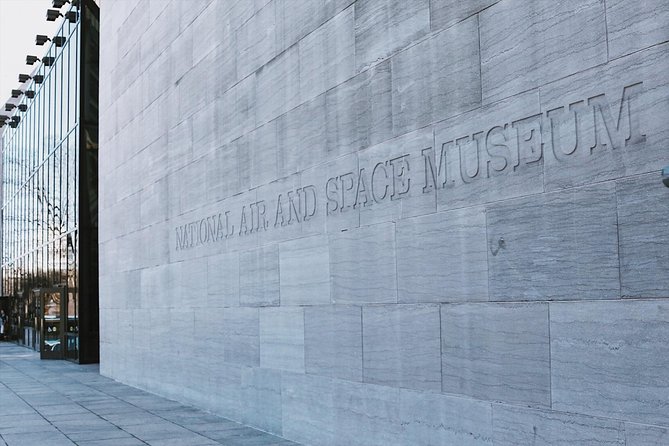
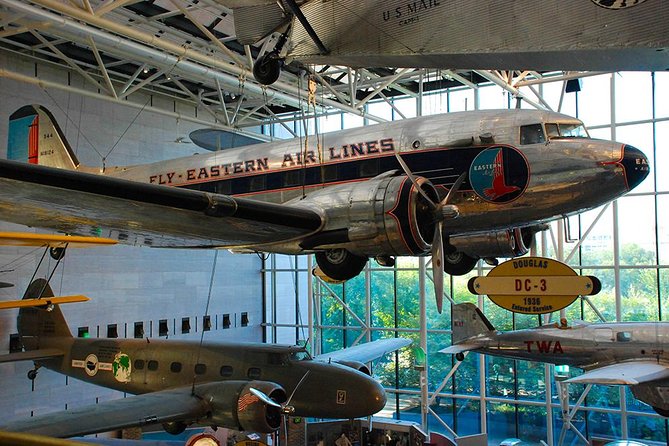
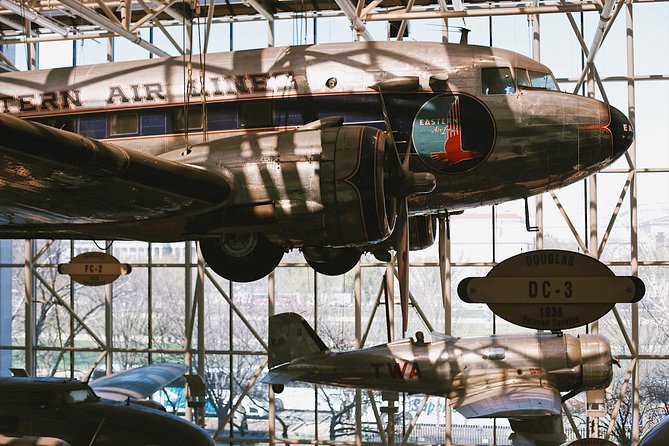
After a break, you cross the National Mall to the National Air and Space Museum. This museum is also drawing fans nonstop, but the guide’s job here is to keep you from spending your limited time staring at maps.
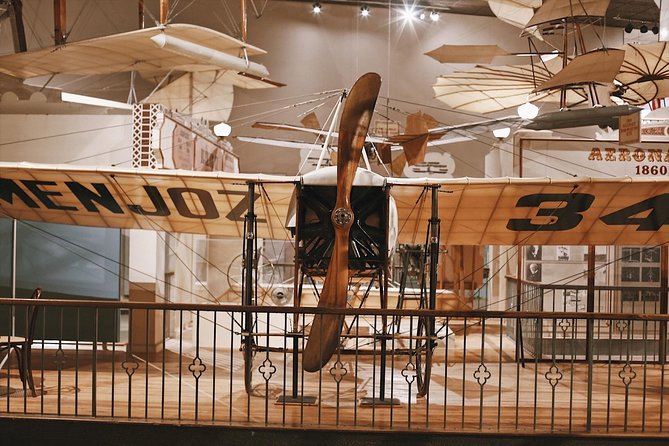
Even during renovation, there’s still plenty to see. You start with aviation beginnings, including the Wright brothers and the original Wright Flyer (1903) in its own gallery. The story is more than names and dates—it’s about the audacity of early flight, and how technology turned into real-world risk.
Next comes the progression into more demanding achievements. You’ll look at the first military flyer (1909), also tied to the Wright brothers, which helps you connect early flight experiments to practical use. Then you move through the era of records and commercial aviation, where the theme is trust—trust in machines, trust in skill, and trust that the next attempt won’t end badly.
Then the tour shifts into space. You’ll see spaceflight artifacts that represent the push to operate in an environment that’s the opposite of Earth-friendly. Your guide connects the “how” and “why” of space missions so the exhibits feel like a story, not a static display case.
From the on-the-ground experience shared by earlier participants, a couple of attractions are worth planning for. The Neal Armstrong suit and the capsule he returned in are standout items, and yes, there’s also room for pop-culture wonder—Mr. Spock and his ears have become a fun stop people remember.
You’ll have about 2 hours in Air & Space. That sounds like a lot until you’re inside. It’s enough to hit the main galleries and key artifacts, but if you’re the kind of person who wants to soak up every tech detail, you’ll want more time on your own after the tour.
Deeper into the capital past

What the Semi-Private Format Changes (8 Max Makes It Personal)
This tour’s semi-private structure is the whole point of paying for guidance in a place where admission is free. With a maximum of 8 people, the guide can actually steer your group in real time—slowing down when someone asks a question, adjusting the flow when the crowd thickens, and deciding what to emphasize based on what the group cares about.
I also like how different guides handle the same museums. Names that have led groups include Ryan, Brenda, Rebecca, Tim, Amanda, and Christopher. The common thread is pacing and storytelling: people described guides answering a flood of questions patiently, including kids, and balancing narration with time to wander.
If you’re traveling with family, this matters a lot. A museum day can turn into a tug-of-war between what adults want and what kids can handle. A good guide helps both sides. That doesn’t mean you’ll see everything—it means you’ll see the right “big hits” without dragging anyone through a 10-mile circuit.
A practical detail: even with skip-the-line access, some rooms can still have lines due to crowding and security. And some areas have quieter or restricted rules about speaking. Your guide should brief you before those sections, so you’re not caught off guard.
Price and Value: What $166.15 Buys You in DC
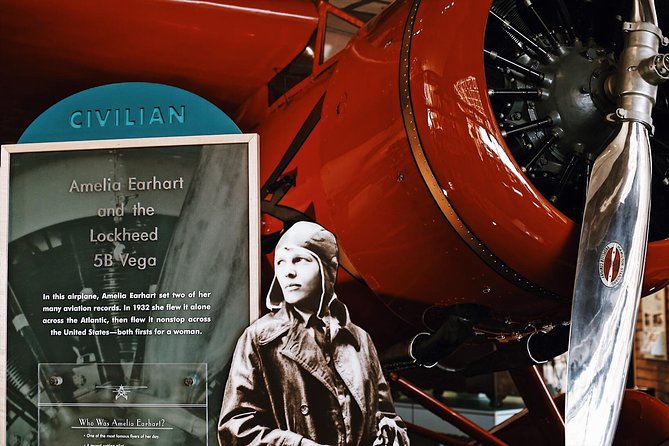
At $166.15 per person, this is not a bargain ticket. But it’s also not paying for admission. Smithsonian museum entry is free in general, and this price is mostly for your guide, the small-group structure, and the skip-the-line semi-private touring advantage.
So the value question is simple: do you have the time to self-navigate two giant museums in one day without missing the highlights? If you’re only in DC for a short stop, you’re likely paying this price to prevent regret. You’re buying direction, crowd navigation, and a curated set of stops that fit into 5.5 hours.
Where it feels fair is in the details. For example, you’re not just getting a map and a “good luck.” You’re getting someone who can point you to what matters quickly: Henry and Fossil Hall’s featured specimens in Natural History, then the Wright Flyer and major spaceflight artifacts in Air & Space.
If you’re a slow museum walker or someone who loves deep reading in every corner, you might find the tour budget doesn’t stretch far. In that case, consider doing just one museum guided, or doing both at your own pace across two days instead of compressing everything.
Practical Tips That Make the Whole Day Easier
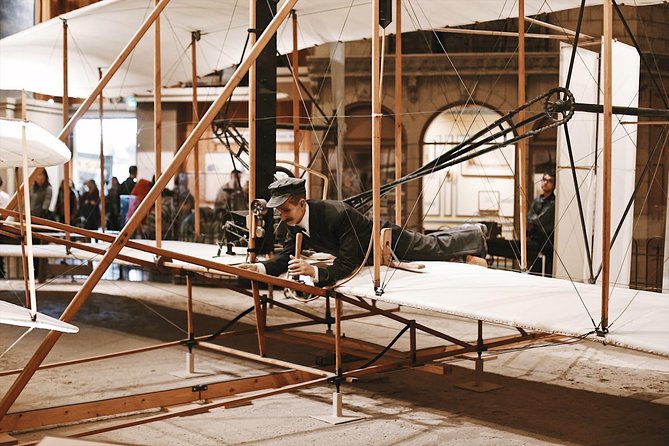
Keep your expectations aligned with the format. This is a highlights tour, not a “see every exhibit” plan. You’ll spend time in the right places, but you’ll also have gaps—normal for any duo-museum schedule.
Bring a phone and keep it charged. The tour asks for a mobile number when booking, and you’ll want your phone for any day-of coordination.
Travel light. The museums restrict big bags and suitcases, and security lines can still form even with skip-the-line access. If you arrive with a mountain of stuff, you’ll pay for it in time and stress.
Also watch the timing of your own interests. Your guide will likely help you fit favorites into the route, but if you show up obsessed with just one subtopic, you may have to accept compromise. The tour is built around seeing major anchors, like Fossil Hall and the Wright story arc, plus key space artifacts.
Finally, remember that exhibits can change over the year. Collections and some displays may vary, so treat the experience as a guided plan for big themes rather than a promise that every exact item will match your online photos.
Who This Tour Suits Best (and When Another Plan Fits Better)
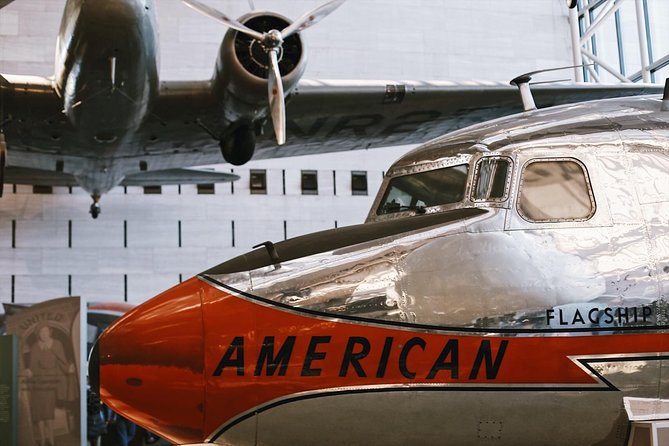
This tour is especially good for people who want a one-day Smithsonian hit without turning their day into a maze. It also suits anyone who likes their learning with a story—how flight went from fragile experiments to milestones, or how fossils explain life’s deep timeline.
Families often do well here because the small-group size makes it easier to keep kids engaged. The tour format supports question time and interaction, which helps when younger visitors have endless curiosity.
Couples and solo visitors also tend to like it because the guide fills in context you’d miss if you just zipped through on your own. When the day is short, having someone point out what to notice saves energy.
You might choose a different plan if you’re the type who needs hours of quiet reading time and zero structure. Two museums in one day will always cut something. Still, if your goal is “see the big things and understand them,” this tour delivers.
Should You Book This Smithsonian Natural History + Air & Space Tour?
If you’re trying to do both museums in one day, this is one of the cleanest ways to make that work. The small-group limit, the skip-the-line touring, and the guided focus on major artifacts add up to real value—especially because admission to these museums is free, so you’re paying for the guidance and pacing.
Book it when your schedule is tight, your goal is highlights, and you want a guide to connect the dots between fossils, aviation, and spaceflight. Skip it when you want slow, gallery-by-gallery wandering or you’d rather spend more time in just one museum at a calmer rhythm.
FAQ
How long is the tour?
The tour runs for about 5 hours 30 minutes (approx.).
What group size should I expect?
This tour is limited to a maximum of 8 travelers, and it’s described as semi-private.
Where does the tour start and end?
It starts at 1010 Madison Dr NW, Washington, DC 20004, and ends at Smithsonian’s National Air and Space Museum, 650 Jefferson Dr SW, Washington, DC 20004.
Is museum admission free?
The tour notes list admission tickets for both museums as free.
What’s included in the price?
The tour includes a skip-the-line semi-private museum tour, a professional tour guide, and a duration of about 5.5 hours.
Do you provide hotel pickup or drop-off?
No. Hotel pickup or drop-off is not included.
Are there bag restrictions for the museums?
Yes. No large bags or suitcases are allowed inside the museums. Only handbags or small thin bag packs are allowed through security.
What if I need to cancel, or a museum visit gets delayed?
You can cancel up to 24 hours in advance for a full refund. The tour also notes that museums can close occasionally; if museum opening is delayed by more than 1 hour from the tour start time, an alternative may be provided, but refunds or discounts may not be offered.
If you want, tell me your travel dates and whether you’re going with kids (and their ages). I can suggest how to prioritize Natural History versus Air & Space so the short time feels worth every minute.
The Capital Past, Up Close





More Tour Reviews in Washington DC






More Smithsonian Halls


Just Added: Fresh Washington DC Reviews
- Washington : Private Custom Walking Tour With A Guide (Private)★ 3.5 · 3 reviews
- 3-Hour Small Group Memorial Tour in Washington, D.C.★ 4.0 · 3 reviews
- Washington DC Private Guided Bus Day Tour with Step Off Guide★ 5.0 · 3 reviews
- Washington, DC: The Good Liar: Brian Curry★ 5.0 · 3 reviews
- DC Monuments Walking Tour: Small Group, Big Ideas★ 5.0 · 3 reviews
- Washington DC: Library of Congress Private Tour with Tickets★ 5.0 · 3 reviews
Smithsonian & Museum Tours, side by side.
 ★ 4.5Guided African American History Tour with Reserved Museum EntryFrom $891,180 reviews
 ★ 4.8Museum of the Bible General AdmissionFrom $34494 reviews
 ★ 5.0Smithsonian Museum of Natural History – Exclusive Guided TourFrom $89446 reviews
 ★ 4.5African American History Tour with Museum of African American History TicketFrom $90390 reviews
 ★ 4.5National Mall Tour with 10 Stops & U.S. Capitol or Museum EntryFrom $59331 reviews
 ★ 4.9African American History Tour & Museum EntryFrom $89312 reviews
 ★ 5.0Smithsonian Museums Walking Tour with Reserved Air & Space EntryFrom $79297 reviews
 ★ 4.5Capitol Combo: U.S. Capitol + Library Congress or Capitol MuseumFrom $79294 reviews
The lists this tour appears in