
Review · SMITHSONIAN & MUSEUM TOURS
Smithsonian Museum of American History Semi-Private 8ppl Max
Small-group American history, without the museum overwhelm. The Smithsonian Museum of American History gets overwhelming fast, so this semi-private tour (max 8 guests) helps you see the real headline artifacts and understand what they mean in just 2.5 hours. You’ll move through stories tied to the national anthem banner, George Washington’s sword, and even Hollywood’s influence via Dorothy’s ruby red slippers—all with a pro guiding your route and your questions.
I love that this tour focuses on objects you’d miss or misread on your own. The guide zeroes in on high-impact exhibits like the First Ladies gowns and the Greensboro lunch counter, connecting fashion and civil rights to the bigger sweep of American change. I also like the way the pace is managed: you spend less time wandering and more time learning the “why” behind what you’re looking at.
One consideration: this experience isn’t for wheelchair users or people with significant walking disabilities, and you’ll need a moderate fitness level to keep up inside the museum.
In This Review
- Key things you should know before you go
- Why This Semi-Private Tour Works in the American History Museum
- Meeting Up at the Smithsonian: Starting Without Stress
- Your 2.5-Hour Route Through the Museum’s Best Stops
- Iconic Objects You’ll Understand Better After the Tour
- Small-Group Pacing: What the Tour Feels Like
- Price and Value: Is $89.67 Worth It?
- Practical Tips: Phone Number, Bags, and Dress Rules
- What Happens If the Museum Closes or Delays
- Should You Book This Semi-Private American History Tour?
- FAQ
- How big is the group for this Smithsonian Museum of American History tour?
- How long is the tour?
- Where does the tour meet?
- Is museum admission included?
- Do I need a mobile phone number?
- Is the tour available for wheelchair users?
- What kind of bag can I bring into the museum?
- What should I know about speaking in some rooms?
- Can I get a refund if I cancel?
Key things you should know before you go

- Semi-private max 8: you stay in a small cluster instead of getting lost in a crowd.
- High-impact artifacts only: anthem banner, Washington sword, Dorothy’s slippers, First Ladies gowns, and the Greensboro lunch counter.
- Guides match your interests: you may have time to steer toward what excites you most.
- Efficient crowd navigation: guides help you stay together and move to the next stop without feeling rushed.
- Museum admission is free: you’re really paying for the guide time and focused route.
More Smithsonian halls, out of the weather
- Guided African American History Tour with Reserved Museum Entry
★ 4.5 · 1,180 reviews - Washington DC: Museum of the Bible General Admission
★ 4.8 · 494 reviews - Smithsonian Museum of Natural History – Exclusive Guided Tour
★ 5.0 · 446 reviews - African American History Tour with Museum of African American History Ticket
★ 4.5 · 390 reviews
Why This Semi-Private Tour Works in the American History Museum
The National Museum of American History is huge, and it’s packed with stuff that looks “important” but doesn’t always feel meaningful until someone explains the context. This tour solves that by filtering the museum through a guided storyline—from early colonists to the U.S. as a world power—using real artifacts as your anchor points. You’re not trying to master everything. You’re learning how to read the museum like a map.
The semi-private setup matters more than you’d think. When you’re in a group of eight, you can actually ask questions and get answers that feel tailored, not generic. In past tours, guides like Tony, Rebecca, Brenda, Richard, Maribeth, and Mary Beth have stood out for making the visit feel organized and welcoming, including for families with wide age ranges.
You also get something you cannot easily buy with a guidebook: story momentum. The tour is built around connections—politics to culture, fashion to civil rights, and national symbols to how Americans see themselves. That’s why the tour works even if you’re a first-timer. You’ll still leave with a framework for what you saw.
Meeting Up at the Smithsonian: Starting Without Stress
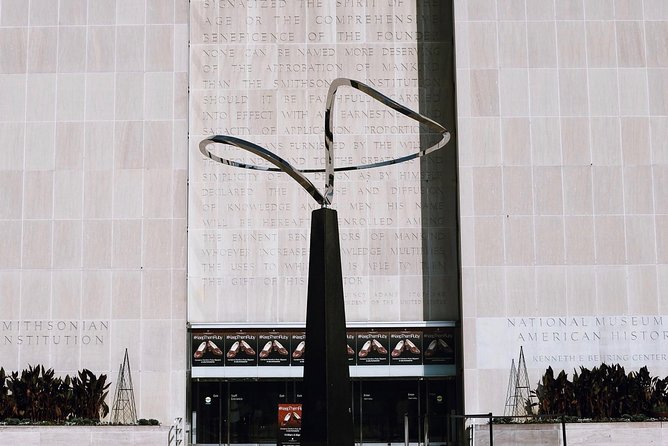
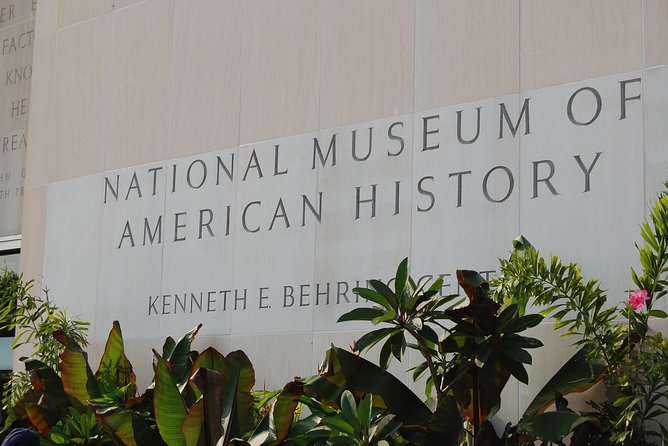
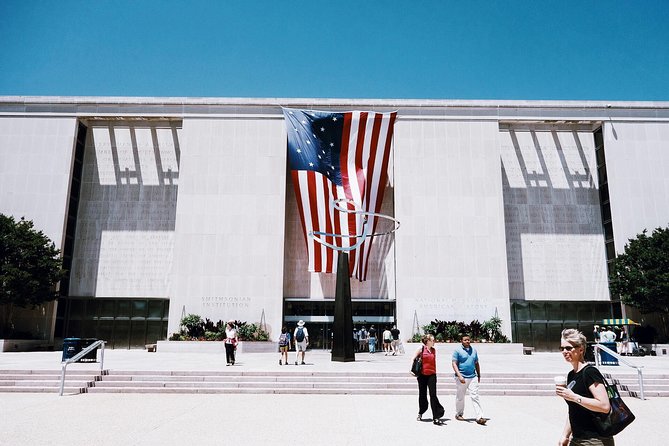
You meet at the National Museum of American History, 1300 Constitution Ave. NW, Washington, DC 20560. Plan to arrive a little before your departure time because the tour begins at the museum, and you’ll need a moment to get oriented before you start moving.
You’ll also want to plan around museum security. The tour notes are clear: no large bags or suitcases inside—only handbags or small thin bag packs through security. So if you’re traveling light, good. If you brought a bigger bag, consider leaving it at your hotel or using other luggage options before you show up.
One more practical item: you must provide a mobile phone number with the country code. The experience uses a mobile ticket, and the team needs that number to coordinate smoothly. If you’re traveling internationally, double-check you’ve entered it exactly right.
Your 2.5-Hour Route Through the Museum’s Best Stops
This is a single main visit with one core destination: the National Museum of American History. The tour runs about 2 hours 30 minutes, so it’s not a slow museum crawl. Instead, it’s a focused highlights route that keeps you moving from one high-impact exhibit to the next.
Here’s what you can expect at the big story points the guide will lead you through:
You’ll start with the broad American arc. The museum is organized like a time-and-meaning journey, and the tour uses that structure to help you understand how the U.S. changed from a ragtag group of colonists into a global superpower. This is where you’ll hear the origin stories that make later exhibits feel less random.
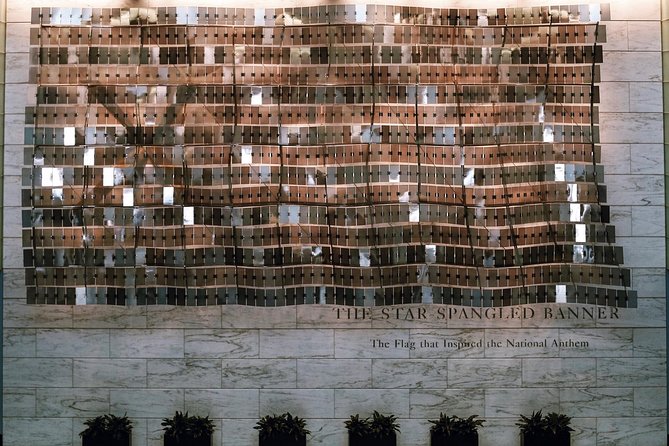
Then you’ll hit the national symbols. One standout is the actual banner that inspired the national anthem. Seeing that artifact in context makes the anthem feel less like a school performance and more like an object with a trail of meaning.
Next comes George Washington. The tour includes time to look at Washington’s sword while your guide tells you what it signaled and why it matters in early American identity. This kind of object-based story is what makes the museum click, even if you’re not a deep-history nerd.
From there, you’ll get a culture-and-media stop: Dorothy’s ruby red slippers. Hollywood is part of how Americans learn their own myths, and the tour uses the slippers to show how popular imagination can shape national identity as strongly as official history.
The tour also zooms in on women’s history and civic change through the First Ladies. You’ll visit the extensive collection of first ladies’ gowns, which helps you see how public roles and private influence can show up through clothing, symbolism, and the times those figures lived in.
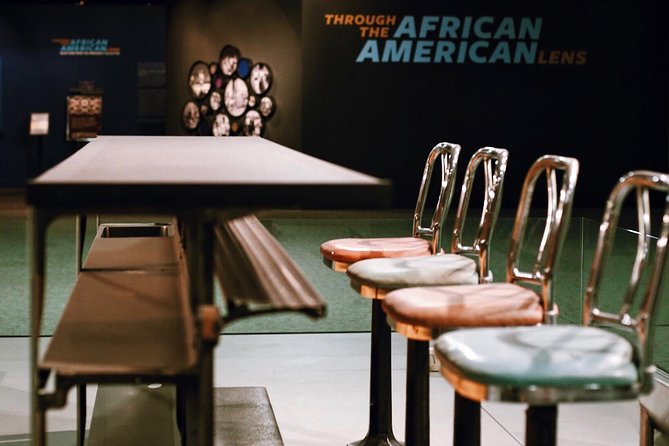
Finally, the tour connects history to civil rights with the Greensboro lunch counter. This is the kind of exhibit that can be emotionally heavy, but a good guide helps you understand both the facts and the stakes without making it feel like a lecture.
Reality check: museum collections can vary by season, so don’t assume every object will look exactly the way it does on your mental checklist. The guide’s job is to bring you to the most relevant highlights for that moment.
Iconic Objects You’ll Understand Better After the Tour
What I like most about this tour is that it teaches you how to look. Many people walk into a museum and try to absorb everything. This style of guiding teaches you to spot the detail that carries the story.
For example, the anthem banner stop isn’t just about seeing something old. Your guide will frame it as inspiration, then connect it to how Americans built a shared identity through symbols. That changes how you react when you’re standing there, because you’re not just viewing. You’re interpreting.
Washington’s sword works in a similar way. The artifact becomes a doorway into how authority was performed and remembered. Even if you’ve read about Washington before, seeing the object while hearing the guide’s explanation can make the story feel more real and less like memorization.
Dorothy’s ruby red slippers are a smart inclusion because they acknowledge a truth many museum visits ignore: American identity isn’t built only in government halls. It’s also built in movies, books, and the images people carry in their heads. The guide uses that connection to explain how Hollywood helped shape the country’s story.
The First Ladies gowns can be fascinating for anyone who enjoys details, but they also offer a stronger takeaway. Clothing becomes an easy entry point into larger questions about public role, visibility, and how image and politics intersected across decades.
And the Greensboro lunch counter brings it all into the streets, where history turns into action. The guide’s job is to keep the conversation grounded in what the exhibit represents and why it mattered, so you leave with context instead of just an emotional reaction.
One extra note that helps you plan mentally: some rooms inside the museum are quieter or have restricted rules about speaking. Your guide will explain those before you enter the areas where you’ll need to keep your voice down.
Deeper into the capital past

Small-Group Pacing: What the Tour Feels Like
A tour can say small group, but the real test is whether you actually feel looked after. In this case, the structure is built for that. With a maximum of 8 travelers, you can stay together as you move, and you’re less likely to get separated in busy corridors.
Guides have also been praised for being thoughtful about the group as a courtesy to other visitors. That shows up in practical habits like timing and how they lead you to the next object without blocking foot traffic.
The pacing also seems to work for mixed mobility needs, as long as you meet the “moderate fitness” level requirement. One review example mentioned the pace working well for bad knees. That’s not a guarantee for every body, but it supports the idea that the tour doesn’t move like a sprint.
Just expect a museum walk. You’re moving between major exhibits with time spent looking closely at select artifacts. So wear shoes you can walk in comfortably, and keep your expectations realistic: you’re not touring the entire museum, and that’s the point.
Price and Value: Is $89.67 Worth It?
At $89.67 per person, you should treat this as a value purchase for guided time, not as a bargain ticket. The upside is that the museum admission is free for your visit, so a chunk of what you pay is really about the guide and the focused route.
If you’re going to spend a day inside the American History Museum anyway, this tour can shorten the “figuring it out” phase. Instead of spending hours trying to decide what matters, you get a guided selection of the museum’s headline objects plus the story thread that connects them.
You also get flexibility options. The experience is described as offering group discounts and you can upgrade for a private tour. That matters if you’re traveling as a family or couple and want a more tailored pace and conversation.
For solo travelers, I think the value is strongest when you want facts but also want help choosing what to prioritize. The guide’s job is to turn “big museum” into a sensible plan.
For families, it tends to work because it uses recognizable objects like Dorothy’s slippers and keeps the flow efficient enough to hold attention without turning into a long, unfocused museum day.
Practical Tips: Phone Number, Bags, and Dress Rules
Before you even leave your hotel, get your basics right.
You need a mobile phone number (including country code) and you’ll use a mobile ticket. If you forget, don’t assume you can fix it on-site—coordinate before you go.
For museum entry, security is strict. No large bags or suitcases are allowed inside; only handbags or small thin bag packs through security. If you’re traveling with a bigger item, handle that luggage plan early so you don’t lose time at the start.
Dress requirements can apply for entry into some sites, so stick to neat, modest, weather-aware clothing. DC weather can shift, so bring a layer even if the forecast looks friendly.
Finally, expect some lines. Even if the tour helps with efficient movement, increased security measures can create queues at many attractions. Build in a little patience and treat the guide’s timing as part of the experience.
What Happens If the Museum Closes or Delays
Museums don’t always run perfectly. The tour notes say the American History Museum and other DC attractions may have occasional closures without warning.
If the museum opening time is delayed more than 1 hour from the tour start time, the provider says they’ll provide an appropriate alternative. In those cases, refunds or discounts aren’t available. I’d file this under normal DC risk: it’s rare, but it’s not zero.
The good part is that they acknowledge the possibility and plan for an alternative if the schedule shifts enough to break the original plan.
Should You Book This Semi-Private American History Tour?
Book it if you want a fast, friendly way to make sense of the Smithsonian’s American History Museum without turning your visit into a stressful scavenger hunt. I’d especially recommend it for first-time DC visitors, history buffs who want context, and families who need their museum time to be organized and not endless.
Skip it if you use a wheelchair or if walking is a major problem. This tour isn’t available for wheelchair users and isn’t positioned for visitors with walking disabilities.
If you do book, I suggest going in with two or three things you care about most—civil rights, political symbols, fashion, media influence—so the guide can steer your time where it matters to you. Past guides (including Tony, Rebecca, Brenda, Richard, Maribeth, and Mary Beth) have been praised for using that kind of attention to keep the tour engaging and efficient.
FAQ
How big is the group for this Smithsonian Museum of American History tour?
The group size is capped at 8 guests maximum for this semi-private tour.
How long is the tour?
The tour runs about 2 hours 30 minutes.
Where does the tour meet?
You meet at Smithsonian National Museum of American History, 1300 Constitution Ave. NW, Washington, DC 20560, USA.
Is museum admission included?
Yes. The tour includes admission ticket free for the museum.
Do I need a mobile phone number?
Yes. You must provide a mobile phone number with the country code, and the experience uses a mobile ticket.
Is the tour available for wheelchair users?
No. The tour is not available for those using a wheelchair or for people with walking disabilities.
What kind of bag can I bring into the museum?
No large bags or suitcases are allowed inside. Only handbags or small thin bag packs are allowed through security.
What should I know about speaking in some rooms?
Some specific rooms may be quiet or have restricted rules about speaking. Your guide will tell you about those before you enter.
Can I get a refund if I cancel?
Yes. You can cancel up to 24 hours in advance for a full refund. If you cancel less than 24 hours before the experience starts, the amount paid will not be refunded.
The Capital Past, Up Close





More Tour Reviews in Washington DC






More Smithsonian Halls


Just Added: Fresh Washington DC Reviews
- Washington : Private Custom Walking Tour With A Guide (Private)★ 3.5 · 3 reviews
- 3-Hour Small Group Memorial Tour in Washington, D.C.★ 4.0 · 3 reviews
- Washington DC Private Guided Bus Day Tour with Step Off Guide★ 5.0 · 3 reviews
- Washington, DC: The Good Liar: Brian Curry★ 5.0 · 3 reviews
- DC Monuments Walking Tour: Small Group, Big Ideas★ 5.0 · 3 reviews
- Washington DC: Library of Congress Private Tour with Tickets★ 5.0 · 3 reviews
Smithsonian & Museum Tours, side by side.
 ★ 4.5Guided African American History Tour with Reserved Museum EntryFrom $891,180 reviews
 ★ 4.8Museum of the Bible General AdmissionFrom $34494 reviews
 ★ 5.0Smithsonian Museum of Natural History – Exclusive Guided TourFrom $89446 reviews
 ★ 4.5African American History Tour with Museum of African American History TicketFrom $90390 reviews
 ★ 4.5National Mall Tour with 10 Stops & U.S. Capitol or Museum EntryFrom $59331 reviews
 ★ 4.9African American History Tour & Museum EntryFrom $89312 reviews
 ★ 5.0Smithsonian Museums Walking Tour with Reserved Air & Space EntryFrom $79297 reviews
 ★ 4.5Capitol Combo: U.S. Capitol + Library Congress or Capitol MuseumFrom $79294 reviews
The lists this tour appears in