
Review · SMITHSONIAN & MUSEUM TOURS
Smithsonian Air & Space Museum Guided Tour Semi-Private 8ppl Max
Space stuff, no wandering required.
A semi-private guided walk through the Smithsonian National Air and Space Museum turns a huge collection into a clear story from early flight to the Moon. You’ll start on the National Mall and follow a route built to keep you moving and understanding what you’re seeing.
I love two things most. First, the small group size (max 8) makes it feel like the guide can actually look at the room with you, not just herd a crowd. Second, the tour zeroes in on the objects people travel across the country to see—Wright Flyer, Buzz Aldrin’s gear, the Apollo 11 Command Module, and real Moon rocks—so you don’t waste time scanning labels like you’re doing homework.
One possible drawback: the Air and Space Museum is in major renovation, so some exhibits may be off-limits or temporarily unavailable, even though the tour is designed around what’s currently on display.
In This Review
- Key highlights you’ll feel during the tour
- Why this Air & Space museum tour is a smart use of your Washington time
- The renovation factor: what to expect when exhibits change
- Your guided storyline: from first flight to Moon landings
- The shows you’ll want to plan around: iconic artifacts worth the ticket
- What you gain from a small group and real guiding (not just walking)
- How security, crowds, and your museum route usually play out
- After the tour: time to roam with a better map in your head
- Price and value: $89.67 for a guide in a free museum
- Who should book this semi-private tour (and who should reconsider)
- Should you book the Smithsonian Air & Space guided tour with a small group?
- FAQ
- How long is the Smithsonian Air & Space Museum guided tour?
- How many people are in the group?
- Where do I meet for the tour?
- Is museum admission included in the tour price?
- What exhibits does the tour focus on?
- Will I be affected by museum construction?
- Does the tour include hotel pickup or drop-off?
- Is the tour accessible for wheelchair users?
Key highlights you’ll feel during the tour

- Max 8 people means you get real attention, not a distant voice from the back of the group.
- Two and a half hours is long enough to see the big-ticket items, yet short enough to still explore on your own afterward.
- Renovation-aware route: your guide adjusts based on what’s open, so you’re not stuck with long dead ends.
- Stop-by-stop storytelling connects flight history to space tech, then to what it means to be an astronaut today.
- Free Smithsonian entry, paid for the guide: the value comes from time saved and context added.
- Freeze dried ice cream at the gift shop is a fun, very DC souvenir-style payoff.
More Smithsonian halls, out of the weather
- Guided African American History Tour with Reserved Museum Entry
★ 4.5 · 1,180 reviews - Washington DC: Museum of the Bible General Admission
★ 4.8 · 494 reviews - Smithsonian Museum of Natural History – Exclusive Guided Tour
★ 5.0 · 446 reviews - African American History Tour with Museum of African American History Ticket
★ 4.5 · 390 reviews
Why this Air & Space museum tour is a smart use of your Washington time
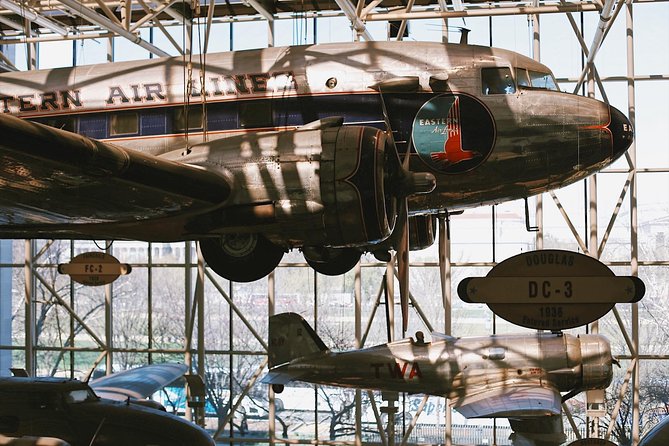
The Smithsonian National Air and Space Museum is famous for being massive. That’s the problem: without a plan, you end up moving in circles and reading signs you’ll forget by lunch.
This tour is built for the exact reality of visiting the National Mall. It starts at 600 Independence Ave SW and runs about 2 hours 30 minutes. You’ll get a meeting point, a guide, and a set route. You also get a manageable group size—8 people max—which is the difference between a tour that feels personal and one that feels like checkout line choreography.
Another small but real win: the tour’s focused on major artifacts tied to the American aviation and space story. You’re not trying to “cover everything.” You’re getting the backbone: early flight → famous leaps → Moon landings → the technology mindset that shaped it all.
And yes, the guide is part of the value. In reviews, guides like Brenda, Ryan, Tim, Leigh, Rebecca, Amanda, Christopher, and Maureen repeatedly got praise for keeping energy up and answering questions clearly—especially when kids or teens are in the mix.
The renovation factor: what to expect when exhibits change
Here’s the one curveball with this museum: it’s in massive construction and will be for multiple years. That means the museum may not always show the same exhibits from day to day.
The tour operator flags this clearly and says the route and what you see will adjust to the museum’s changing stages. They even provide a page you can check for what’s currently viewable: airandspace.si.edu/exhibitions/now-view.
What does this mean for you as a decision-maker?
- If seeing a specific artifact is your top priority, check the museum’s “now viewing” list before you go.
- Keep your expectations flexible. The guide’s job is to steer you toward the best available version of the story, not to pretend renovation isn’t real.
- If you’re the type who hates surprises, this may frustrate you. But if you like good interpretation and “best available” touring, it can still be a fantastic way to understand the whole field.
This also helps explain the mixed feedback you’ll find online. When something is closed, any tour is affected—but a guided route generally still saves you from wasting time hunting for closed galleries.
Your guided storyline: from first flight to Moon landings
The tour starts at the museum and follows a specially-designed route through the collections. Even though the museum is huge, you’ll walk with a purpose.
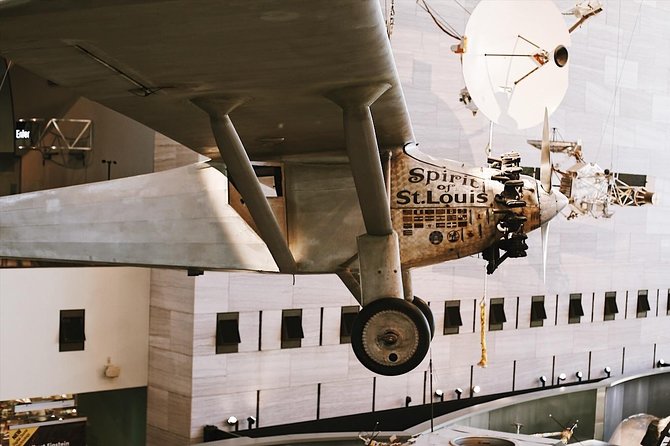
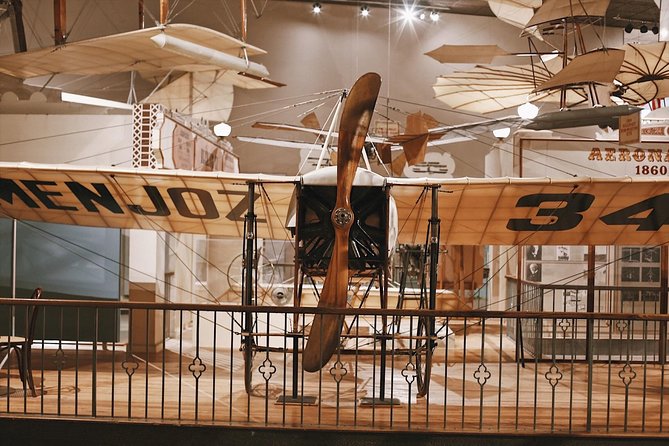
The pacing is structured: the route generally begins with the very first plane to take flight, then moves into iconic milestones like Charles Lindbergh’s Spirit of St. Louis. From there, the tour shifts into the era where aviation technology turns into space engineering.
Expect the guide to connect the dots in plain language: not just what an artifact is, but why it mattered—how it worked, what it enabled, and what the limitations were at the time.
From the highlights, here’s the shape of what you’ll likely see during a typical run:
- Wright Flyer (original) as the early “how flight became real” anchor
- Spirit of St. Louis as the leap into global aviation heroics
- Buzz Aldrin’s spacesuit and moon boots as the human layer of landing
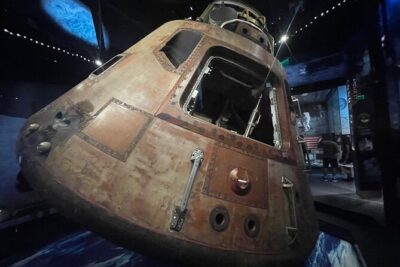
- Apollo 11 Command Module as the mission cockpit of history
- Real lunar rocks as the payoff of reaching the Moon
- Then more spacecraft and space-program objects, including pieces tied to later programs like the Space Shuttle model and station-related items
In other words: the tour takes you through a timeline where the exhibits reinforce each other instead of standing alone.
The shows you’ll want to plan around: iconic artifacts worth the ticket
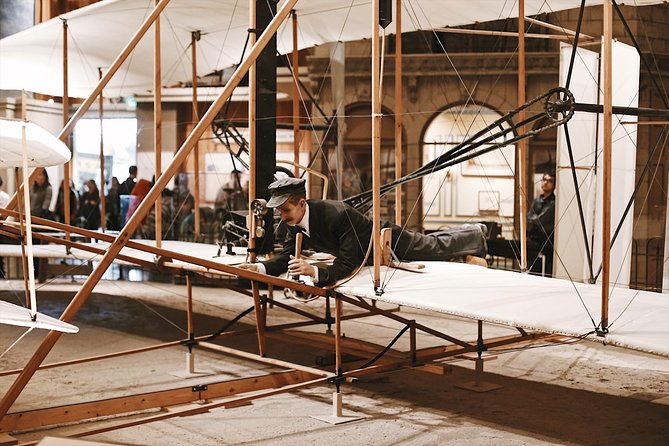
Let’s talk about the big-name objects, because this is where a guided tour earns its keep. At a museum this size, you often miss the “how it all connects” angle unless someone points it out.
Here are the highlights you’re specifically set up to see, based on what the tour commonly includes:
- Wright Flyer (original): the early heartbeat of flight. Don’t just look—notice what makes it historically important, not just visually impressive.
- Charles Lindbergh’s Spirit of St. Louis (original): more than a plane; it’s the story of navigation, endurance, and the world-changing effect of one trip.
- Neil Armstrong Apollo 11 spacesuit (original): a standout “you are staring at history” moment. If you care about mission details, this is a must-see stop.
- Apollo 11 Command Module: this gives you the mission technology picture—what a crew actually relied on.
- Moon rocks brought back from the Moon: these are small objects that hit hard because they prove the journey.
- Chuck Yeager’s Bell X-1 (original): it bridges early aviation breakthroughs to the idea of pushing boundaries.
- John Glenn’s Mercury capsule (original): it brings the human test-flight stage of space down to a specific vehicle.
- Lunar Module (backup) and other program pieces: even the “backup” listings matter, because renovation can change what’s available on the day.
- Skylab (backup) and Space Shuttle mid deck (model): these help you connect Apollo to the longer arc of space station life and repeated missions.
- Hubble Telescope (test vehicle): if you’re a tech-minded person, this helps explain how space science continued after landing.
One practical point: some specific rooms can have quiet or restricted rules about speaking. Your guide should brief you before entering those spaces, which makes the tour smoother and keeps you from getting surprised by museum “house rules.”




What you gain from a small group and real guiding (not just walking)

At the Smithsonian, the difference between “a visit” and “a tour” is how you move and how you interpret.
With up to 8 people, you tend to get:
- Better timing around crowd-prone galleries
- Room-by-room context so you know what to notice
- Space for questions without shutting down the group’s flow
In reviews, multiple guides were praised for structured pacing and strong engagement. For example, Brenda earned repeat mentions for making the museum come alive and keeping teenage kids interested. Christopher stood out for proactive communication and organization, including texting a photo and meeting location so people could find him fast. And guides like Ryan and Tim were highlighted for excellent pace and energy—important in a place where you could easily spend your whole day standing and reading.
You’ll also likely get “lesser known details,” which is where guided tours feel worth it. You’re not just seeing the artifact; you’re getting the story behind the artifact—why it looks the way it does, what it was built to do, and what problems it solved.
How security, crowds, and your museum route usually play out
Even with a guided tour, you should expect the real world: security checks and indoor crowd flow. The good news is your tour is designed as a route rather than a random walk.
The tour experience notes that no large bags or suitcases are allowed through museum security—only handbags or small thin bag packs. So pack smart. If you show up with a carry-on-sized bag, you’ll burn time.
Also, occasional closures can happen without warning at the museum and nearby sites. If opening time is delayed by more than an hour from the tour start, the operator says you’ll be given an appropriate alternative. Refunds or discounts aren’t always available in those cases, so your best move is to arrive with a flexible mindset and plan to enjoy what’s open.
If your group includes people who get frustrated by lines, a guide can help you avoid the worst moments. In reviews, guides were credited with routing people toward galleries where queues can become huge—like the Armstrong suit area—so you spend time seeing rather than waiting.
After the tour: time to roam with a better map in your head
The tour concludes back at the meeting point, but you’re not “done” with the museum. You’ll have time to keep exploring on your own once the guided portion ends.
That’s a smart setup. You get the backbone from your guide, then you can choose what to revisit:
- the exhibits you found most emotional
- the tech details you want to read more closely
- the things your guide mentioned that you want to spot again
And yes, there’s a fun little “museum moment” here. Your tour route includes a stop concept tied to the gift shop, where you can try freeze dried ice cream—a silly-sounding souvenir that actually fits the museum’s theme in a very DC way.
If you’re visiting with kids, don’t skip the gift shop thinking it’s pointless. For many families, it’s where the tour energy sticks.
Price and value: $89.67 for a guide in a free museum
This is where I try to be honest. Smithsonian museum admission is free, so you’re paying for the guide, the route, and the time-saving advantage of not trying to design your own itinerary in a giant building.
At $89.67 per person for about 2.5 hours, the value depends on your travel style:
- If you like structure, want help choosing what matters, and don’t want to spend your limited DC time translating labels, the price can feel fair fast.
- If you’re a very independent museum walker who reads everything and doesn’t mind wandering, you might feel you could do something similar on your own—especially when renovations reduce what’s on display.
In reviews, many people said the tour gave them more than they expected in a short time window—one guide alone can turn a museum sprint into a focused learning route. That’s the best argument for booking: you’re buying efficiency and interpretation, not admission.
My take: for a first-time visit to Air and Space, paying for a guide is often a smart shortcut. If you’ve already studied this stuff and just want the photos, self-guided can work. If it’s your first time and you want the “why,” go guided.
Who should book this semi-private tour (and who should reconsider)
This tour fits best if you:
- want a small-group experience (up to 8)
- care about the story of aviation and US spaceflight, not just isolated displays
- like asking questions and getting answers on the spot
- are visiting with teens or family members who need a little human guidance to stay engaged
It may not be ideal if you:
- use a wheelchair or need accommodations for walking disabilities, since the tour is stated as not available for those cases
- are extremely sensitive to renovation disappointments—because what’s on display can change
- are on a shoestring budget and plan to visit the museum only once
Also remember the physical reality. The tour asks for moderate fitness. You’ll be moving through the museum, not sitting through a lecture.
Should you book the Smithsonian Air & Space guided tour with a small group?
I’d book it if you want the museum to make sense fast. The combination of small-group pacing, high-impact artifacts like the Wright Flyer and Apollo 11 gear, and guides who can keep both adults and teenagers interested is exactly what makes this kind of tour worth your time.
Before you go, do two things:
- Check the museum’s current “now viewing” list because renovation is real.
- Pack a small bag that will get through security without drama.
If you’re the type who enjoys reading signs and mapping your own route, you can probably enjoy Air and Space solo. But if you want to leave with a timeline in your head—flight-to-space, human-to-technology—this is one of the better ways to do it in Washington.
FAQ
How long is the Smithsonian Air & Space Museum guided tour?
It lasts about 2 hours 30 minutes (approx.).
How many people are in the group?
The tour is limited to a maximum of 8 people, so it stays semi-private.
Where do I meet for the tour?
Meeting starts at 600 Independence Ave SW, Washington, DC 20560, USA.
Is museum admission included in the tour price?
Admission to Smithsonian museums is free, and the tour price is for the guided experience. (So you’re paying for the guide, not an entry ticket.)
What exhibits does the tour focus on?
The tour route is designed around highlights such as the Wright Flyer (original), Charles Lindbergh’s Spirit of St. Louis, Apollo 11 objects (including Buzz Aldrin’s spacesuit and moon boots and the Apollo 11 Command Module), and real lunar rocks, plus other program artifacts that may vary based on what’s open during renovations.
Will I be affected by museum construction?
Yes. The museum is under massive construction, and many exhibits may not be on display. The guide adjusts the route based on what’s currently viewable, and you can check the museum’s updated list on their site.
Does the tour include hotel pickup or drop-off?
No. The tour price does not include hotel pickup or drop-off. Using Uber or taxi is recommended.
Is the tour accessible for wheelchair users?
No. The tour is not available for those with walking disabilities or using a wheelchair.
More Tour Reviews in Washington DC






More Smithsonian Halls






Just Added: Fresh Washington DC Reviews
- Washington : Private Custom Walking Tour With A Guide (Private)★ 3.5 · 3 reviews
- 3-Hour Small Group Memorial Tour in Washington, D.C.★ 4.0 · 3 reviews
- Washington DC Private Guided Bus Day Tour with Step Off Guide★ 5.0 · 3 reviews
- Washington, DC: The Good Liar: Brian Curry★ 5.0 · 3 reviews
- DC Monuments Walking Tour: Small Group, Big Ideas★ 5.0 · 3 reviews
- Washington DC: Library of Congress Private Tour with Tickets★ 5.0 · 3 reviews
Smithsonian & Museum Tours, side by side.
 ★ 4.5Guided African American History Tour with Reserved Museum EntryFrom $891,180 reviews
 ★ 4.8Museum of the Bible General AdmissionFrom $34494 reviews
 ★ 5.0Smithsonian Museum of Natural History – Exclusive Guided TourFrom $89446 reviews
 ★ 4.5African American History Tour with Museum of African American History TicketFrom $90390 reviews
 ★ 4.5National Mall Tour with 10 Stops & U.S. Capitol or Museum EntryFrom $59331 reviews
 ★ 4.9African American History Tour & Museum EntryFrom $89312 reviews
 ★ 5.0Smithsonian Museums Walking Tour with Reserved Air & Space EntryFrom $79297 reviews
 ★ 4.5Capitol Combo: U.S. Capitol + Library Congress or Capitol MuseumFrom $79294 reviews
The lists this tour appears in