
Review · SMITHSONIAN & MUSEUM TOURS
Curated Tour – National Gallery of Art with French Art Historian
Art history becomes readable at this museum. I loved the small-group pace and Tosca’s art historian storytelling, because you stop wandering and start understanding what you’re seeing—piece by piece. The one possible drawback: you’ll move with the group for about 2.5 hours, so it’s not the best fit if you want total freedom to roam.
This tour works especially well when you feel like the National Gallery is too big to process alone. You’ll get a guided arc through European art, with familiar artists and a sense of why their choices mattered, from Renaissance portraiture to later Impressionist-style views. If you want a “stand in front of one painting and forget the rest” kind of visit, this isn’t that.
In This Review
- Key Highlights at a Glance
- Why the National Gallery Feels Easier With an Art Historian
- Your 2.5-Hour Plan: What You Actually Do Inside
- Step One: Museum History and the Masterpiece Map
- How Tosca Turns Famous Paintings Into Living Stories
- The Pace and Group Size: Semi-Private Means You Can Breathe
- What to Look For While You’re Following the Tour
- Admission Included: Less Planning, More Looking
- Getting There: A Simple DC Logistics Win
- Who This Tour Is Best For
- The Value Call: Is This Tour Worth It?
- Should You Book the National Gallery Tour With Tosca?
- FAQ
- How long is the National Gallery tour?
- Is museum admission included?
- What language is the tour offered in?
- How big is the group?
- Where do we meet?
- What’s the transportation recommendation?
- Do I need to bring a printed ticket?
- Is the tour price all-inclusive?
- What if the weather is bad?
- What’s the cancellation policy?
Key Highlights at a Glance
- Small-group format: limited to about 6 people, with a semi-private cap of 8
- Tosca’s European context: studied and lived between Paris, Italy, and London
- From artist lives to masterpieces: you connect genius to biography and style
- Hands-on seeing, not just hearing: the tour links works across centuries
- Admission included: you don’t have to plan a separate museum ticket
More Smithsonian halls, out of the weather
- Guided African American History Tour with Reserved Museum Entry
★ 4.5 · 1,180 reviews - Washington DC: Museum of the Bible General Admission
★ 4.8 · 494 reviews - Smithsonian Museum of Natural History – Exclusive Guided Tour
★ 5.0 · 446 reviews - African American History Tour with Museum of African American History Ticket
★ 4.5 · 390 reviews
Why the National Gallery Feels Easier With an Art Historian
The National Gallery of Art can be a joy and a test at the same time. It’s world-class, yes—but if you walk in with no plan, you can end up bouncing from room to room with little time to actually connect the dots.
That’s where this tour earns its keep. Instead of treating the museum like a checklist, the guide sets up a narrative. You learn the museum’s history and then move through masterpieces in an order that makes changes in style feel logical, not random. I especially like that the tour is designed for people who want their museum visit to mean something.
And Tosca matters here. She’s not just reciting facts—she brings a European art-historian perspective shaped by having studied and lived between Paris, Italy, and London. That background shows in the way she talks about artists as real people with careers, influences, and turning points. It helps you feel more grounded when you stand in front of something famous and think, okay, but why is it great?
One more thing: the group size keeps this from turning into a loud lecture. You’re not lost in a crowd, and you’re more likely to get answers to the questions you’re already thinking.
Your 2.5-Hour Plan: What You Actually Do Inside
This is a single main stop focused on the National Gallery of Art, running around 2 hours 30 minutes. The structure is simple, which is a good thing. You’ll start at the museum, get oriented quickly, and then follow the guide’s sequence of paintings and artists.
Here’s what the experience is built to do:
- Prevent aimless wandering: the guide leads you through the museum’s history and key works
- Give you stories behind the art: you learn the lives and careers behind major names
- Show style evolution across centuries: you’re taught to compare and notice differences
You’re essentially being taught how to look. That might sound abstract, but in practice it changes everything. A painting you’d normally see as “pretty” or “important” becomes “connected” to themes, training, and context. Even if some names mean nothing to you at the start, the tour is built to fix that by the end.
Step One: Museum History and the Masterpiece Map
You don’t begin by sprinting toward the biggest paintings. You start with a little framing: the museum’s story and what makes its collection special. For first-time visitors, this is a smart warm-up. It helps you understand where you are and why certain artworks show up as landmarks rather than decoration.
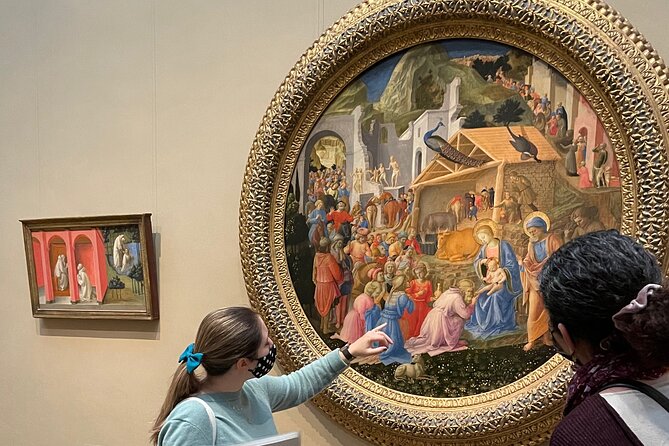
Then the guide starts moving you through works like building blocks. You’ll hear about major figures in European art—think artists such as Raphael, Da Vinci, Rubens, Rembrandt, Monet, and Degas. Even if you only recognize a few of those names, the goal is to make the rest click. The tour is set up so you leave with a stronger sense of who these painters were and why they became defining voices in their era.
This is also where the tour’s “French art historian” angle shows. Instead of treating Europe’s art as a blur, you get a clearer sense of relationships between places, ideas, and techniques. You’re not just learning names; you’re building a mental map.
How Tosca Turns Famous Paintings Into Living Stories
The standout theme from the reviews is that Tosca makes art easier to grasp. People didn’t just come away feeling they saw good paintings—they felt they understood them more deeply.
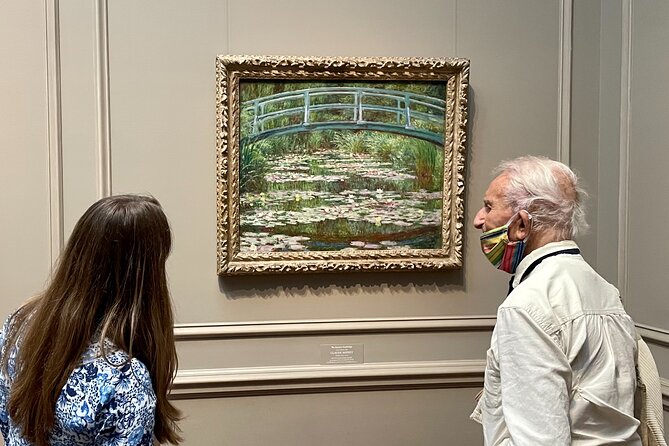
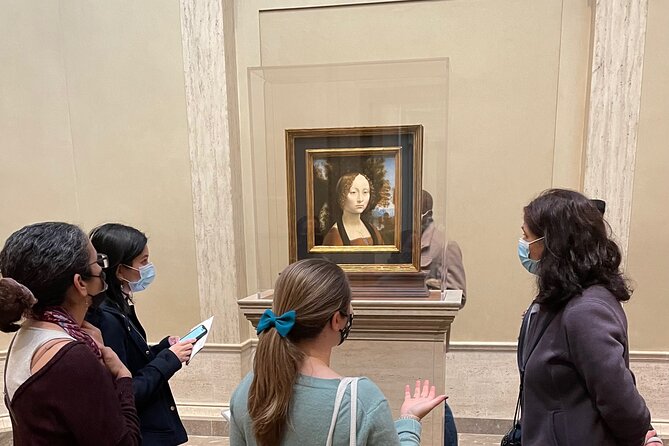
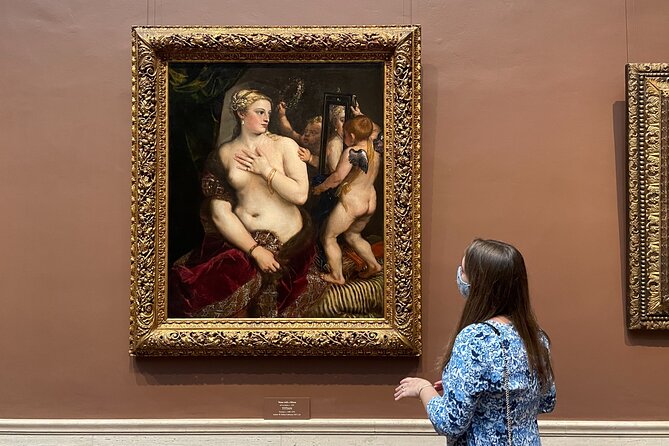
In the tour experience, that happens through biography and comparisons. You’ll look at a well-known example of Renaissance genius with Portrait of Ginevra de’ Benci, then the tour shifts forward to a later example with Japanese Footbridge. That kind of pairing is more than scheduling—it trains your eyes to notice change over time.
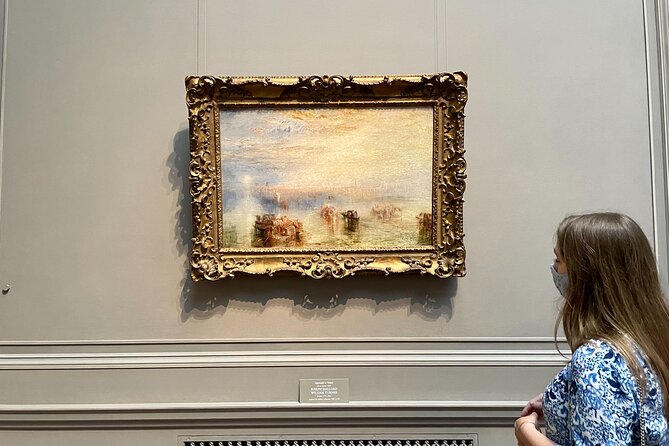
Here’s the practical magic: you start seeing artworks as part of an evolution, not isolated masterpieces. A portrait isn’t just a portrait. An Impressionist-style scene isn’t just a pretty view. When you know a bit about what the artist was trying to do and how style develops, your brain stops treating paintings like museum wallpaper and starts treating them like decisions.
Also, pay attention to how flexible the guide can be. One review notes that Tosca tailored the visit when someone said they especially enjoyed Italian Renaissance art. If you have a favorite period—Renaissance, Baroque, Impressionism—tell your guide. You might find the tour becomes even more satisfying because it leans harder into what you actually want to see.




The Pace and Group Size: Semi-Private Means You Can Breathe
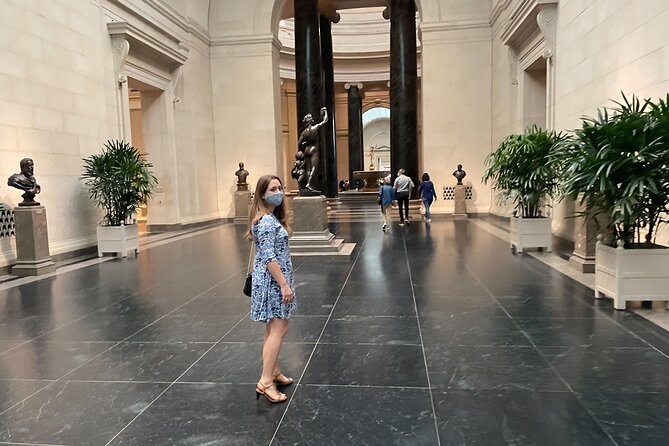
This isn’t a huge group tour where the guide talks and you just stand there. The experience is kept small: limited to 6 people for the more in-depth visit, and described as semi-private with no more than 8 guests maximum.
That difference matters in a museum. When the group is small, the guide can:
- adjust explanations on the fly
- give you time to look before moving you on
- answer your question without losing the whole room
Even better, you’re more likely to remember what you saw because you had time to focus. In a big museum with dozens of galleries, your attention is your currency. A small group format protects it.
What to Look For While You’re Following the Tour
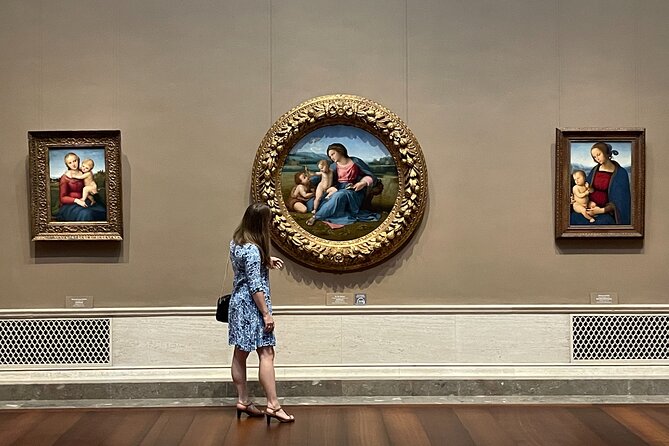
The guide will point out what to notice, but you’ll get more out of the tour if you come prepared to look actively. You’re basically learning a technique: compare, connect, and ask why.
When you’re in front of a painting, try to notice three things:
- The subject and why it was chosen: what is the artist emphasizing?
- How the style changes over time: you’re moving from era to era during the tour
- What makes the artist a “genius” in practice: it’s not just fame—it’s choices you can see
By the time you reach the tour’s later works (like the Monet example), it should feel less like random variety and more like a guided history of how artists solved problems differently.
Admission Included: Less Planning, More Looking
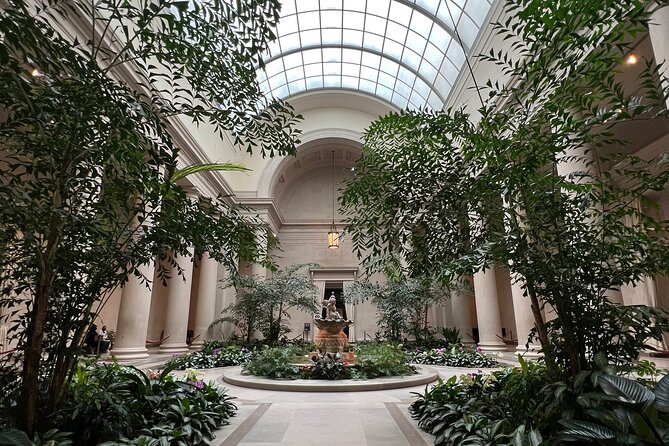
This tour includes museum admission, so you don’t have to scramble to secure entry separately. For many people, that alone makes the experience feel smoother. You also get the benefit of arriving with the guide, which helps you get your bearings fast once you’re inside.
You’ll also use a mobile ticket for the experience, which is convenient. And because the tour is in English, you can expect the guide’s explanations to be clear and paced for regular museum visitors—not specialist-only jargon.
Getting There: A Simple DC Logistics Win
The meeting point is at the National Gallery of Art on Constitution Ave. NW, Washington, DC 20565. You’ll return back to the same meeting point at the end, which makes the rest of your day easier to plan.
For transit, the recommendation is straightforward: use Uber, taxi, or the Metro, and get off at Archives. The area is described as near public transportation, so you shouldn’t need a complicated plan to get there.
Who This Tour Is Best For
This tour is ideal when you fall into one of these groups:
You’re a first-time visitor to the National Gallery.
You’ll get a structured experience that prevents overload and helps you connect famous artists to why they matter.
You want a deeper perspective, not just photos.
If you like understanding the why behind the painting—artist lives, style evolution, and context—this tour is built for you.
You like smaller groups and conversation.
With the semi-private cap and the small number of guests, the visit tends to feel personal rather than rushed.
It may be less ideal if you want long, unguided wandering time. This is a guided storyline, and it keeps you moving.
The Value Call: Is This Tour Worth It?
I think it offers strong value in three ways, even without a price shown here:
First, admission is included, so the tour isn’t asking you to pay extra just to enter. That’s a real convenience, especially in a major museum.
Second, you’re paying for interpretation. The National Gallery can swallow you whole, but a good guide turns the collection into a sequence you can remember. The tour’s comparisons—like moving from Portrait of Ginevra de’ Benci to Japanese Footbridge—help you see evolution, not just individual highlights.
Third, the small-group setup protects your attention. A museum is best when you can actually look. This format helps you do that without feeling trapped in a massive crowd.
One more note: gratuities aren’t included, so plan for that as an extra. If you appreciate guided storytelling, that’s part of how these tours stay great.
Should You Book the National Gallery Tour With Tosca?
If you want your first (or next) National Gallery visit to feel organized and meaningful, I’d book this. The format suits people who like to learn while they look, and the emphasis on European art history—carried by Tosca’s background spanning Paris, Italy, and London—adds an extra layer of understanding.
Book it especially if:
- you recognize some big names but want the story behind them
- you want style evolution explained in plain language
- you prefer a small group experience that doesn’t rush you to the next room
Skip it if you want total freedom to roam on your own schedule for a long time. This tour gives you a guided arc. It’s great at teaching you how to see. Just know that it’s not designed to be open-ended.
FAQ
How long is the National Gallery tour?
It runs about 2 hours 30 minutes.
Is museum admission included?
Yes, the entrance to the museum is included.
What language is the tour offered in?
The tour is offered in English.
How big is the group?
It’s a small-group experience. The visit is limited to 6 people, and it’s described as semi-private with a maximum of 8 guests.
Where do we meet?
The meeting point is National Gallery of Art, Constitution Ave. NW, Washington, DC 20565.
What’s the transportation recommendation?
Uber, taxi, or Metro are recommended. The suggested Metro stop is Archives.
Do I need to bring a printed ticket?
No. The experience uses a mobile ticket.
Is the tour price all-inclusive?
No. Entrance is included, but gratuities are not included.
What if the weather is bad?
The experience requires good weather. If it’s canceled due to poor weather, you’ll be offered a different date or a full refund.
What’s the cancellation policy?
This experience is non-refundable and cannot be changed for any reason.
More Tour Reviews in Washington DC






More Smithsonian Halls





Just Added: Fresh Washington DC Reviews
- Washington : Private Custom Walking Tour With A Guide (Private)★ 3.5 · 3 reviews
- 3-Hour Small Group Memorial Tour in Washington, D.C.★ 4.0 · 3 reviews
- Washington DC Private Guided Bus Day Tour with Step Off Guide★ 5.0 · 3 reviews
- Washington, DC: The Good Liar: Brian Curry★ 5.0 · 3 reviews
- DC Monuments Walking Tour: Small Group, Big Ideas★ 5.0 · 3 reviews
- Washington DC: Library of Congress Private Tour with Tickets★ 5.0 · 3 reviews
Smithsonian & Museum Tours, side by side.
 ★ 4.5Guided African American History Tour with Reserved Museum EntryFrom $891,180 reviews
 ★ 4.8Museum of the Bible General AdmissionFrom $34494 reviews
 ★ 5.0Smithsonian Museum of Natural History – Exclusive Guided TourFrom $89446 reviews
 ★ 4.5African American History Tour with Museum of African American History TicketFrom $90390 reviews
 ★ 4.5National Mall Tour with 10 Stops & U.S. Capitol or Museum EntryFrom $59331 reviews
 ★ 4.9African American History Tour & Museum EntryFrom $89312 reviews
 ★ 5.0Smithsonian Museums Walking Tour with Reserved Air & Space EntryFrom $79297 reviews
 ★ 4.5Capitol Combo: U.S. Capitol + Library Congress or Capitol MuseumFrom $79294 reviews
The lists this tour appears in