

Review · OLD TOWN ALEXANDRIA TOURS
Alexandria: Walking Through George Washington’s Alexandria
Washington’s Alexandria feels closer than you think. This 90-minute walk puts you in the streets tied to George Washington and the people around him, with a guide who stitches together names, buildings, and stories into one easy route. I especially like how the tour isn’t just about famous events, but about the web of Alexandria neighbors who helped Washington move through his life and career.
Two things I really like: you get to see taverns and historic religious sites connected to Washington’s milestones, and you’ll also learn what Alexandria meant to him beyond the headlines. One consideration: the walking pace is the point of the experience, so if you tire quickly on sidewalks and stops, plan to take it slow and wear comfortable shoes.
In This Review
- Key highlights worth planning for
- Meeting at 221 King St.: how the tour starts
- Following Washington’s footsteps through the neighborhood
- Taverns where Washington marked turning points
- The historic church Washington helped finance (and when you can sit in his pew)
- Where Washington was first publicly addressed as President
- Alexandria’s neighbor who helped fund his inaugural travel
- Where the Revolutionary War ended celebrations happened
- A picture moment with young Lt. Col. Washington
- French and Indian War: how his military career started
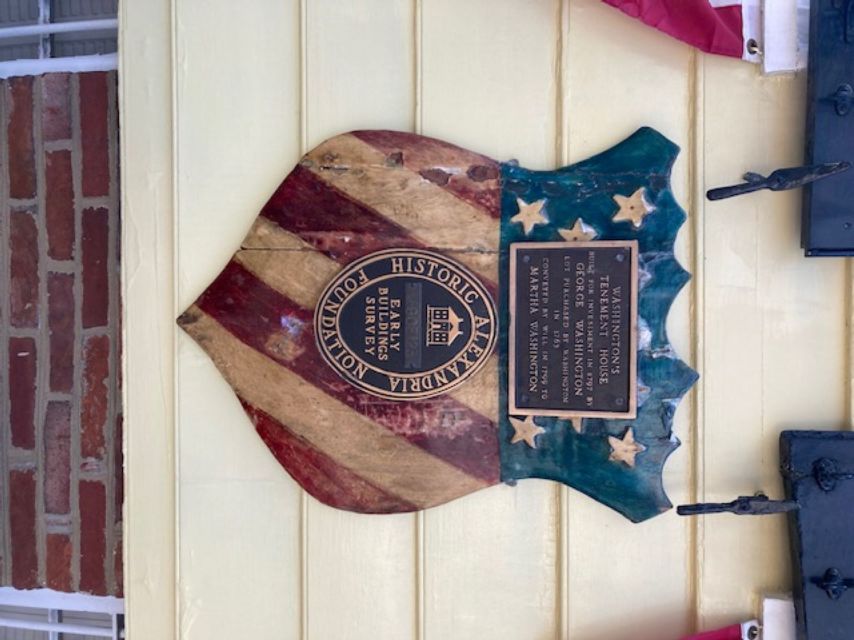
- Washington’s real estate in Alexandria: two properties, different purposes
- Washington’s final years: two doctors who lived nearby
- Tim’s guiding style: why the tour works
- How much it costs and why it’s fair value
- Who this tour is best for (and who might want something else)
- Should you book this walk through Washington’s Alexandria?
- FAQ
- FAQ
- Where is the meeting point?
- How long is the tour?
- What does it cost?
- What language is the tour in?
- Is the tour wheelchair accessible?
- Is the church stop always open?
- What are the cancellation rules?
- Can I reserve without paying right away?
Key highlights worth planning for
- Washington’s Alexandria “neighbor map”: you’ll learn how local people and places connected to his big moments.
- Taverns tied to milestones: you’ll get specific stops where Washington marked turns in his life.
- A major church Washington helped finance: you might even get a chance to sit in his pew when it’s open.
- Two Washington properties in town: see where he lived and where he rented out space like a real estate operator.
- Last-days connections: you’ll hear about two doctors who lived nearby and helped care for him.
- A lively guide, Tim: questions are welcomed and woven into the story.
Down to Old Town Alexandria, a few more
- Discover Alexandria: Historic Homes, Churches, and Taverns!
★ 5.0 · 26 reviews - Alexandria Ghosts: Spirits & Spirits Haunted Pub Crawl
★ 3.4 · 21 reviews - Alexandria: Phantoms of the Potomac Walking Tour
★ 3.6 · 18 reviews - Alexandria: American Revolution Guided Walking Tour
★ 5.0 · 13 reviews
Meeting at 221 King St.: how the tour starts
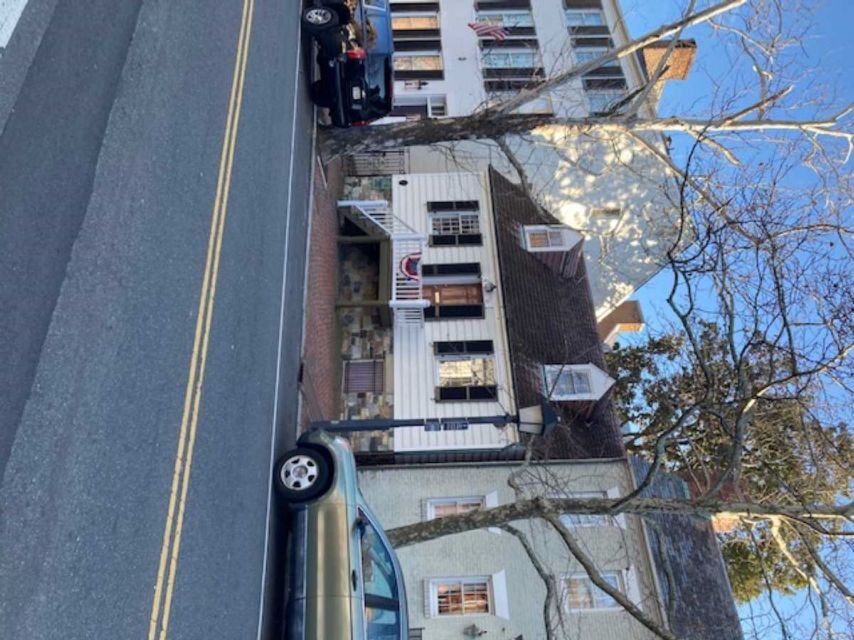
The tour meets at the Visitor Center at 221 King St. You’ll find a bathroom on the lower level, plus water and tourist info. Your guide will be either on the porch or inside, so it’s worth arriving a few minutes early so you can spot them right away.
This matters because the tour is built for flow. Alexandria’s old streets are walkable, but you don’t want to spend your first minutes hunting for the group. Once you’re matched up with the guide, you’ll get an approach to the city that makes later stops click into place.
Following Washington’s footsteps through the neighborhood
The main experience is a guided walk through Washington’s Alexandria—his streets, his circle, and the everyday geography that shaped his days. The goal isn’t to rattle off dates. It’s to show you how the people and businesses around him worked like a local network.
I like this because it changes how you look at the buildings. Instead of seeing landmarks as stand-alone photos, you start treating them like stage sets where Washington had relationships—through friendship, faith, business, and even practical travel problems.
Taverns where Washington marked turning points
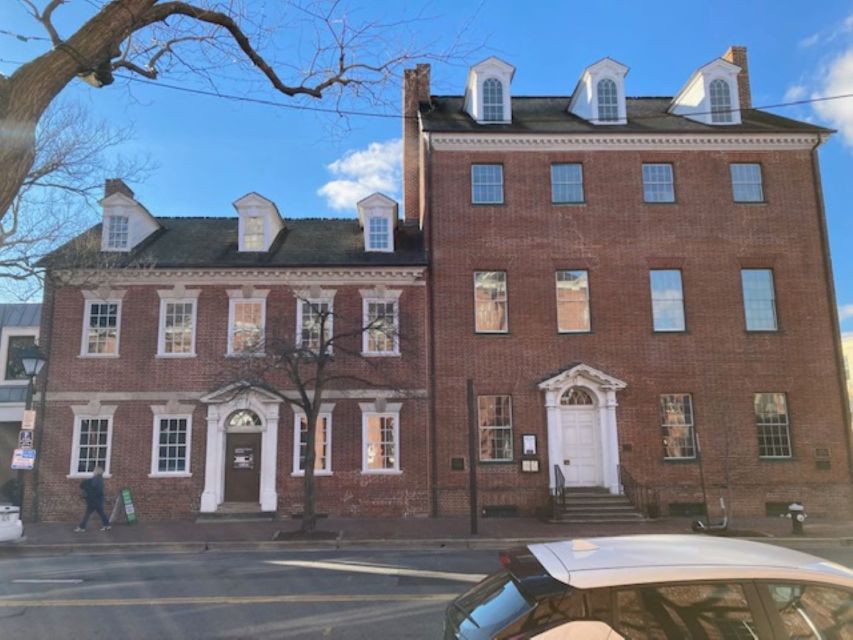
One of the most enjoyable parts is the focus on taverns—places where Washington celebrated major milestones. Taverns in this era weren’t just for drinks. They were meeting rooms for news, introductions, and decisions. So when the guide points you to tavern stops connected to Washington’s life, you learn more than the “what happened.” You learn the why it mattered in the moment.
On a walking tour like this, the tavern sections are also where questions tend to pop up. You’ll hear the guide connect those taverns to Washington’s connections in Alexandria—who he knew, what he was trying to accomplish, and how local culture fit into national history.
Practical note: taverns are typically marked on the street by location rather than modern interiors, so don’t expect to step into a historical room unless the stop is specifically described that way during your tour.
The historic church Washington helped finance (and when you can sit in his pew)
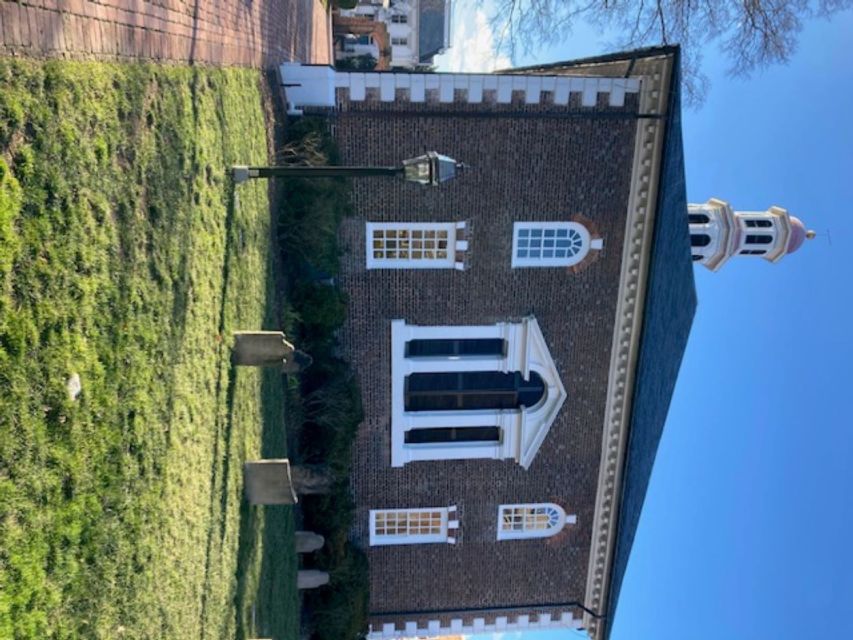
Washington’s connection to Alexandria isn’t just political and military. The tour also includes one of the oldest historic churches in America that Washington helped finance. The guide explains where Washington worshipped and even gives you a chance to sit in Washington’s pew—if the church is open.
There’s a key scheduling detail to know: the church is not open on Monday and Tuesday. If your tour falls on those days, you’ll still get the context from the guide, but you should assume the pew-sitting moment may not happen.
This stop is valuable because it adds a human layer to the story. It reminds you that Washington wasn’t only a commander. He was also a property owner, a neighbor, and a man of routine and belief—part of Alexandria’s local rhythms.
DC at walking pace, more routes


Where Washington was first publicly addressed as President
Another standout is the stop tied to where Washington was first publicly addressed as President Washington. This is the kind of moment that can sound abstract until you stand on the street and see the physical setting where people reacted to the idea of a new nation’s leader.
The guide’s job here is to connect the national “first” to the local “who was there.” You’ll hear how Alexandria helped shape the meaning of the office, not by grand speeches alone, but by community recognition and the practical logistics of the early presidency.
Alexandria’s neighbor who helped fund his inaugural travel
The tour also highlights Washington’s connection to a local neighbor who helped pay his travel expenses to reach his first inaugural. That detail is more meaningful than it sounds, because it shows how early American political life depended on real people doing real favors.
I like this kind of story because it removes the myth frosting. It makes Washington feel less like a distant monument and more like a man who needed help, timing, and introductions—just like anyone.
The guide uses the stop to show Alexandria as a place where influence and support worked at human scale.
Where the Revolutionary War ended celebrations happened
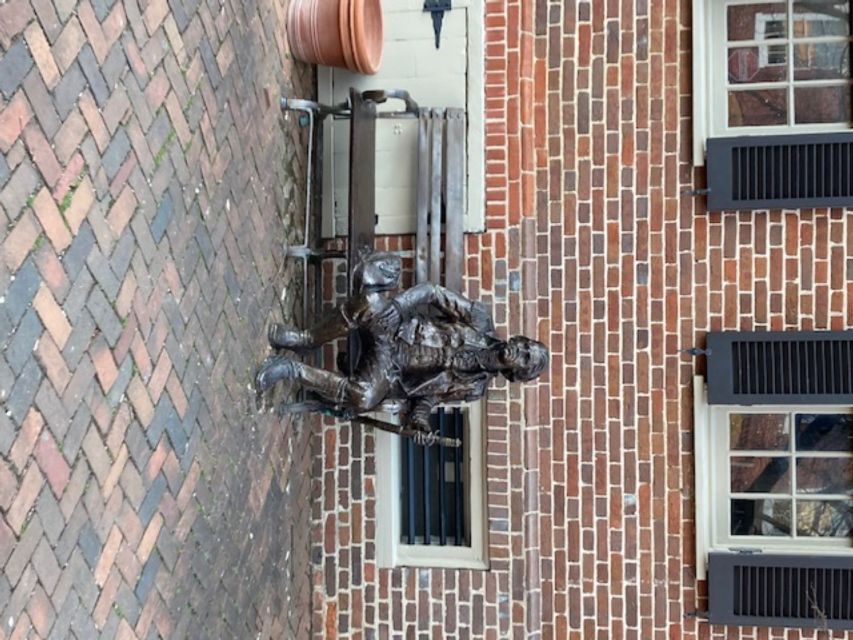
You’ll then see where Washington celebrated the end of the Revolutionary War. Again, this isn’t presented as a vague “big moment” in a history book. The tour points out the local setting tied to the celebration, and the guide explains why Alexandria fit into the endgame of the conflict.
This section often lands well because the contrast is immediate: you move from war-era context to a kind of relief and public milestone. It gives the walk emotional pacing, not just information.
A picture moment with young Lt. Col. Washington
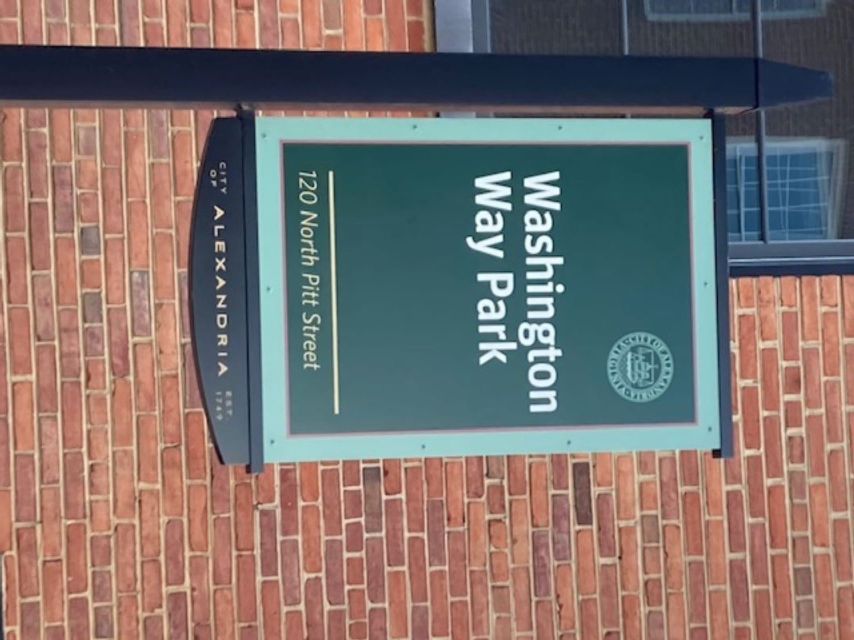
There’s also a chance to take a picture with a young Lt. Col. Washington. This is clearly designed for fun, but it’s more than a prop. The idea is to remind you that Washington’s story didn’t start at the presidency. His career and character were already taking shape long before the nation settled into its first political structure.
If you like photo stops, this one is timed so you can grab the picture without breaking the rhythm of the walk.
French and Indian War: how his military career started
The tour doesn’t skip Washington’s earlier military roots. You’ll talk about how his career began and his heroic actions during the French and Indian War.
This part matters because it gives you the “before.” Without it, the Revolutionary War and presidency can feel like separate chapters. With it, you see Washington building skills, reputation, and relationships over time—skills that later mattered in how he led and negotiated.
The guide keeps the story connected to Alexandria so it doesn’t turn into a generic military lecture.
Washington’s real estate in Alexandria: two properties, different purposes
One of the most practical and interesting sections is about Washington’s properties in Alexandria—two different holdings in the city. He built a townhouse for his own use and owned another home to rent out. The tour frames this as real estate savvy, not just residence.
I like that angle because it makes the story feel grounded. Washington wasn’t only a soldier and a statesman. He was also making decisions about money, housing, and long-term stability. Seeing that through two properties gives you a clear picture of how wealth and stability worked in early America.
You’ll get the locations connected to those properties, and the guide explains what the setup likely meant for Washington’s life in Alexandria.
Washington’s final years: two doctors who lived nearby
The tour wraps with Washington’s final years and the people around him when his health was failing. You’ll see where two doctors lived who helped take care of him on his last day.
This stop is a good “human ending.” It shifts the tone from achievements to care, and it also reinforces the tour’s overall theme: Alexandria was full of connections—some political, some personal, and some practical in the most literal sense.
Even if you don’t know the details ahead of time, the guide’s explanation helps you understand why these small, specific addresses matter. They make the final chapter feel real instead of distant.
Tim’s guiding style: why the tour works
A big reason this tour earns top scores is the guide. The experience is led by Alexandria History Tours, and the guide Tim stands out for how he connects the dots.
He’s clear, uses fun facts, and incorporates questions and comments in a way that keeps the story moving. Instead of reading like a script, the walk feels like a conversation with a strong outline: people, places, and why each stop matters.
If you like history where you can ask “so what does that mean” without feeling silly, you’ll probably have a good time here.
How much it costs and why it’s fair value
The price is $30 per person for a 90-minute walking tour. That’s not a “bare-bones” rate, but it’s also not trying to charge like a full-day museum ticket.
You’re paying for three things:
- A guide who has spent many hours researching Washington’s connection to Alexandria.
- A route that hits multiple site types (church, taverns, and property locations), so you get variety instead of repeating one theme.
- A story structure that explains relationships and context, not just names.
If you’re traveling in Alexandria with limited time and you want more than a self-guided stroll, this is a solid value. If you’re the type who wants to linger in museums with long interior time, you might feel like you’d prefer a longer or more ticket-heavy option.
Who this tour is best for (and who might want something else)
This tour fits best if you:
- want a walkable, structured way to learn Washington’s Alexandria story in under two hours
- enjoy connections and character details, not just major dates
- like seeing how national history played out in specific neighborhoods
You might consider a different format if you:
- need a lot of sitting time, since the experience is designed around walking between multiple stops
- only want interior access to historic sites, since some locations are likely primarily about exterior place-based context
- visit on Monday or Tuesday if “sit in Washington’s pew” is a must-have moment for you
Should you book this walk through Washington’s Alexandria?
If you want a compact tour that makes Washington feel local—through taverns, churches, properties, and neighborhood relationships—then yes, book it. The combination of focused stops and a guide like Tim who can answer questions without losing the thread is exactly what makes a walking tour worth your time.
If your ideal history day is mostly museum rooms and long exhibits, you may get more from a different kind of visit. But for anyone who likes street-level storytelling and leaving with names and addresses you can actually picture, this is a strong choice.
FAQ
FAQ
Where is the meeting point?
The tour meets at the Visitor Center at 221 King St.
How long is the tour?
It lasts about 90 minutes.
What does it cost?
The price is $30 per person.
What language is the tour in?
The tour is offered in English.
Is the tour wheelchair accessible?
Yes, the tour is listed as wheelchair accessible.
Is the church stop always open?
The church is not open on Monday and Tuesday, so access like sitting in Washington’s pew may not be possible those days.
What are the cancellation rules?
You can cancel up to 24 hours in advance for a full refund.
Can I reserve without paying right away?
Yes. It offers reserve now & pay later, so you can book your spot and pay nothing today.
DC on Foot: More Walks



More Tour Reviews in Alexandria Virginia




Down to Old Town Alexandria
Just Added: Fresh Washington DC Reviews
- Alexandria & Mt Vernon Tour★ 4.4 · 3 reviews
- Alexandria: Walking Through George Washington’s Alexandria★ 5.0 · 4 reviews
- Old Town Alexandria: Southern Comfort Food & History Tour★ 4.7 · 11 reviews
- Alexandria: Ultimate Dead of Night Walking Ghost Tour★ 4.4 · 11 reviews
- Alexandria: American Revolution Guided Walking Tour★ 5.0 · 13 reviews
- Alexandria: Phantoms of the Potomac Walking Tour★ 3.6 · 18 reviews
Old Town Alexandria Tours, side by side.
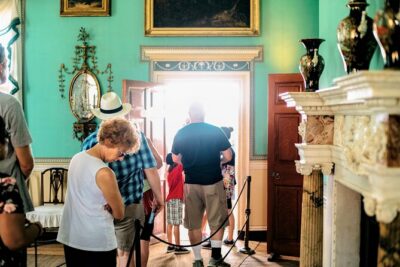 ★ 4.0Mount Vernon and Old Town Alexandria Day Trip from Washington DCFrom $99874 reviews
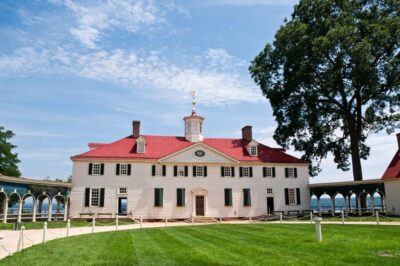 ★ 4.6From Washington DC: Old Town Alexandria & Mount Vernon TourFrom $109393 reviews
 ★ 4.5Mount Vernon Guided Estate Tour plus Old Town Alexandria from DCFrom $109307 reviews
 ★ 5.0Old Town, Alexandria and Mount Vernon Private TourFrom $1,04483 reviews
 ★ 4.0Water Taxi from Wharf or Old Town AlexandriaFrom $1965 reviews
 ★ 4.0Holiday Lights Tour of Washington DC and Old Town AlexandriaFrom $6964 reviews
 ★ 3.7Alexandria: Full-Day Bike Tour to Mt Vernon w/ Optional BoatFrom $7450 reviews
 ★ 3.5George Washington’s Mount Vernon & Old Alexandria Half-Day Guided Tour from DCFrom $9948 reviews
The lists this tour appears in