

Review · NATIONAL MALL & MONUMENTS
Pedicab Sightseeing Tour on the National Mall
Pedicabs make the Mall feel easy. This private ride covers the White House all the way to the Einstein Memorial in about 1 hour to 1 hour 5 minutes, with a guide who keeps the stops smart and the pacing flexible.
My favorite part is the combination of a relaxed vehicle ride plus real explanations you can follow, even if you’re not up for a long, foot-only trek. The trade-off is that the schedule keeps each monument visit moving (roughly five minutes per stop), so you’ll get great orientation, but not hours of lingering.
In This Review
- Key highlights to look for
- Why a private pedicab loop beats a sprint across the Mall
- Price and what you really get for $121 per person
- Starting at the White House: South Front views with two distance options
- Washington Monument and WWII: construction details plus total-war context
- MLK and FDR around the Tidal Basin: design you can actually interpret
- Lincoln and Vietnam Veterans Memorial: union, sacrifice, and minimalist impact
- Einstein on Constitution Avenue: a calm finisher near the National Academy of Sciences
- Pace and on-demand stops: how to make the most of one hour
- Accessibility and comfort: wheelchairs, rollators, and easier boarding
- Who should book this National Mall pedicab tour
- Should you book this pedicab tour on the National Mall?
- FAQ
- How long is the Pedicab Sightseeing Tour on the National Mall?
- Is this a private tour?
- What landmarks are included?
- Are tickets or admission costs included for the stops?
- Is the tour available in English?
- What accessibility options are available?
Key highlights to look for
- On-demand stopping so you can choose when to park, look, and move on
- White House South Front viewing with options to stay in the pedicab or step out briefly
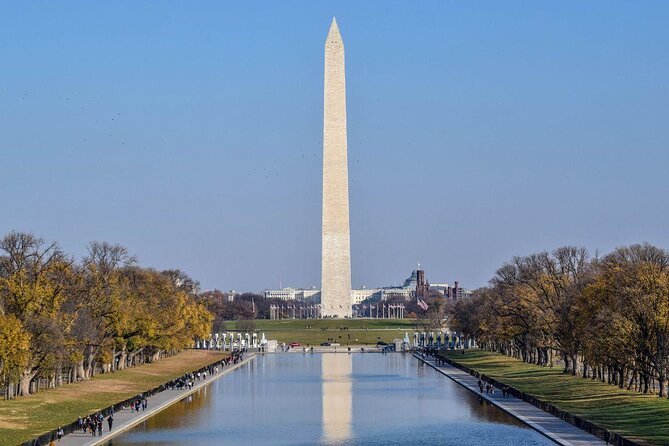
- Washington Monument design and construction talk, including materials and how it shaped the skyline
- World War II, MLK, and FDR memorial context built around meaning, not just names
- Lincoln and Vietnam Veterans Memorial experiences that explain symbolism and scale without making it feel like a lecture
- Accessibility support including a complimentary folding wheelchair with advance arrangement and help boarding with steps/handrail
The whole city in one sweep, a few more ways to see it
- Hop-on Hop-off Sightseeing Tour by Open-top Bus with 18 Stops
★ 3.5 · 3,848 reviews - Washington DC in One Day: Guided Sightseeing Tour
★ 4.5 · 3,360 reviews - VIP Best of DC with US Capitol + National Archives Reserved Entry
★ 4.5 · 2,491 reviews - Washington DC “See the City” Guided Sightseeing Segway Tour
★ 5.0 · 1,924 reviews
Why a private pedicab loop beats a sprint across the Mall

The National Mall is wide, flat, and packed. If you’re trying to see iconic sights in one day, walking can turn into a grind fast—especially with families, time limits, or anyone who tires easily.
This pedicab tour solves that problem with a simple approach: you get a private vehicle to “reset” your energy between monuments, and your guide handles the storytelling so you can keep moving with purpose. You’re not stuck in a long line of group departures, and you’re not trying to figure out the best angles while you juggle a map, photos, and crowds.
You’ll also appreciate that it’s a private tour, meaning it’s only your group. That matters on the Mall, where shared transport and crowded sidewalks can turn every stop into a slow shuffle.
Price and what you really get for $121 per person
At $121 per person, you’re paying for more than the pedicab seat. You’re buying three things that add up in Washington DC:
First: the guide work. The tour is led by a Washington DC–licensed official tour guide with 15 years of experience. That’s a big deal because the Mall is full of monuments that look straightforward until someone points out the design choices and the controversies you might otherwise miss.
Second: the logistics and access. One pedicab conveyance is included, and you’ll make it through major stops without the stop-start chaos that comes from navigating on foot or sharing crowded bus flow.
Third: real-world safety and authorization. The business includes liability insurance coverage of $2,000,000 and holds a Commercial Use Authorization concession issued by the National Park Service. That extra layer matters for peace of mind when you’re booking a vehicle-based tour in a high-profile public space.
Practical note: gratuities aren’t required, but they’re always welcome. And since it’s a private experience, you’ll likely feel the value most if you actually use the guide’s explanations instead of just treating the tour as a sightseeing taxi.
Starting at the White House: South Front views with two distance options
The tour kicks off with a White House stop focused on the South Front. What I like about this start is that you get two viewing styles: you can take in the view from the pedicab, or you can step out and view it on foot, while the guide points out things that are easy to miss.
Why that matters: with major DC landmarks, your photos can look similar unless you know where to stand and what you’re looking at. Getting both a close-by pedicab option and a brief on-foot option lets you adjust based on comfort, energy, and your group’s needs.
Also, the White House area can be unpredictable with crowds and pedestrian flow. Having a guide who can help you time your viewing and keep things moving tends to make the experience feel calm, not rushed.
Washington Monument and WWII: construction details plus total-war context

Next up is the Washington Monument, and the guide’s focus goes beyond “it’s tall.” You’ll learn about its design, controversial aspects of its history, and the building materials and construction techniques. Then you’ll connect it to how the monument sits in and shapes the skyline of downtown Washington, DC.
That kind of explanation pays off because the Washington Monument is one of those sights where you can walk past it a hundred times and still not understand what you’re seeing. Construction materials and technique are the nuts and bolts, but the skyline impact is what makes it feel like more than just a photo backdrop.
From there you’ll head to the National World War II Memorial. This stop is built around perspective and scale: you’ll take in a scenic viewshed and learn how Americans across different age groups contributed to a total war effort.
Even if you already know the basics of WWII, the point here is not name-checking. It’s helping you look at the monument with a clearer sense of what the designers wanted visitors to understand—especially how the memorial connects multiple generations to the war effort.
More of the Mall, monument by monument
MLK and FDR around the Tidal Basin: design you can actually interpret

Two of the most talked-about memorials on the Mall are also two of the easiest places to feel lost: there’s meaning in the details, but the details can blur when you rush.
At the Martin Luther King, Jr. Memorial, you’ll get a new perspective on the memorial’s design and the relief pediment tied to MLK. You’ll also get context for how the memorial’s site design works in relation to its setting at the Tidal Basin. The guide helps you see how the setting shapes what you notice as you move through the area.
This stop is especially good if you want the experience to feel respectful and grounded. It’s not just reading plaques; it’s understanding why the monument’s layout and sculptural elements matter.
Then comes the Franklin Delano Roosevelt Memorial, which is set up to feel more human in scale. You’ll have a chance to focus on Roosevelt at a walking-and-looking pace that makes sense, and you’ll move through the way the memorial organizes his terms of office—four in total—so it doesn’t all blend into one big wall of text.
One of the most useful ideas you’ll pick up here is how water functions as a symbolic design element. When you know that, you’ll start noticing the memorial’s visual logic instead of treating it like a single stop on your list.
Lincoln and Vietnam Veterans Memorial: union, sacrifice, and minimalist impact

If you want one of the most iconic photo moments, the Lincoln Memorial delivers. Your stop focuses on why Lincoln is positioned where he is—near the river edge—and on how the monument’s design works as a metaphor for preserving the union. You’ll also learn how the memorial’s site symbolism connects to historic events that took place here.
You’ll even have an opportunity to visit the seated statue of Lincoln, which is one of those simple moments that can hit harder than expected because it turns a towering figure into something more personal and close-up.
Then the tour shifts to the Vietnam Veterans Memorial, where the experience changes tone. Instead of grand ornament, you’ll get a close and personal look at its abstract, minimalist approach—and you’ll get a fresh perspective on the scale of service and sacrifice.
This pairing is smart: Lincoln gives you symbolism through monumental design, while Vietnam conveys impact through restraint. Together, they help you understand how memorials can use totally different languages to communicate grief, respect, and meaning.
Einstein on Constitution Avenue: a calm finisher near the National Academy of Sciences
The final stop is the Albert Einstein Memorial, located just off the well-worn path on Constitution Avenue near the National Academy of Sciences.
This ending works well because it’s less of a crowd magnet than the biggest headline monuments, and it gives you a chance to land the tour with something quieter. You’ll be able to view and visit Einstein, which turns the last minutes into a small breather rather than another sprint for the next landmark.
If your group is tired by the end, this stop often feels like a soft landing—still meaningful, but not as intense as the busiest stops on the Mall.
Pace and on-demand stops: how to make the most of one hour

The whole experience is designed for momentum: about eight major stops, with each one paced at roughly five minutes. That’s not enough time to memorize every detail, and that’s okay. This tour is about getting your bearings fast and leaving with the “why” behind what you’re seeing.
The on-demand stopping feature is what makes it feel personalized. Your guide can help you slow down when your group wants photos or a closer look, and speed up when you’re trying to connect to the rest of your day. It’s a practical way to handle the reality of the Mall—crowds, lines, and constant foot traffic.
A good strategy is to arrive ready to decide. If you have limited mobility, focus your energy on the stops that matter most to you, and use the pedicab ride time to rest instead of scanning the map.
If you want the best photos, plan for quick positioning at the stops you care about most. The tour’s short timing makes those early minutes count.
Accessibility and comfort: wheelchairs, rollators, and easier boarding
This is one of the strongest reasons to consider the tour if you’re planning around mobility needs.
The booking includes complimentary no-charge use of a folding wheelchair, but you’ll need to arrange it in advance. The tour also welcomes folding rollators and walkers. Boarding includes steps and a handrail for easier access, so you’re not left to figure out equipment transitions on your own.
Oxygen tanks are welcome, which is the kind of detail that can make a huge difference for people traveling with medical needs.
And if you travel with a service animal or companion dog, they’re welcome. The tour is also described as near public transportation, which is helpful if you’re building this into a bigger DC itinerary.
If you’re using the wheelchair service, I’d treat that as a must-plan item: request it ahead so it’s ready when you arrive.
Who should book this National Mall pedicab tour
This tour fits best when at least one of these is true:
- Your group wants to see major monuments without committing to long stretches of walking
- You’re traveling with someone who has short-distance limits or needs a wheelchair or rollator
- You want an organized route with explanations, not a self-guided puzzle
- You prefer a private experience where you can adjust on the fly instead of sticking to a rigid group schedule
- You’re visiting Washington DC for the first time and want the big-picture meaning of the memorials, not just the names
It can also work well for multigenerational trips, because the pedicab ride helps different comfort levels stay together instead of splitting the day.
If your group is the type that loves quiet reading time at a monument, keep expectations realistic. You’ll get strong orientation and memorable design explanations, but the pace is built to cover several sites in one session.
Should you book this pedicab tour on the National Mall?
I’d book it if you want a close, efficient, private way to understand the National Mall’s biggest hits. The value is strongest when you can use the guide’s context: design choices, symbolic meaning, and the sometimes surprising stories behind what you’re looking at.
I would think twice if your top priority is long unhurried time at just one or two memorials. The schedule moves, and the tour is meant to deliver breadth in about an hour.
One more practical point: the experience requires good weather. If your dates are shaky, it’s smart to keep flexibility so you can take advantage of the ride when conditions cooperate.
If you want a National Mall day that feels manageable—less walking stress, better guidance, and a smooth route—this pedicab sightseeing tour is exactly the kind of Washington DC experience that makes the monuments feel reachable.
FAQ
How long is the Pedicab Sightseeing Tour on the National Mall?
The tour lasts about 1 hour to 1 hour 5 minutes.
Is this a private tour?
Yes. It’s a private tour/activity, and only your group participates.
What landmarks are included?
You’ll visit the White House, Washington Monument, National World War II Memorial, Martin Luther King, Jr. Memorial, Franklin Delano Roosevelt Memorial, Lincoln Memorial, Vietnam Veterans Memorial, and Albert Einstein Memorial.
Are tickets or admission costs included for the stops?
The stops are listed as admission ticket free.
Is the tour available in English?
Yes, it is offered in English.
What accessibility options are available?
A complimentary folding wheelchair is available with advance arrangement. Folding rollators and walkers are welcome, and boarding includes steps and handrail for easier access. Oxygen tanks are welcome, and service animals are allowed.
The Capital on Two Wheels





The Mall, Monument by Monument






All of DC in a Day





Just Added: Fresh Washington DC Reviews
- Washington : Private Custom Walking Tour With A Guide (Private)★ 3.5 · 3 reviews
- 3-Hour Small Group Memorial Tour in Washington, D.C.★ 4.0 · 3 reviews
- Washington DC Private Guided Bus Day Tour with Step Off Guide★ 5.0 · 3 reviews
- Washington, DC: The Good Liar: Brian Curry★ 5.0 · 3 reviews
- DC Monuments Walking Tour: Small Group, Big Ideas★ 5.0 · 3 reviews
- Washington DC: Library of Congress Private Tour with Tickets★ 5.0 · 3 reviews
National Mall & Monuments, side by side.
 ★ 4.5DC Memorials Night Tour: Glass-Roof Convertible Upgrade OptionFrom $696,933 reviews
 ★ 4.5National Mall Monuments Night Tour with 10+ Stops, Entry TicketsFrom $654,863 reviews
 ★ 4.5Washington DC Monuments by Moonlight Tour by TrolleyFrom $483,956 reviews
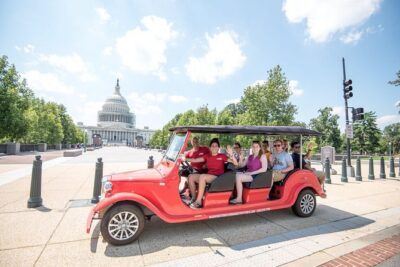 ★ 5.0DC Monuments and Capitol Hill Tour by Electric CartFrom $552,841 reviews
 ★ 4.5National Mall Night Tour with 10+ Monuments (Public or Private)From $682,207 reviews
 ★ 5.0Small Group National Mall Night Tour with 10 Top AttractionsFrom $991,658 reviews
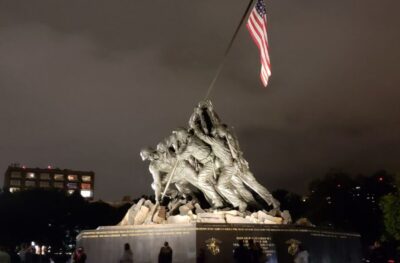 ★ 4.6Monuments by Moonlight Nighttime Trolley TourFrom $481,529 reviews
 ★ 4.8National Mall Tour by Electric VehicleFrom $531,252 reviews
The lists this tour appears in