
Review · DC BIKE & SEGWAY TOURS
Washington DC: See the City Segway Tour
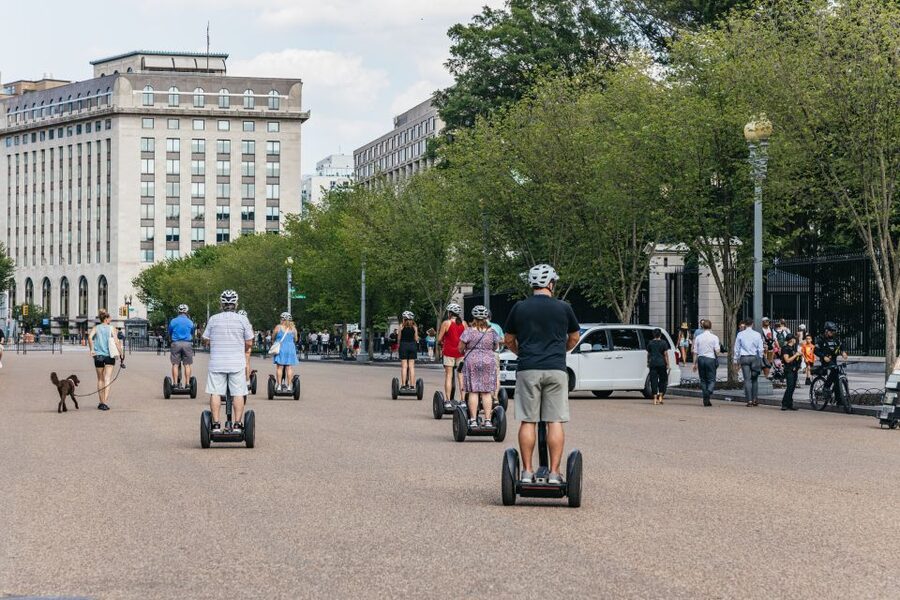
Segways make the National Mall feel short. In about 150 minutes, you’ll glide past the White House and a huge chunk of the National Mall, while your guide talks through radio headsets so you catch every detail. It’s a smart way to cover big sights without turning your day into an ankle test.
Two things I like a lot: first, the setup is designed for first-timers. You arrive 30 minutes early for training and one-on-one instruction, and most people get comfortable quickly. Second, the tour is built around high-impact viewpoints, with fun, fast storytelling that keeps you mentally engaged, not just moving.
One drawback to plan for: even when riding feels easy, your feet still want a break. And you’ll mainly see the buildings and memorials from the outside along the route, so if your goal is long indoor time in specific museums, you’ll still need to add that on your own.
In This Review
- Key takeaways before you book
- Meeting at Capital Segway Tours: right by the White House
- The 30-minute Segway lesson that makes first-timers comfortable
- National Mall highlights route: from Lafayette Square to Lincoln Memorial
- Memorials and Tidal Basin: Vietnam through WWII in one ride
- Washington Monument, Smithsonian row, and the art of quick viewpoints
- Capitol area and the stops you can’t miss: National Archives, Navy Memorial, FBI, Freedom Plaza
- Why the radio headsets change everything
- Photo stops and the Lincoln Memorial reset
- Comfort reality check: helmet fit, riding in single file, and earfit issues
- Price and value: $70 for 150 minutes of guided landmark access
- Who this tour fits best
- Should you book this Segway tour or skip it?
Key takeaways before you book

- Radio headsets keep the narration clear the whole ride
- 30-minute pre-training helps you get control fast and safely
- White House to Lincoln Memorial is an efficient highlights path
- Memorials loop covers Vietnam, Korean War, DC War, Tidal Basin, WWII
- Lincoln Memorial stop often includes a real chance to rest and look around
- Capitol area viewpoints include the National Archives and more, without long transfers
The whole city in one sweep, a few more ways to see it
- Hop-on Hop-off Sightseeing Tour by Open-top Bus with 18 Stops
★ 3.5 · 3,848 reviews - Washington DC in One Day: Guided Sightseeing Tour
★ 4.5 · 3,360 reviews - VIP Best of DC with US Capitol + National Archives Reserved Entry
★ 4.5 · 2,491 reviews - Washington DC “See the City” Guided Sightseeing Segway Tour
★ 5.0 · 1,924 reviews
Meeting at Capital Segway Tours: right by the White House
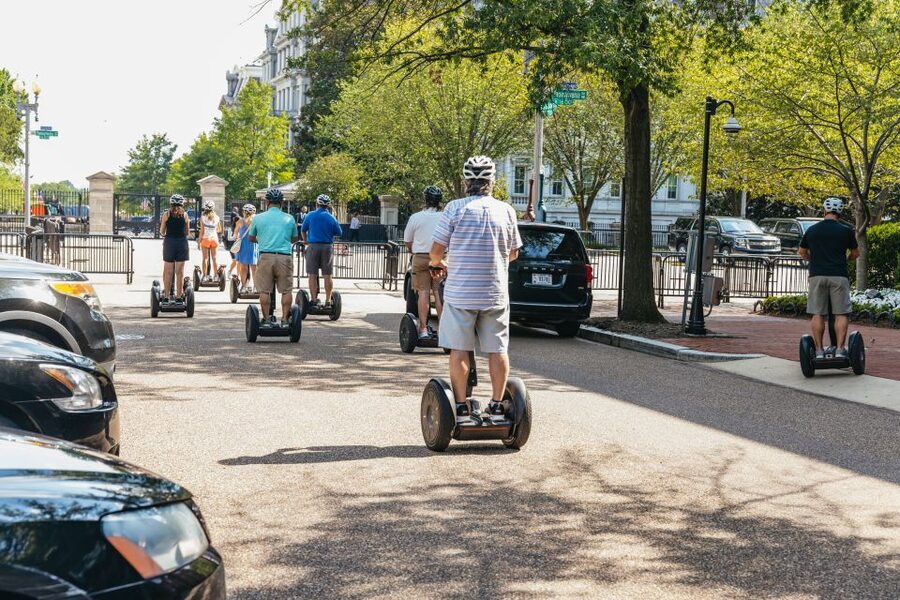
You start at the activity provider’s office for Capital Segway Tours, inside the store on Connecticut Avenue about half a block north of the White House. That location matters more than it sounds. Being near the White House means your tour doesn’t waste time getting going, and it also helps you orient fast for the rest of the day.
Getting there is straightforward with Metro. The meeting point is convenient from Farragut West and Farragut North stations. If you’re staying anywhere central, you won’t feel like you’re “commuting to sightseeing.” You’re just stepping into it.
The 30-minute Segway lesson that makes first-timers comfortable
Before you ride out, you’ll get a brief video and equipment presentation, then you’ll get one-on-one instruction from the staff. The key point is pacing: they don’t throw you into traffic right away. You practice until you can handle the basics confidently, and then you do a quick soundcheck before you head off.
This is where the tour earns its reputation. In the real world, you don’t just want a fun transport trick. You want to feel steady, in control, and safe around pedestrians. The staff’s job is to make sure you can steer, stop, and start smoothly enough for a group ride in a busy public area.
What to bring: comfortable shoes. That’s not just boilerplate. Even with the Segway doing the heavy lifting, you’ll still be standing, shifting your weight, and stepping around at stops. If your shoes are all wrong, your feet will complain even if your Segway feels great.
National Mall highlights route: from Lafayette Square to Lincoln Memorial

Once you leave, the first stop is the White House, just across from where you start. From there, you roll into the heart of the National Mall sights, with the guide pointing out the landmarks as you go. Expect a classic sequence through Lafayette Square, the US Treasury, and Constitution Gardens.
These stops are more than postcards. Riding here lets you see the spacing and relationships between buildings: where the mall opens up, how sightlines work, and why certain monuments feel like anchors. If you’ve only seen these places on maps, this part helps you understand Washington’s geometry without walking for hours.
Then you move into the biggest “wow” moment for many people: the Lincoln Memorial. You get a rhythm of gliding, listening, and spotting details, and then you reach the memorial area where you can reset. Multiple guides are known for giving a real pause here to rest your feet and take in the view before rolling on.
Memorials and Tidal Basin: Vietnam through WWII in one ride

After Lincoln, the tour flows into the memorials that people often underestimate until they’re standing in front of them. You’ll pass the Reflecting Pool, the Vietnam Veterans Memorial, and the Korean War Memorial. Each stop is built for guided storytelling while you keep moving, so you don’t just skim names—you get context fast.
Next comes the DC War Memorial, then you continue toward the Tidal Basin area and the WWII Memorial. This section is where the tour shines if you like your sightseeing to have a narrative thread. You’re not just hopping between photos. You’re hearing why each memorial is designed the way it is, and how it connects to the larger story of Washington.
One practical thing here: memorial areas often feel like they’re “right there,” but they can add up in walking time. The Segway turns that walking math into something manageable, which is the core value of this tour. You still get the emotional impact, but you’re not paying for it with your knees.
The city on two wheels, a few more routes
Washington Monument, Smithsonian row, and the art of quick viewpoints

From the memorial zone, you’ll see Washington Monument and then continue along the area connected with the Smithsonian museums and the National Gallery of Art. Even if you don’t go inside on this specific ride, the route helps you see the layout: what’s close together, what’s farther than it looks, and where you’d want to return later.
This matters because it helps you plan your remaining time in Washington. After the tour, you’ll usually have a much clearer sense of which museums you actually want to pursue and which ones you can skip. The glide makes the city readable.
Also, the Segway gives you a better chance to look up and scan details. When you walk for hours, your attention shrinks to where your feet go. On the tour, you can keep your head up and your brain on the sights while still covering ground efficiently.
Capitol area and the stops you can’t miss: National Archives, Navy Memorial, FBI, Freedom Plaza

As the ride continues, you’ll see the US Capitol area and then keep going toward the National Archives and the US Navy Memorial. You’ll also pass the FBI Building and Freedom Plaza, among other major highlights.
A quick note that helps your expectations: this is a ride-and-view experience. You’ll see the landmarks as part of the route, but it’s not framed as an inside-the-building tour. For many first-time visitors, that’s perfect. It gives you a strong overview without burning half a day waiting in lines.
In practice, this portion is a great “connect-the-dots” segment. You start the day in the executive branch area, then move through the cultural and memorial core, and end up at the core of national government. Even if you don’t know Washington’s political geography yet, you’ll start to feel it by the end of the route.
Why the radio headsets change everything
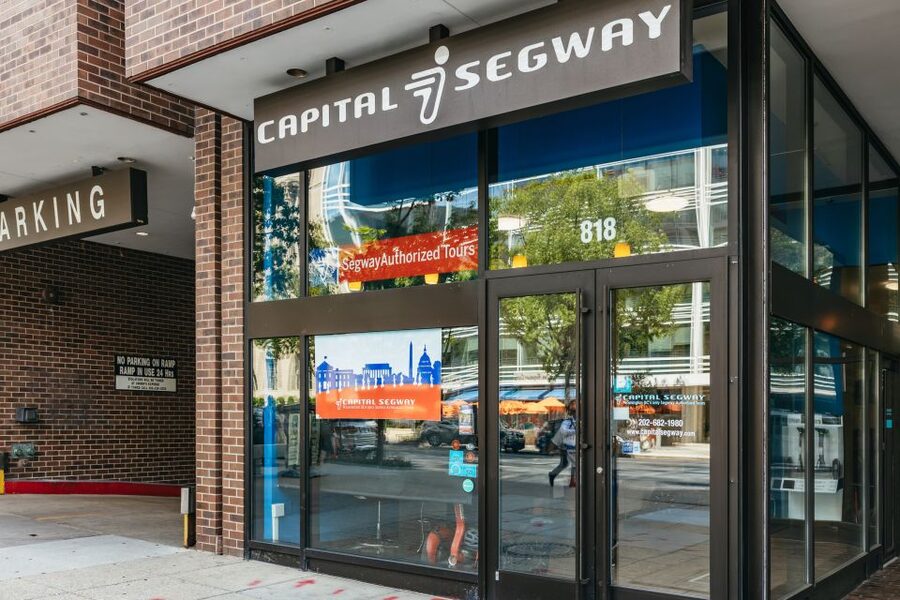
The biggest quality-of-life feature here is the narration system. You’ll hear your guide via top-of-the-line radio headsets, so you can focus on riding and listening at the same time. That might sound small, but it’s huge on a city tour.
Without headsets, guides either get quiet or the group gets disconnected. With headsets, you stay in sync with the story and you don’t feel like you’re missing big chunks when you get a step behind. It’s one of the reasons this tour can feel like it moves at the speed of your curiosity, not your feet.
You’ll also feel the guide’s style. Guides like Kyle, Brandon, Teddy, Chris, Ty, and Evan show up in the pattern of high praise—often for a mix of strong facts, humor, and photo help. If you’re the type who likes your guide to be a real person, not a script reader, this is where that matters.
Photo stops and the Lincoln Memorial reset

This tour doesn’t just pass by landmarks like a moving billboard. You’ll get moments to stop and take photos, and the Lincoln Memorial area often includes a meaningful rest pause. Some groups specifically note a longer parked moment here that helps with foot fatigue.
I recommend you treat photo time like a two-step process: grab the wide shot first, then look for one or two details your guide highlights. The guide’s stories often point you to something you would never notice at first glance, like symbolism in the layout or what certain sightlines are meant to emphasize.
One practical tip from the real-world tradeoff of a Segway tour: your feet can still feel tingly by the end. Build in a light expectation that you’ll want to stretch, shift, and take advantage of any pause points.
Comfort reality check: helmet fit, riding in single file, and earfit issues

Let’s be honest: helmets and headsets are part of the deal. For most people, that’s fine. For some, headset comfort can be tricky—especially if you have small ear canals. One reviewer noted the headset didn’t stay comfortably and depended on helmet and hair placement. If that’s you, ask staff to help you get the best headset position during the training phase.
On the road, safety shape-shifts the experience. The ride often happens in single file or mostly in a straight-line formation, because it’s public streets and shared space. That can feel a bit “tight,” but it’s also why the group stays organized and why the tour works as well as it does.
Price and value: $70 for 150 minutes of guided landmark access
At $70 per person for a 150-minute tour, this isn’t a cheap impulse buy. But it can be great value if you want maximum sightseeing with minimum effort.
Here’s why the price works for the right people:
- You get the Segway, helmet, and a guide, plus radio headsets.
- You cover a long list of major landmarks in one loop without logistics headaches.
- You save a ton of time compared to walking the same stretch across the National Mall and memorials.
The tradeoff is that you’re paying for speed and guidance. If you want long, slow wandering with lots of time inside museums, this won’t replace that. Think of it as the high-efficiency overview layer for your DC day, not the whole destination.
Who this tour fits best
This is a strong match if you:
- Are visiting DC for a first time and want the big landmarks connected into one route
- Want an easier way to handle the National Mall distance
- Like guided storytelling more than self-guided “just photos” wandering
- Have limited time and want to see a lot without exhausting yourself
It may not be your best choice if you:
- Need lots of inside museum time during your main sight day
- Want a very flexible stopping schedule on your own
- Have concerns about riding. The tour isn’t recommended for pregnant women, and the minimum age is 16.
Should you book this Segway tour or skip it?
If you want an efficient, guided way to see the National Mall and major memorials, I’d book it. The combination of quick training, clear narration through radio headsets, and a route that hits major sights in about 150 minutes makes it a solid use of time.
Skip it if you’re not into riding or you know you’ll be frustrated by comfort gear and a set route. Also, if your priority is long indoor museum visits, plan to do those separately.
Bottom line: for most visitors, this is one of the best “first-pass” ways to understand Washington fast, then come back later with more focus.
More Tour Reviews in Washington Dc






The Capital on Two Wheels






All of DC in a Day



Just Added: Fresh Washington DC Reviews
- Washington : Private Custom Walking Tour With A Guide (Private)★ 3.5 · 3 reviews
- 3-Hour Small Group Memorial Tour in Washington, D.C.★ 4.0 · 3 reviews
- Washington DC Private Guided Bus Day Tour with Step Off Guide★ 5.0 · 3 reviews
- Washington, DC: The Good Liar: Brian Curry★ 5.0 · 3 reviews
- DC Monuments Walking Tour: Small Group, Big Ideas★ 5.0 · 3 reviews
- Washington DC: Library of Congress Private Tour with Tickets★ 5.0 · 3 reviews
DC Bike & Segway Tours, side by side.
 ★ 5.0Washington DC “See the City” Guided Sightseeing Segway TourFrom $701,924 reviews
 ★ 4.5Washington DC Sites at Night Guided Bicycle TourFrom $65536 reviews
 ★ 4.8Monuments and Memorials Bike TourFrom $65399 reviews
 ★ 4.3Monuments by Night Bike TourFrom $65254 reviews
 ★ 4.5Washington DC Capital Sites Bike TourFrom $55198 reviews
 ★ 5.0Epic Evening e-Scooter TourFrom $89122 reviews
 ★ 5.0Customized Private Bike Tour of DCFrom $595114 reviews
 ★ 4.5Monumental Electric Bike TourFrom $8999 reviews
The lists this tour appears in