
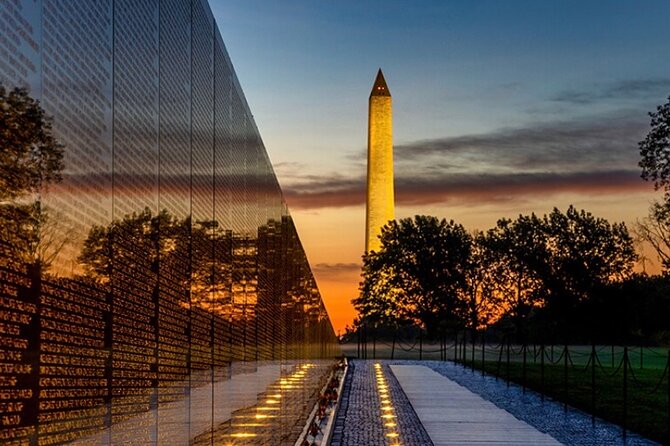
Review · NIGHT MONUMENT TOURS
Washington DC Night-Time City Tour
Nighttime DC feels like a movie set. This 3-hour bus tour strings together the city’s biggest landmarks after dark, with stories from guides like Kareem that help it all click fast.
I love the practical extras that keep the night comfortable: bottled water and a phone charger. One thing to consider is that not every monument is brightly lit at night, so some stops can feel darker than you expect.
In This Review
- Key points before you go
- Why DC after dark changes how you see the monuments
- Price and what you’re really buying for $69.99
- Meeting point, timing, and how the bus experience works
- From Capitol Hill to Civil War stops: where the story begins
- U.S. Capitol area
- Ulysses S. Grant Memorial
- James A. Garfield Monument
- Peace Monument lecture
- Washington Monument pass and nearby presidential memorial context
- Tidal Basin and the big presidential memorial cluster: Jefferson to MLK to Lincoln
- Thomas Jefferson Memorial
- Franklin Delano Roosevelt Memorial
- George Mason Memorial
- Martin Luther King Jr. Memorial
- Lincoln Memorial
- War memorials that land hardest: Korean, Vietnam, WWII, and Iwo Jima-style symbolism
- Korean War Veterans Memorial
- U.S. Marine Corps War Memorial (Iwo Jima)
- Albert Einstein Memorial
- Vietnam Veterans Memorial
- World War II and World War I memorials
- Private-timed highlights beyond the Mall: 9/11, Air Force, Japanese American memorial, and more
- Night lighting and seating: how to get better photos and a better comfort level
- Guides are the difference: Kareem and Vernon’s trivia-style pacing
- Who should book this DC night tour, and who might want another option
- Should you book this DC night tour?
- FAQ
- How long is the Washington DC Night-Time City Tour?
- What time does it start, and where do I meet?
- What’s included in the price?
- Is hotel pickup included?
- Are tickets needed for the monuments?
- How big is the group?
- Can I cancel for a full refund?
Key points before you go
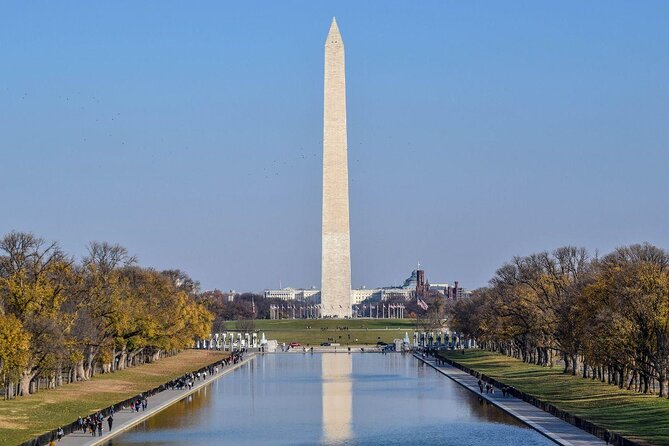
- National Mall in one sweep: quick stops and views that help you get oriented fast.
- Night storytelling: guides bring the history into focus with trivia-style engagement.
- On-bus comfort perks: air conditioning, bottled water, and a phone charger are included.
- Photo reality check: several memorials can be subtle in low light, even on a “night tour.”
- It’s structured, not lingering: most stops are short, so it’s best for seeing a lot, not hanging around.
The whole city in one sweep, a few more ways to see it
- Hop-on Hop-off Sightseeing Tour by Open-top Bus with 18 Stops
★ 3.5 · 3,848 reviews - Washington DC in One Day: Guided Sightseeing Tour
★ 4.5 · 3,360 reviews - VIP Best of DC with US Capitol + National Archives Reserved Entry
★ 4.5 · 2,491 reviews - Washington DC “See the City” Guided Sightseeing Segway Tour
★ 5.0 · 1,924 reviews
Why DC after dark changes how you see the monuments
Daytime DC is all about scale and architecture. At night, it becomes about atmosphere. The bus keeps you moving, and the route is timed so you’re seeing monuments in the same light your photos need—cooler, calmer, and usually less frantic than the daytime rush.
The big win here is that you don’t have to plan a half-dozen separate walks. In about three hours, you get a guided overview of the National Mall and surrounding memorials—so when you do come back later for a deeper visit, you already know where everything sits.
Still, manage expectations on lighting. Some of the memorials are meant to be viewed quietly, and in low light they can look darker than their daytime photos. Plan to enjoy the stories and silhouettes, not just bright “postcard” illumination.
Price and what you’re really buying for $69.99

At $69.99 per person, you’re not paying for admission tickets in bulk—you’re paying for time, route-planning, and guidance. Most stops on this loop are free (and the tour is built around that), but the real value is the structure: you’re shown the key sites, then told what matters about each one, without you needing to drive, park, and shuffle between locations.
You also get included comfort items that add up on a night tour. Bottled water matters when you’re outside and walking for short bursts between stops. A phone charger is underrated too—DC at night means lots of photos, maps, and quick research, and batteries die faster than you’d think.
What you should watch for is how “much” is packed into “three hours.” This tour is a highlights format. If you want to spend 30–45 minutes at each memorial, you may feel rushed. But if your goal is to get your bearings and see the major sights efficiently, this price makes sense.
Meeting point, timing, and how the bus experience works
This tour starts at 7:00 pm and returns you back to the meeting point at 1200 Independence Ave SW, Washington, DC 20004. There’s no hotel pickup, so you’re doing a quick walk to the start area (or using public transportation since it’s “near public transportation”).
The bus setup is designed for a mixed group. The experience lists air conditioning, and the maximum group size is up to 53 travelers. That means you’re not going to get a super-private, one-on-one lecture—but you still get clear guidance and a planned rhythm.
One practical move: arrive a few minutes early. Nighttime DC schedules are tight, and the tour depends on staying on the clock so you can hit the next set of monuments before the light changes and crowds thin out.
From Capitol Hill to Civil War stops: where the story begins
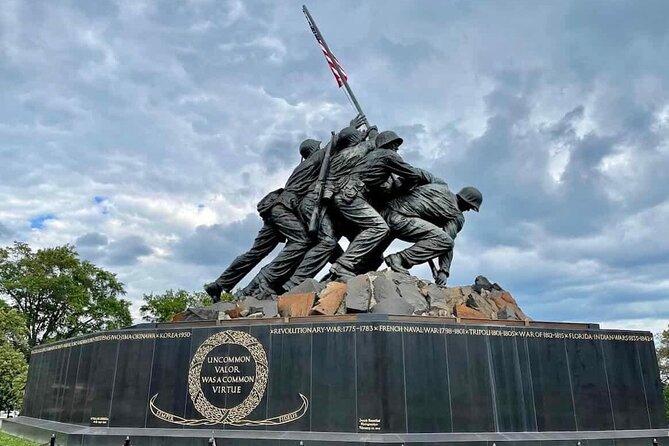
The tour’s main launch point sets the tone: you’re in the National Capital area, where the U.S. government landmarks and Civil War history sit close enough to connect visually. The early portion focuses on big symbols—buildings, monuments, and memorials that anchor DC’s identity.
The memorials after dark, other evenings out
U.S. Capitol area
You’ll start with the U.S. Capitol as your landmark anchor. From there, the bus tour works like a guided “map in motion,” showing major nearby sights and setting up what you’ll see next. This is also where you’ll get the “why this matters” framing—so later, when you’re standing at smaller memorials, the context won’t feel random.
Ulysses S. Grant Memorial
Next is the Ulysses S. Grant Memorial with a quick story of the Civil War. Even in a short window, Grant’s presence helps connect the political landscape to the human cost of the conflict.
James A. Garfield Monument
Then comes the James A. Garfield Monument, again with short-form historical context. The point isn’t a long museum-style visit—it’s to give you the headline connection to Garfield as a president and Civil War era figure.
Peace Monument lecture
A Peace Monument stop includes a lecture on the Civil War (1861–1865). Night is a smart time for this kind of stop because the pace stays steady and you’re not distracted by everything happening during peak daylight hours.
Washington Monument pass and nearby presidential memorial context
The early-to-mid portion includes major National Mall views and presidential memorial stops in the same overall flow. You’ll see key names tied to the dates that shaped the nation—so by the time you reach the Tidal Basin area, you’re already tracking the “timeline” in your head.
Possible drawback here: short stops mean you’ll take photos, listen, and move on. If you’re the type who wants to read every plaque word-for-word, you’ll need a separate daytime visit later.
Tidal Basin and the big presidential memorial cluster: Jefferson to MLK to Lincoln
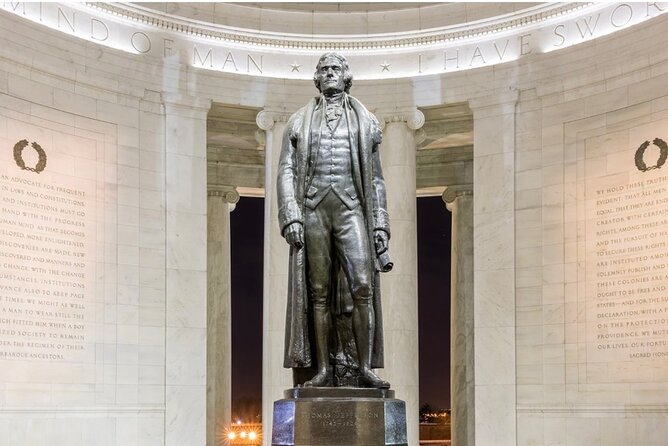
This is where the tour really feels like a guided walk through American ideals. Even though you only get minutes at each stop, the grouping matters: Jefferson and FDR are about governing and ideals, MLK is about civil rights, and Lincoln is about unity and sacrifice.
Thomas Jefferson Memorial
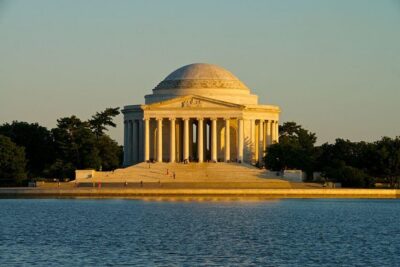
You’ll spend around 15 minutes at the Jefferson Memorial. It’s a perfect stop for the night because the domed silhouette reads clearly, and the storytelling helps you connect Jefferson to the bigger American narrative—not just a name on a monument.
Franklin Delano Roosevelt Memorial
The tour then moves through the FDR stop area and keeps the pace moving. FDR’s memorial works well at night because the design still reads as “chapter by chapter,” even when you’re not spending a long time there.
George Mason Memorial
You’ll also hit the George Mason Memorial. Mason is the kind of figure that many first-time visitors don’t know well, and a guided stop helps turn him from a footnote into a real person tied to the founding era.
Martin Luther King Jr. Memorial
At the Martin Luther King Jr. Memorial, you’ll get about 10 minutes. MLK’s message lands differently at night—quietly, with gravity. The time is short, but the guided explanation makes it easier to understand what you’re seeing before you move on.
Lincoln Memorial
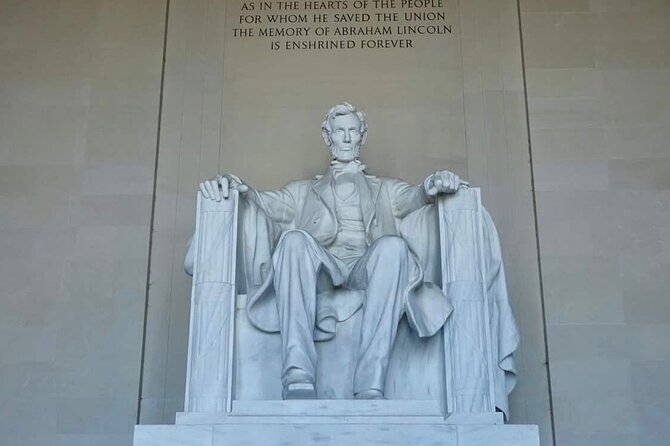
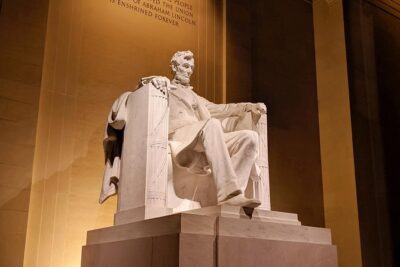
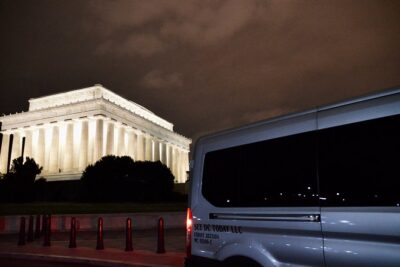
Then comes the Lincoln Memorial for about 15 minutes. Night makes Lincoln’s presence feel larger than life, and the tour frames him in context quickly—so you’re not just looking at a statue, you’re understanding why it’s placed where it is.
Photo tip that saves frustration: if you’re relying on phone photos, switch your camera exposure down slightly and aim for steadier shots. Night lighting can be uneven, especially when memorials aren’t fully illuminated.
War memorials that land hardest: Korean, Vietnam, WWII, and Iwo Jima-style symbolism
After the presidential and civil-rights stops, the tour turns toward the nation’s wars and remembrances. This part is emotionally heavier, and it’s also where the guided storytelling can really help you stay connected to what each memorial represents.
Korean War Veterans Memorial
At the Korean War Veterans Memorial, you’ll get around 10 minutes. It’s one of those stops where the guide’s framing helps you understand what to look for—without needing to “figure it out” alone in the dark.
U.S. Marine Corps War Memorial (Iwo Jima)
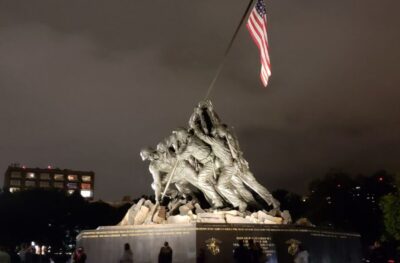
Next is the U.S. Marine Corps War Memorial, often referred to in connection with Iwo Jima. You’ll get about 10 minutes here. Even in a short stop, this memorial is visually powerful at night, and the guided context helps connect the scene to the people behind it.
Albert Einstein Memorial
Between the war memorials, you’ll also see the Albert Einstein Memorial. It’s a nice contrast point, reminding you DC isn’t only presidents and battlefields—it’s also ideas.
Vietnam Veterans Memorial
The Vietnam Veterans Memorial stop runs about 15 minutes. This memorial can feel especially intense after dark, and the short guided explanation helps keep you oriented: what the names mean, and why the design has such a strong emotional effect.
World War II and World War I memorials
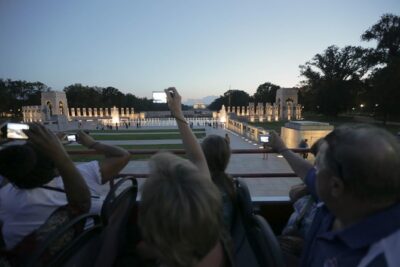
You’ll also reach the National World War II Memorial (around 10 minutes) and the World War I memorial as part of the same broader loop. The key is that the tour keeps the timeline moving—so each stop adds another layer instead of feeling like separate random sites.
Private-timed highlights beyond the Mall: 9/11, Air Force, Japanese American memorial, and more
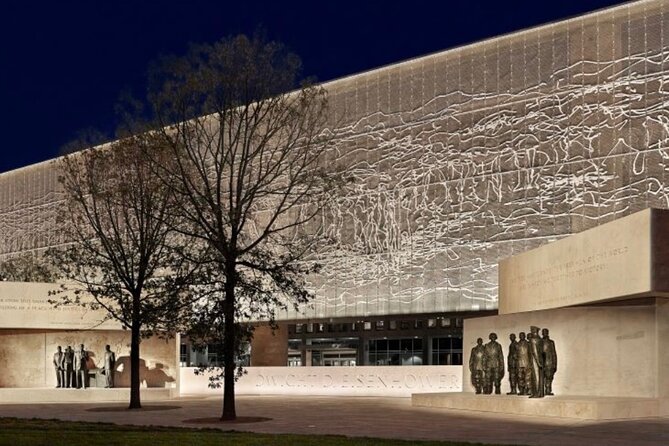
Some stops on this tour are labeled as private-tour style windows, including the Pentagon 911 Memorial and Air Force Memorial, plus a Japanese American Memorial. In practice, this matters because you’re scheduled to experience them as part of the bus plan, not just arriving and figuring it out on your own.
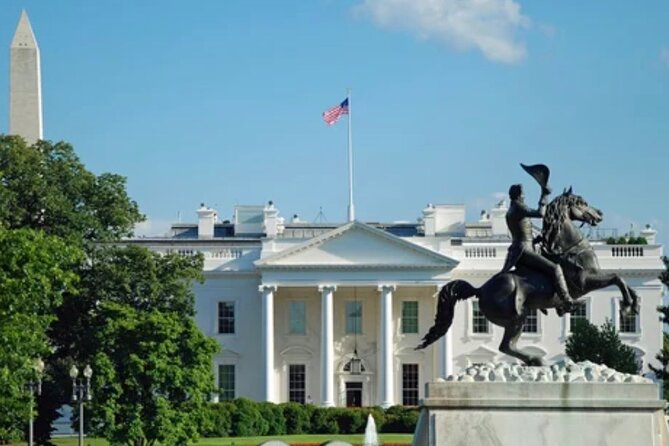
You’ll also see additional major points like Ford’s Theater and the Navy Memorial as part of the broader route. And the White House area is included as a view with White House admission not included, meaning you’re not being sold tickets for inside.
One more thing: you’ll pass by where President Lincoln was assassinated. Even though it’s not a long stop, that passing moment can stick with you because you connect the Lincoln story from the memorial to the real-world location of the event.
Real-world note: road closures can happen in DC. The best guides adjust the route while still keeping you on the main schedule, so you don’t feel stranded.
Night lighting and seating: how to get better photos and a better comfort level
Night tours are all about tradeoffs. You get fewer crowds and a calmer vibe, but lighting is inconsistent. If your top goal is crisp photos of every monument, a daytime visit might still be better for some sights.
For this tour specifically, it helps to understand the lighting pattern: some of the best-lit silhouettes include the Washington Monument, Lincoln Memorial, Jefferson Memorial, and the White House area. Others can be more subdued, so your best strategy is to treat them like “story stops,” not just photo stops.
On the comfort side, the tour lists air conditioning, but bus airflow can vary by where you sit. If you run hot, try to choose a seat where air feels stronger rather than relying on a back-row gamble.
Also, plan around the pace between stops. You may be stepping out, taking a few photos, listening briefly, then reboarding quickly. Wear shoes you can move in easily.
Guides are the difference: Kareem and Vernon’s trivia-style pacing
The biggest standout in the experience is the people running the tour. Guides like Kareem and Vernon are repeatedly highlighted for keeping the group engaged with stories and trivia, and for staying upbeat even when schedules shift.
That matters more than you might think. DC history can feel like a blur if you only read signs. A good guide turns monuments into a chain of cause-and-effect: what happened here, why the memorial looks the way it does, and how it connects to later events.
You’ll also feel the difference in how the time is managed. Stops with around 5 minutes are quick hits. Stops with 10–15 minutes are where you can actually absorb the scene before the bus pulls away.
If you want to maximize the experience, listen for the guide’s call-and-response timing for reboarding. Night streets and busy routes can make it easy to wander without meaning to, so staying close to the pickup point is your best move.
Who should book this DC night tour, and who might want another option
This is a strong fit for you if:
- You’re first-timing DC and want major National Mall sights in a single outing.
- You like history delivered as stories and quick context, not as long museum time.
- You want convenience—no driving, no parking, no building your own route at night.
It’s less ideal if:
- You want extended time at memorials to read every detail.
- You’re extremely sensitive to temperature on buses (airflow can be uneven).
- You’re expecting every monument to be brightly lit like a stadium.
If you’re traveling with kids or teens, the trivia-style energy can help keep focus. If your group includes veterans or active service members, the guide may tailor the moment with respectful attention to meaningful sites (you’ll get the best outcome by mentioning your connection early).
Should you book this DC night tour?
Yes, if your goal is to get your bearings fast and see the biggest DC landmarks at night with guided context. The value is in the “one-stop overview” of the National Mall area plus key memorials nearby, all wrapped in a three-hour bus format with bottled water and a phone charger.
I’d say book this sooner rather than later if you know your dates. This tour tends to fill ahead of time, and night departures are popular because they help you pack DC into a tight itinerary.
If your main goal is quiet, long reading time at memorials, you’ll probably want to add a daytime follow-up. But for a first pass that makes your next walks much smarter, this one earns its place.
FAQ
How long is the Washington DC Night-Time City Tour?
The tour runs about 3 hours.
What time does it start, and where do I meet?
It starts at 7:00 pm. Meet at 1200 Independence Ave SW, Washington, DC 20004.
What’s included in the price?
You get air conditioning, a phone charger, and a bottled water.
Is hotel pickup included?
No, hotel pickup isn’t included.
Are tickets needed for the monuments?
Many stops are free, but White House admission is not included.
How big is the group?
The tour has a maximum of 53 travelers.
Can I cancel for a full refund?
Yes. You can cancel up to 24 hours in advance for a full refund, and poor-weather cancellations are handled with a different date or a full refund.
More Tour Reviews in Washington DC





The Memorials After Dark



All of DC in a Day



Just Added: Fresh Washington DC Reviews
- Washington : Private Custom Walking Tour With A Guide (Private)★ 3.5 · 3 reviews
- 3-Hour Small Group Memorial Tour in Washington, D.C.★ 4.0 · 3 reviews
- Washington DC Private Guided Bus Day Tour with Step Off Guide★ 5.0 · 3 reviews
- Washington, DC: The Good Liar: Brian Curry★ 5.0 · 3 reviews
- DC Monuments Walking Tour: Small Group, Big Ideas★ 5.0 · 3 reviews
- Washington DC: Library of Congress Private Tour with Tickets★ 5.0 · 3 reviews
Night Monument Tours, side by side.
 ★ 4.5DC Memorials Night Tour: Glass-Roof Convertible Upgrade OptionFrom $696,933 reviews
 ★ 4.5National Mall Monuments Night Tour with 10+ Stops, Entry TicketsFrom $654,863 reviews
 ★ 4.5Washington DC Monuments by Moonlight Tour by TrolleyFrom $483,956 reviews
 ★ 5.0Washington DC Moonlight Tour by Electric CartFrom $742,610 reviews
 ★ 4.5National Mall Night Tour with 10+ Monuments (Public or Private)From $682,207 reviews
 ★ 5.0Small Group National Mall Night Tour with 10 Top AttractionsFrom $991,658 reviews
 ★ 4.6Monuments by Moonlight Nighttime Trolley TourFrom $481,529 reviews
 ★ 4.5Big Bus DC: Monuments & Memorials Night Tour by Open-top BusFrom $491,174 reviews
The lists this tour appears in