
Review · TROLLEY & OPEN-TOP BUS TOURS
Washington, DC: Hop-On Hop-Off Old Town Trolley City Tour
DC is big; this tour makes it manageable. The Old Town Trolley is a smart way to get oriented fast while still seeing the major monuments and museums—at your own pace, with stops across the National Mall and beyond. I like that you can jump on and off repeatedly, including at the big-ticket photo stops that matter most in Washington.
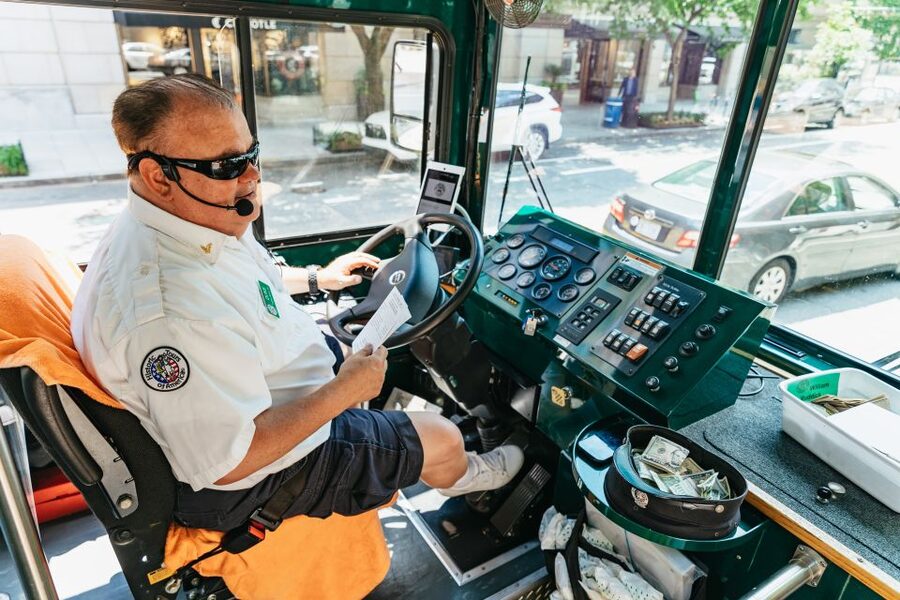
Two things I especially like: the combination of a live English guide and pre-recorded audio (with GPS) lets you follow the story in real time and switch languages when you need it. And on hot or crowded days, the trolley format means you can see a lot without constantly repositioning on foot—exactly the kind of day-saving move you’ll appreciate. You can even end up with a guide who brings the material to life, like Sarge, Hollywood, Sasha, or Joey (names you might hear on the ride).
One drawback to weigh: the Arlington National Cemetery tram option isn’t just a timing game—you must bring the right ID. For non–U.S. residents, a valid passport or U.S. driving license is required for entry (foreign ID cards won’t be accepted), and without it you’ll be turned away with no refund.
In This Review
- Key highlights that matter
- The Washington DC trolley route: 25 hop-on stops that shape your whole day
- Starting points: Washington Welcome Center vs Union Station
- From Ford’s Theatre area to the White House: the opening stretch
- National Archives and the Navy Memorial stop: why this sector is worth it
- Capitol area: when you should hop off
- Smithsonian and museum corridor: how to use the stops without overwhelm
- Jefferson, FDR, MLK: the memorial loop that tells a clear story
- Lincoln and the major war memorials: why this section feels like DC’s core
- The International Spy Museum and The Wharf: a break from the solemn parts
- Arlington National Cemetery tram upgrade: the 45- to 60-minute plan that deserves respect
- Audio in 7 languages and GPS app tracking: helpful when you’re moving fast
- Price and value: is $48 a good deal for a DC orientation day?
- Practical comfort and rules: what to bring and what to skip
- Who this tour suits best (and who should consider a different approach)
- Should you book the Washington DC Old Town Trolley?
- FAQ
- FAQ
- How long is the Arlington National Cemetery tram tour?
- Can I do the Arlington Cemetery tram tour the same day as the trolley tour?
- Are there live guides on the city tour?
- What languages are available for the audio commentary?
- Do I need a passport or ID for Arlington National Cemetery?
- Where do I board the trolley?
- Is the trolley tour wheelchair accessible?
- What items are not allowed on the tour?
- What does the itinerary cover in Washington, D.C.?
Key highlights that matter
- Unlimited hop-on hop-off at 25 popular stops so you control walking vs. riding
- Narration that covers 100+ points of interest, with live English commentary and app audio in 7 languages
- Optional 45- to 60-minute Arlington Cemetery tram with 7 stops
- Stadium seating and open-air comfort that helps when DC weather turns
- A route that hits the National Mall’s must-sees (Capitol, Smithsonian area, Holocaust Museum area, and the major memorial ring)
- Trolley access that’s designed to be beginner-friendly, with multiple boarding points
The whole city in one sweep, a few more ways to see it
- Hop-on Hop-off Sightseeing Tour by Open-top Bus with 18 Stops
★ 3.5 · 3,848 reviews - Washington DC in One Day: Guided Sightseeing Tour
★ 4.5 · 3,360 reviews - VIP Best of DC with US Capitol + National Archives Reserved Entry
★ 4.5 · 2,491 reviews - Washington DC “See the City” Guided Sightseeing Segway Tour
★ 5.0 · 1,924 reviews
The Washington DC trolley route: 25 hop-on stops that shape your whole day

Think of this as your DC backbone. The trolley loop strings together the sites that are spread out across the city center—then gives you the freedom to get off where you want and reboard when you’re ready. That matters because DC rewards wandering, but it also punishes running around when you’re tired, in heat, or stuck behind crowds.
The tour’s narration is geared toward helping you connect landmarks to their stories. You’ll hear about major institutions like the White House area and the National Archives, then move into the museum-heavy Smithsonian zone, and finally land on the concentration of memorials that form the emotional core of the National Mall.
Where this shines is pacing. I like that you’re not locked into a single “one-and-done” view. You can spend 45 minutes at one stop, hop back on for the next sector, and come back around if you need it. This also helps if you’re traveling with a mix of interests—someone wants photos, someone wants museums, and someone just wants shade and a drink.
Starting points: Washington Welcome Center vs Union Station
You’ve got two practical launch options. Most people begin at the Washington Welcome Center area (50 Massachusetts Ave NE), which also lines up well with the trolley’s most central National Mall movements. Another starting option is Washington Union Station, which can be easier if you’re already near the rail hub.
Pick the one that reduces your “pre-trolley stress.” DC is easy to navigate once you’re on the route, but the walking just before boarding can feel longer than you expect—especially with museums and the monument corridor pulling you in different directions. Starting close to where you’ll board means you can spend your time actually touring.
Also note a small reality check: some stops cluster multiple attractions. That can be great (more choices in one place), but it also means you might walk a bit once you get off—so don’t assume every major landmark is immediately at curb level from the exact stop.
From Ford’s Theatre area to the White House: the opening stretch
Early on, you’ll pass through the downtown core and the institutional landmarks that anchor DC’s identity. One popular launch hub is the Washington Welcome Center stop area, which connects with the Ford’s Theatre zone and nearby historic buildings. This gives you a strong first impression of DC beyond just monuments.
Then the route moves toward the White House area, including stops that cover the White House Visitor Center region and the nearby WWI Memorial connection. This is the part of the day where the trolley’s narrative helps you understand what you’re looking at. You’ll see the public-facing architecture and also get context for how this city is designed to display national power—political, cultural, and ceremonial.
If you want a quick win: stay on the trolley for the drive-by narration once, then hop off for photos when you’re ready. That keeps you from spending too long searching for the perfect angle before you’ve even built a rhythm.
National Archives and the Navy Memorial stop: why this sector is worth it
One of the more satisfying stops is the National Archives area (with the surrounding galleries and nearby memorial context in the mix). This is one of those DC moments where the meaning lands even faster when you understand what the building represents and why it’s placed where it is.
The trolley gives you an efficient way to reach this part of downtown without planning multiple bus lines or dealing with parking. And because the National Archives area is close to other important landmarks, you can use the hop-off window to connect the dots, then reboard to move on.
If you’re short on time, you can still do a smart “scan and soak” here: a quick look at the exterior and the immediate surroundings, then back on board so you don’t lose your seat (or your energy) before the National Mall loop begins.
Open top and easy, more loops of DC
Capitol area: when you should hop off
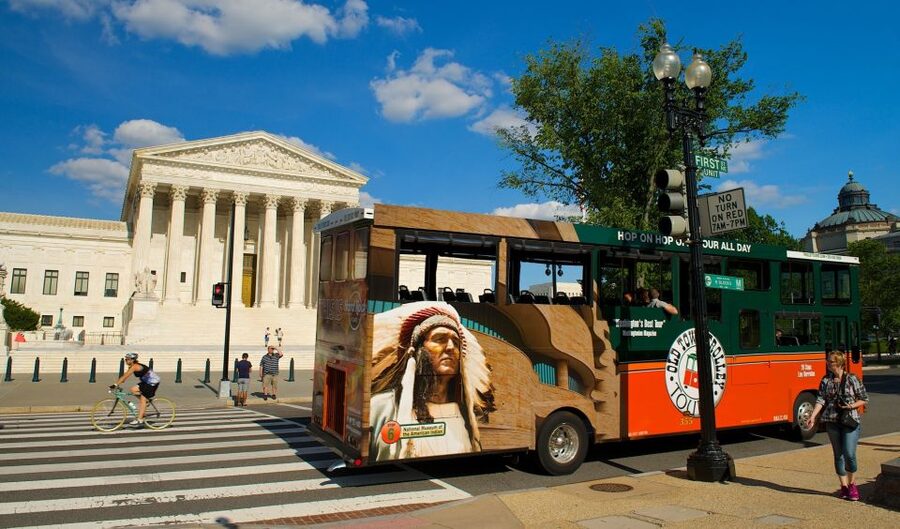
The U.S. Capitol zone is a highlight stop on the route, and it’s also a useful planning marker. Seeing this area early helps you orient yourself for everything that follows—especially if you’re unsure how the Mall lines up with the government buildings.
This is also where the trolley format helps with timing. The Capitol area can be busy and slow depending on the day’s crowds. With hop-on hop-off access, you can step off, take in what you can at street level, and then continue onward without committing to long walking detours.
If you want the best flow, consider spending enough time to get a clear view of where the Mall stretches, then save deeper museum time for later. That way you’re not trying to decide where you stand while juggling crowd pressure.
Smithsonian and museum corridor: how to use the stops without overwhelm
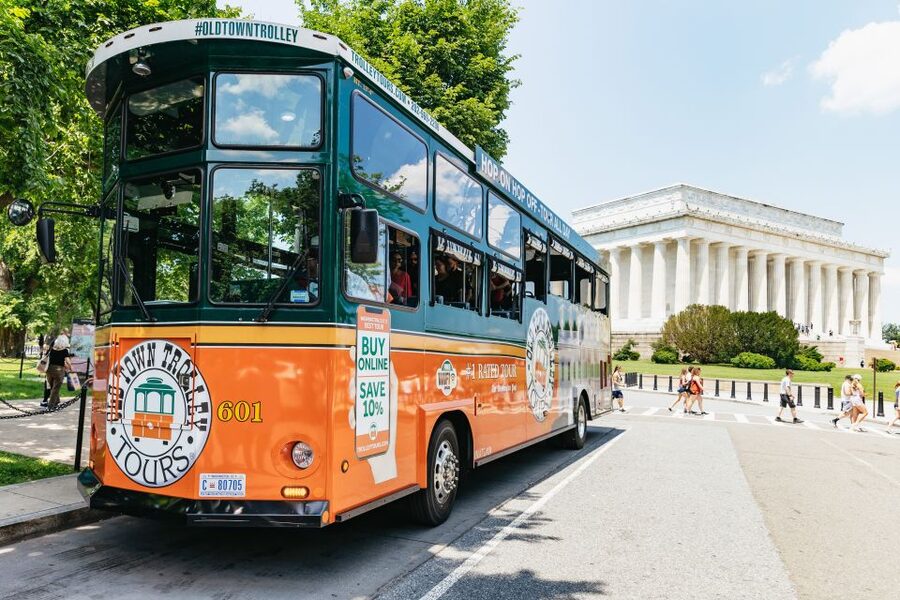
The Smithsonian area is where DC can go from exciting to exhausting fast. The trolley route addresses that by putting you near multiple museum front doors and museum-adjacent landmarks—while giving you the option to ride through if you’re not ready yet.
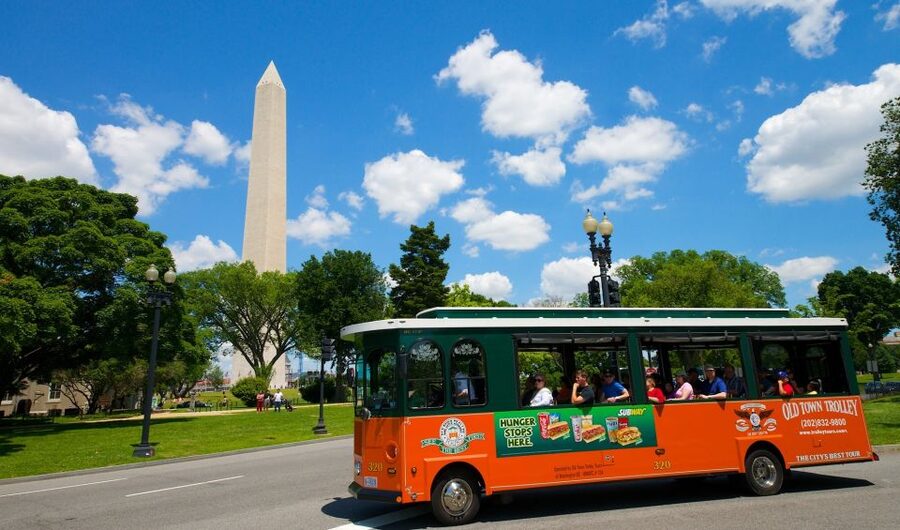
A strong example is the concentration around the Air & Space Museum region and the American Indian museum area, plus nearby memorials connected to that general zone. Another is the Washington Monument and the adjacent Smithsonian cluster, where you can pivot between big monuments and indoor museums.
Here’s a practical approach: pick one museum stop to commit to when the trolley drops you near your target. Then use the next one or two stops for “walk-through browsing”—looking at entrances, nearby viewpoints, and quick exterior context—before you move along. This keeps the day from turning into a decision marathon.
Also, one caution: the route can place some attractions temporarily out of reach due to events and seasonal activities. If you’re visiting during a busy period, expect that some venues might have limited access and plan for alternatives.
Jefferson, FDR, MLK: the memorial loop that tells a clear story
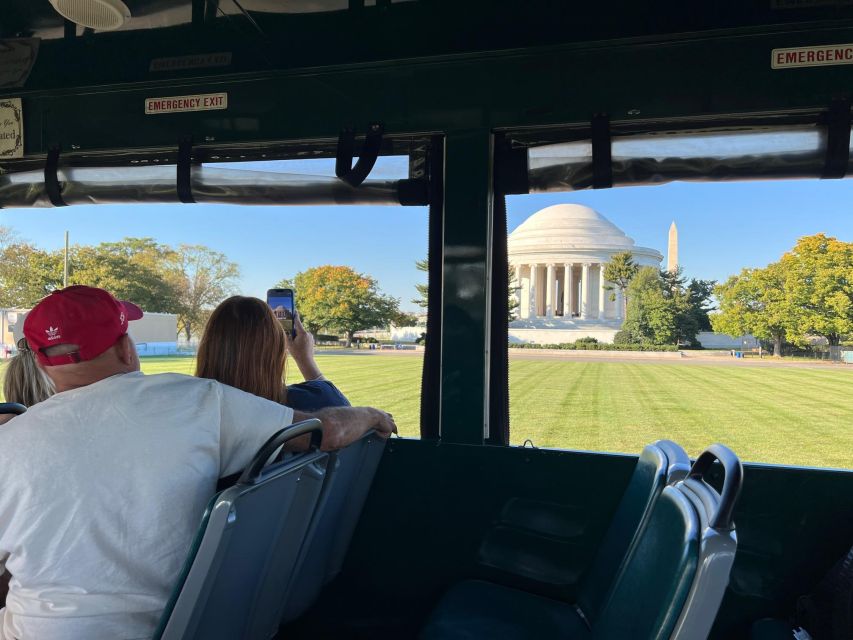
As the route moves into the memorial corridor, it becomes more than sightseeing—it turns into a guided emotional route through U.S. history. The Jefferson Memorial area and the George Mason Memorial zone give you one of the earliest “philosophy of government” segments.
Then the trolley links you toward the Franklin Delano Roosevelt Memorial and the Martin Luther King Jr. Memorial. This combination is valuable because it shows how DC commemorates different eras and different kinds of civic change in physical form. The trolley narration helps connect the dots so you’re not just reading plaques while tired.
If you like photos, this is also where you’ll want to time your hop-offs. DC light and shadows matter around memorials, and the trolley’s flexibility lets you adjust on the fly. If it’s sunny, plan a little buffer before you rush to your next stop.
Lincoln and the major war memorials: why this section feels like DC’s core
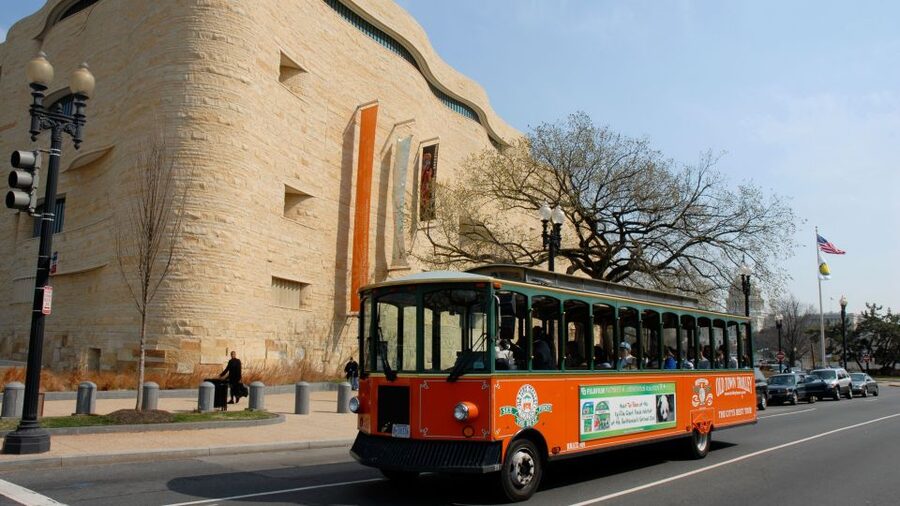
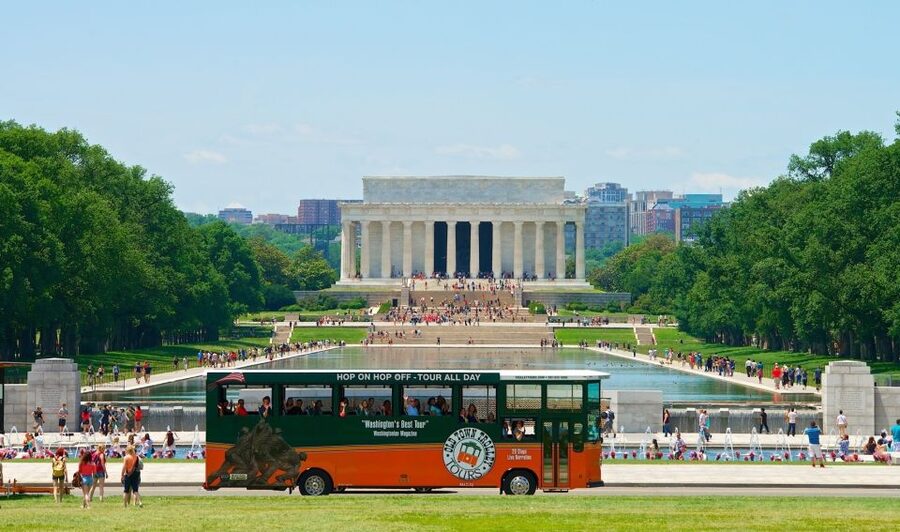
The Lincoln Memorial area is where the tour really earns its keep. You’re not only near Lincoln—you’re also in the zone for other major memorials clustered around the same axis, including the Vietnam Veterans Memorial, the Korean War Veterans Memorial, and the World War II Memorial.
This is one of those places where the trolley’s structure helps you choose your emotional pace. If you want a longer pause, you can stay off longer and do the memorials in sequence without losing your place on a rigid schedule. If you want a faster circuit, you can do the highlights quickly and then come back for a second pass.
One practical tip: if you’re visiting on a day with heavy pedestrian flow, building in time for lines and crowd movement will save your mood. This isn’t the spot to run on a strict stopwatch. You’ll get more out of it if you let the moment breathe.
The International Spy Museum and The Wharf: a break from the solemn parts

Not every DC stop has to be solemn. The trolley loop includes the International Spy Museum area and reaches out toward The Wharf. These are great for a reset—especially if you’ve been in monument mode for hours.
The Wharf is also a helpful “real-life” stop. It’s where you can grab food and think through your next hop-off. Then the Spy Museum area gives you something more playful and modern, without straying far from the main DC corridor.
This balance is why the hop-on hop-off structure works so well. You can spend your best daylight hours on the monuments, then use the later hours for more flexible, casual sightseeing.
Arlington National Cemetery tram upgrade: the 45- to 60-minute plan that deserves respect
If you choose the Arlington National Cemetery tram upgrade, you’re adding a focused, time-bounded experience. The tram tour runs 45 minutes Monday–Friday and 1 hour on Saturday–Sunday, with 7 stops along the route.
The stops include Arlington National Cemetery, President John F. Kennedy Gravesite, the U.S. Coast Guard Memorial, John J. Pershing Gravesite, the Tomb of the Unknown Soldier, Arlington House, and the U.S. Marine Corps War Memorial Iwo Jima viewpoint (outside the gate).
What makes this worth it is that Arlington is physically big and emotionally heavy. The tram helps you see the right stops without turning your day into marathon walking. And because the trolley day gives you DC orientation, adding Arlington gives you the “other half” of what many people come to Washington to understand.
A key timing note: plan to do this early if you can. The cemetery experience benefits from time for lines, lingering, and any formal moments that might be happening. If you’re aiming for changing of the guard, give yourself extra slack. Even with the tram, you’ll want time on foot once you’re inside the grounds.
Audio in 7 languages and GPS app tracking: helpful when you’re moving fast
This tour covers both a live English guide and downloadable audio commentary in Spanish, French, German, Italian, Chinese, Japanese, and Portuguese. The app also includes GPS bus tracking, which can make it easier to find your stop and time your boarding.
Here’s how I’d use it: treat the app like a navigation and context tool, not a replacement for the guide. When the trolley stops are moving and crowds shift, the GPS helps you avoid the awkward “are we here yet?” moment. Then the audio lets you re-hear or catch details you missed.
One caution from real-world experience: if the app map doesn’t load as expected, rely on the stop areas you’re given and give yourself time to locate the correct boarding point. DC can be confusing when you’re hot, rushing, and trying to match street corners.
Price and value: is $48 a good deal for a DC orientation day?
At $48 per person, this isn’t a “coupon” bargain. It’s more like renting a tool for your trip: guided narration plus a transportation loop that avoids parking and navigation headaches in the center of DC.
Where it becomes good value is when you use it for what it’s best at: orientation plus efficient access to distant sights. If you’re trying to fit Capitol, major Smithsonian areas, multiple memorials, and at least a couple of museums into a single visit, hop-on hop-off beats the stress of piecing together multiple transit segments.
If you’re adding Arlington, the upgrade makes sense because it solves a practical problem. Arlington is the kind of place where time is limited and walking adds up fast. The tram option helps you cover the core stops without letting your day collapse into transit logistics.
If your trip is short, or you hate wasting hours in transit, you’ll likely feel the value quickly. If you already plan to do every major site on your own with deep museum bookings, you might still appreciate the trolley for orientation, but you’ll want to be selective about where you hop off.
Practical comfort and rules: what to bring and what to skip
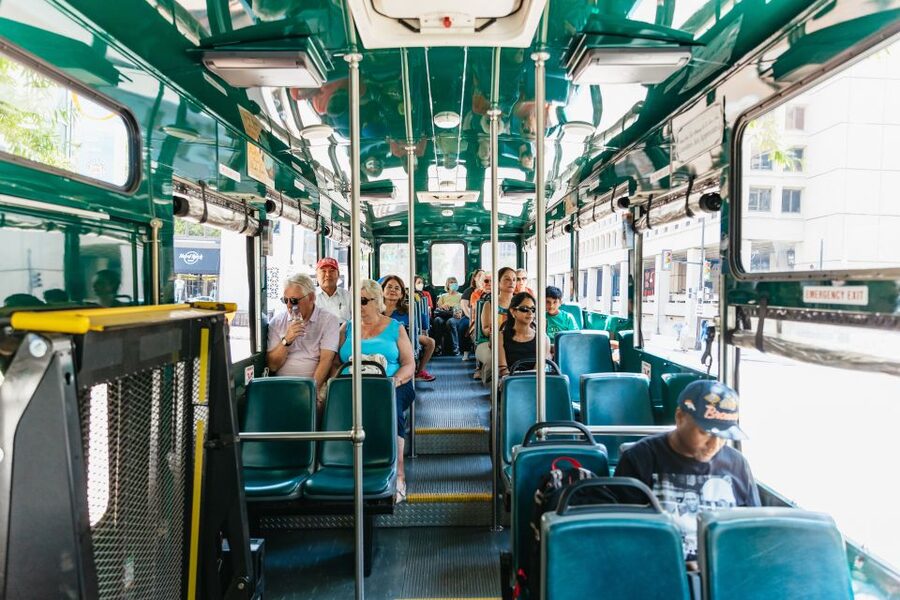
The trolley setup includes stadium-style seating for the city tour, plus an experience designed for wheelchair accessibility. For your day, that’s useful because it reduces the “how do I sit?” friction.
Bring a passport or ID card. That matters a lot if you’re doing Arlington. A valid passport or U.S. driving license is required for entry to Arlington National Cemetery, and foreign ID cards won’t be accepted. For non-U.S. visitors, that’s the single most important detail to get right.
Also skip anything that won’t fit the rules: smoking isn’t allowed, large luggage isn’t allowed, and pets aren’t allowed (assistance dogs are permitted). If you’re traveling light, you’ll be comfortable.
Who this tour suits best (and who should consider a different approach)
I think this tour is best for three types of travelers.
First, first-timers. DC is easier once you’ve seen the “shape” of the city from a moving loop. Second, families or mixed-interest groups, where not everyone wants to walk the same distance. Third, visitors with limited time who still want to cover major memorials and museum areas without building a complex schedule.
It’s less ideal if you already have a very tight, museum-first itinerary and you hate the idea of waiting at stops. Also consider skipping or adjusting your plan if you’ll want lots of hands-on museum time throughout the day—because even with hop-on hop-off flexibility, the city pacing still uses the loop as its spine.
Should you book the Washington DC Old Town Trolley?
Book it if you want a simple, guided way to understand DC’s layout and hit the big sights without turning your vacation into a logistics project. The mix of live English narration, hop-on hop-off stops across the National Mall, and easy optional add-on for Arlington is a strong package for first-time visitors and time-conscious travelers.
Skip or rethink it if you’re only visiting a few specific sites and you don’t need help with orientation. In that case, you might be better using a museum-focused plan with direct visits instead of riding a full loop.
FAQ
FAQ
How long is the Arlington National Cemetery tram tour?
The tram tour lasts 45 minutes Monday–Friday and 1 hour on Saturday and Sunday.
Can I do the Arlington Cemetery tram tour the same day as the trolley tour?
Yes. You can do the Arlington tram tour the day you take the trolley tour or the next day.
Are there live guides on the city tour?
Yes. The city tour includes a live English-speaking guide.
What languages are available for the audio commentary?
The downloadable audio commentary is available in Spanish, French, German, Italian, Chinese, Japanese, and Portuguese.
Do I need a passport or ID for Arlington National Cemetery?
Yes. You need a valid passport or a U.S. driving license. Foreign ID cards will not be accepted, and entry will be refused without proper identification.
Where do I board the trolley?
You can start at the Washington Welcome Center (50 Massachusetts Ave NE) or at Washington Union Station. The exact meeting point can vary by option booked.
Is the trolley tour wheelchair accessible?
Yes, the experience is wheelchair accessible.
What items are not allowed on the tour?
No smoking. Large luggage isn’t allowed. Pets aren’t allowed, though assistance dogs are allowed. Alcohol and drugs aren’t allowed.
What does the itinerary cover in Washington, D.C.?
It covers major landmarks and memorials across downtown and the National Mall area, including the White House area, the National Archives area, the Capitol area, and the Washington Monument and memorial corridor, plus additional museum and waterfront stops.
More Tour Reviews in Washington Dc






Open Top DC: More Bus Loops




All of DC in a Day




Just Added: Fresh Washington DC Reviews
- Washington : Private Custom Walking Tour With A Guide (Private)★ 3.5 · 3 reviews
- 3-Hour Small Group Memorial Tour in Washington, D.C.★ 4.0 · 3 reviews
- Washington DC Private Guided Bus Day Tour with Step Off Guide★ 5.0 · 3 reviews
- Washington, DC: The Good Liar: Brian Curry★ 5.0 · 3 reviews
- DC Monuments Walking Tour: Small Group, Big Ideas★ 5.0 · 3 reviews
- Washington DC: Library of Congress Private Tour with Tickets★ 5.0 · 3 reviews
Trolley & Open-Top Bus Tours, side by side.
 ★ 4.5Washington DC Monuments by Moonlight Tour by TrolleyFrom $483,956 reviews
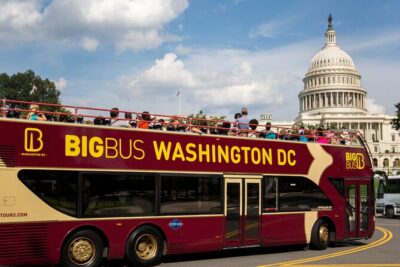 ★ 3.5Hop-on Hop-off Sightseeing Tour by Open-top Bus with 18 StopsFrom $493,848 reviews
 ★ 4.0Washington DC Hop-On Hop-off Trolley Tour with 15 StopsFrom $482,599 reviews
 ★ 4.1Hop-On Hop-Off with 17 Stops plus Arlington Walking TourFrom $492,238 reviews
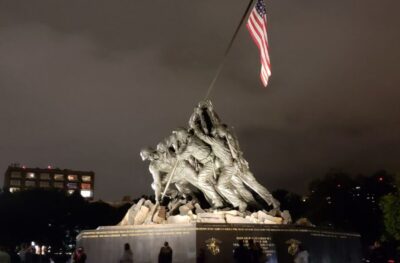 ★ 4.6Monuments by Moonlight Nighttime Trolley TourFrom $481,529 reviews
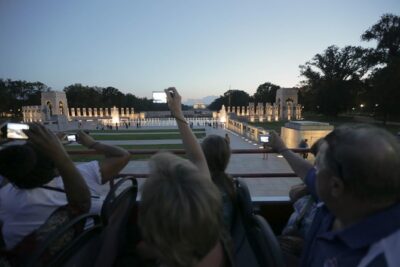 ★ 4.5Big Bus DC: Monuments & Memorials Night Tour by Open-top BusFrom $491,174 reviews
 ★ 4.5Arlington National Cemetery Hop-On Hop-Off TourFrom $21744 reviews
 ★ 4.0Open-top Monuments and Memorials Sightseeing Night TourFrom $49443 reviews
The lists this tour appears in