

Review · WASHINGTON DC
VIP Private Tour of Washington DC
DC clicks when a guide drives the story. This VIP private highlights tour strings together DC’s top sights in one efficient loop, with snacks and bottled water included so you spend less time figuring out food and more time taking it all in.
I also love the pace: lots of short stops, each paired with a clear story that helps you connect what you’re seeing (from the U.S. Capitol and Supreme Court to the way memorials frame major wars). One drawback to plan for: White House access is limited to outside viewing, and security barriers can affect exactly how close you can get, so you’ll want to set expectations before booking.
In This Review
- Key points to know before you go
- How the VIP setup works: pickup, timing, and a group of up to 6
- First stretch: Garfield sculpture, the U.S. Capitol, and Supreme Court in one arc
- Presidents and the big framing story: Grant, Lincoln, and Jefferson
- Memorials that teach conflict in plain language: Eisenhower, FDR, and MLK
- Outside-of-everything America: Pentagon, Marines, Korean War, WWII, and White House viewpoints
- The calmer side of DC: National Cathedral, Potomac views, Ford’s Theatre, and the Tidal Basin
- Price and value: is $703 per group worth it?
- Who should book this VIP private DC tour
- Should you book it? My take
- FAQ
- How long is the VIP Private Tour of Washington DC?
- What is the price and group size?
- Do you offer pickup and where does the tour start?
- Are snacks and bottled water included?
- Is the tour inside the White House?
- Are admission tickets included for the stops?
- What is the cancellation policy?
Key points to know before you go
- Private group up to 6 means the route and timing can feel less rushed than big-bus tours
- Pickup from 1200 Independence Ave SW helps you start without wasting time in transit
- Snacks and bottled water included keep you comfortable during quick stops
- Every stop comes with a story tying presidents, courts, and wars to the landscape around them
- White House is outside only; inside visits require your own reservation
- Short stop times add up fast, so wear comfortable shoes even if you are not doing a long hike
Still deciding? Line this one up against a few DC favorites before you book.
- DC Memorials Night Tour: Glass-Roof Convertible Upgrade Option
★ 4.5 · 6,933 reviews - National Mall Monuments Night Tour with 10+ Stops, Entry Tickets
★ 4.5 · 4,863 reviews - Washington DC Monuments by Moonlight Tour by Trolley
★ 4.5 · 3,956 reviews - Hop-on Hop-off Sightseeing Tour by Open-top Bus with 18 Stops
★ 3.5 · 3,848 reviews
How the VIP setup works: pickup, timing, and a group of up to 6
This is a private experience in Washington DC for up to 6 people, and it’s designed to run about 4 to 5 hours. That shorter time window matters here because DC is so spread out. Instead of bouncing between sites on your own, you get a single guided route that covers a lot of major landmarks without you doing the logistics math.
You also get pickup tied to 1200 Independence Ave SW. Even if you’re near public transit, showing up at a central point cuts down on stress—especially on a first DC day when you’re still learning the layout.
Another small but meaningful perk: the tour includes snacks and bottled water. That matters in a city where you can easily lose momentum if everyone needs to stop for food every couple of hours.
Finally, you’re traveling in English. That’s helpful for the way the guide talks through symbolism and history at each site, rather than just pointing out what’s visible from the sidewalk.
First stretch: Garfield sculpture, the U.S. Capitol, and Supreme Court in one arc

The tour opens with three stops that give you the backbone of Washington: presidency, lawmaking, and law.
Stop 1: James Garfield sculpture (about 5 minutes)
This is a quick hit that helps connect the memorial world to a specific president. It’s short, but that’s the point—you’re starting the day with a named figure so the rest of the presidential landmarks feel more connected instead of random.
Stop 2: U.S. Capitol (about 10 minutes)
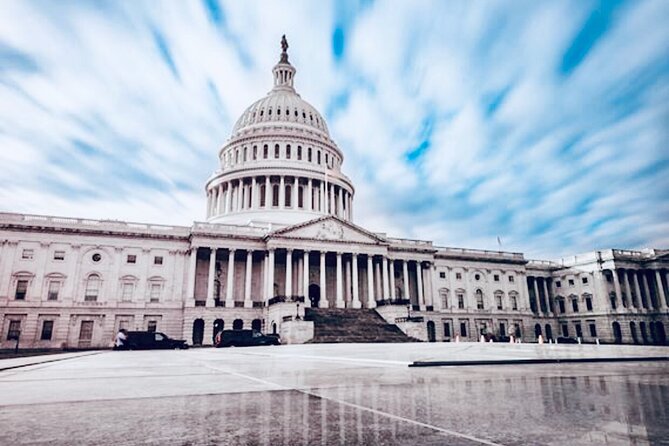
Here you’ll hear about the story of U.S. democracy. In a guided setup like this, that usually means more than dates—it’s the meaning of the building and why it became the symbol it is today. If you love government history, this is one of your best early warm-ups.
Stop 3: Supreme Court (about 10 minutes)
This stop is designed to answer the big question: what the Supreme Court does and why it’s central to American democracy. The short time means you won’t get every detail, but the guide-led framing helps you “see” the institution even from the outside.
Practical tip: because these are quick stops, come ready to look up at the building features and statues while the guide talks. If you wait until the end to pay attention, you’ll miss the story thread.
Presidents and the big framing story: Grant, Lincoln, and Jefferson
After the institutions, the route turns toward major figures who shaped the country in crisis and change.
Stop 4: Ulysses S. Grant Memorial (about 10 minutes)
This is your Civil War entry point. Memorials in Washington can feel like they’re all saying the same thing, but a good guide helps you notice what this one emphasizes—Grant’s place in the war era and what people wanted to remember when the monument was built.
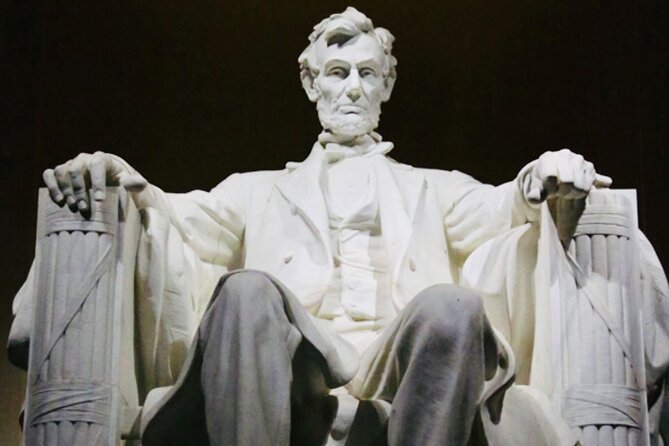
Stop 5: Lincoln Memorial (about 15 minutes)
You’ll spend the most time here so far, and it’s used to walk through the story of the 16th president. If you’re expecting just a photo stop, this one is worth leaning in. Lincoln is one of those names that DC repeats constantly, so having context early makes later memorials hit harder.
Stop 6: Library of Congress National Book Festival (about 5 minutes)
This stop is shorter, and it’s not the classic “monument” feeling. Instead, it reminds you that Washington isn’t only courts and presidents—it’s also the national stage for culture and ideas. One caution: if you’re hoping for deep access, this stop is designed as a brief orientation moment, not a long visit.
Stop 7: Jefferson Memorial (about 15 minutes)
You’ll learn about the third U.S. president. Jefferson is a key figure for understanding how the country thought about founding ideals. In a route like this, the Jefferson stop also gives your guide a chance to connect philosophy to the physical space you’re walking through.
A good sign in the experience: many guide-style reports focus on how the guide explains symbolism around the city, not just the headlines. That’s exactly what you want here.
Memorials that teach conflict in plain language: Eisenhower, FDR, and MLK
DC’s memorial circuit can feel heavy. The value of a guided loop is that someone can connect each site so it doesn’t turn into a list of names.
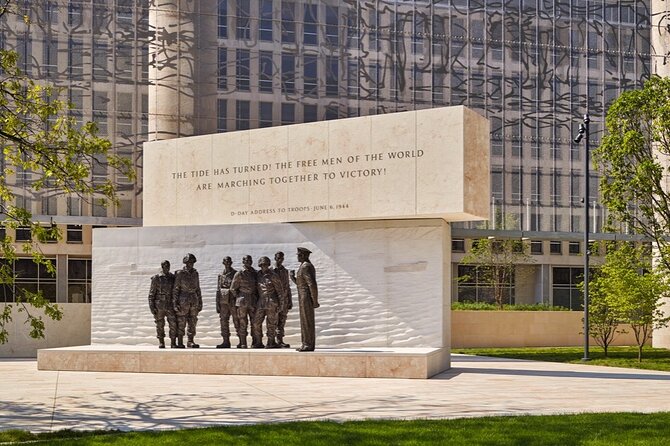
Stop 8: Dwight D. Eisenhower Memorial (about 10 minutes)
You’ll learn about the 34th president. Expect context around the era Eisenhower represents, and how the monument communicates it.
Stop 9: Franklin Delano Roosevelt Memorial (about 10 minutes)
This one focuses on FDR. Because Roosevelt is tied to multiple turning points in the U.S. story, a guided explanation helps you understand why his name appears in so many DC memorial contexts.
Stop 10: George Mason Memorial (about 5 minutes)
This is a short stop, but it’s a smart inclusion. Mason is tied to American ideas about rights and the foundation of government, and he’s the kind of figure who can get overlooked if you only focus on the biggest-name presidents.
Stop 11: Air Force Memorial (about 10 minutes)
This is where the tour starts shifting from political figures to military memory. The guide’s role matters here because war memorials are easy to treat as background scenery unless someone explains what each element is emphasizing.
Stop 12: Vietnam Veterans Memorial (about 10 minutes)
Another key memory site. In a timed stop like this, the guide can help you understand how people read these memorials—what the space is trying to do emotionally and historically, even if you don’t have a long stay.
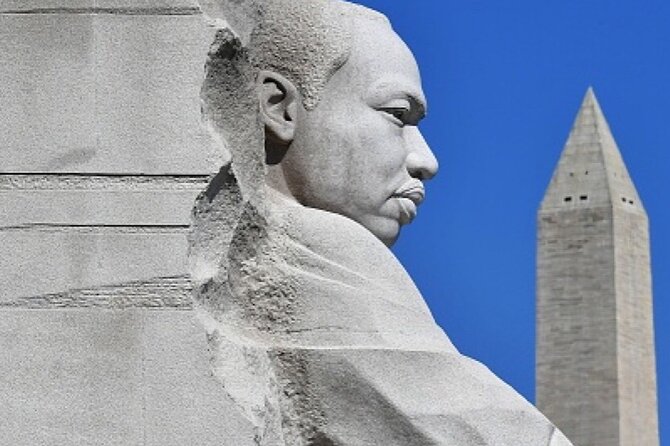
Stop 13: Martin Luther King, Jr. Memorial (about 15 minutes)
This is one of the longer stops in this stretch. You’ll learn the story of Dr. Martin Luther King, Jr., and that extra time is useful because MLK landmarks are built to reflect meaning, not just biography.
What I’d watch for: memorial timing matters. If your group is split between taking photos and listening, you’ll want to make sure you actually pause long enough to hear the guide’s connections.




Outside-of-everything America: Pentagon, Marines, Korean War, WWII, and White House viewpoints
This part of the day gets more recent and more intense, and it’s also where your expectations need to be clear.
Stop 14: Pentagon Memorial (about 10 minutes)
This stop covers the story of 9/11. A guided explanation can help you understand the monument’s focus and why it was placed where it is.
Stop 15: U.S. Marine Corps War Memorial (about 10 minutes)
You’ll learn what’s connected to the Iwo Jima story. These war memorials often have symbolic details, and a guide can translate those details into something you can remember later.
Stop 16: Korean War Veterans Memorial (about 10 minutes)
Another war memory stop, and again the guide’s job is to frame the larger story so you’re not just seeing names and shapes without context.
Stop 17: Albert Einstein Memorial (about 5 minutes)
This is quick and interesting. It adds a science-and-ideas note to the day so it’s not only presidents and conflicts. If you like DC variety, this is a nice reset before the bigger memorials.
Stop 18: National World War II Memorial (about 10 minutes)
World War II gets dedicated time. The guided narration here is key because WWII can be too big to hold in your head unless someone helps you see what the monument is trying to highlight.
Stop 19: The White House (about 15 minutes)
Important: this is outside only. The tour does not include entry into the White House. The guidance is to make your own reservation if you want to go inside.
Also, security and access can change around major events. One negative experience centered on not seeing the White House as expected due to closures, and the follow-up explanation pointed out that the north side can be restricted while the tour can sometimes still position you for a different exterior viewing angle. So: treat this as a strong viewing stop, not a guaranteed inside visit.
Stop 20: National Japanese American Memorial (about 5 minutes)
A brief stop that teaches the story of Japanese American experience and memory. In a fast route, it’s easy to miss the significance unless you’re paying attention while the guide talks.
Stop 21: National World War I Memorial (about 5 minutes)
This is the earlier war era, included so the day isn’t only 20th century mid-century and later.
The calmer side of DC: National Cathedral, Potomac views, Ford’s Theatre, and the Tidal Basin
The route finishes with a mix of architecture, views, and story-rich public spaces.
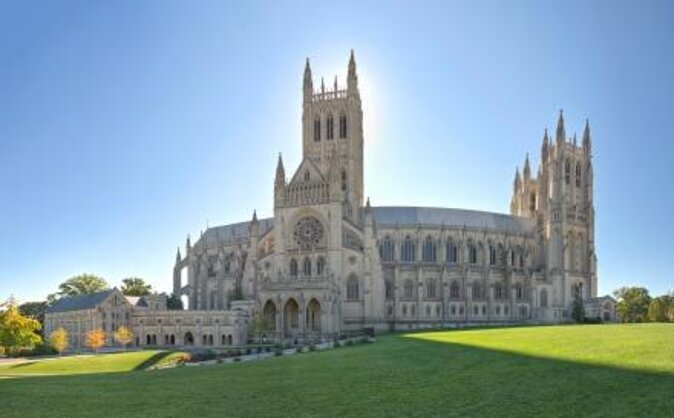
Stop 22: Washington National Cathedral (about 10 minutes)
You’ll learn about the National Cathedral’s story. Even if you don’t go inside, a guided stop helps you understand what makes the cathedral notable as a symbol and landmark.
Stop 23: Potomac River (about 5 minutes)
This is a view stop. Sometimes you need a breather after memorial intensity, and a quick Potomac look does that.
Stop 24: Ford’s Theatre (about 5 minutes)
This is a short stop tied to what happened on April 14, 1865. It’s a good reminder that DC history isn’t only monuments—it’s also events and places.
Stop 25: Tidal Basin (about 5 minutes)
This is another view moment. In spring it’s especially photogenic, but even without peak season, it functions as a visual exhale at the end of a big circuit.
Price and value: is $703 per group worth it?

The price is $703 per group (up to 6 people). That works out to about $117 per person if you fill the group. If you have 4 to 6 people and you’d otherwise split cars or ride shares across many stops, a private guided loop starts to look like a practical deal.
Here’s what you’re buying besides the sites:
- A single guide narrative that links monuments, presidents, courts, and wars into one readable storyline
- Pickup and a maintained route through parts of DC that can be annoying to stitch together on your own in limited time
- Snacks and bottled water included, which is small but real value
- Short stop structure that’s ideal if you want to cover a lot without committing to a full-day crawl
It’s not a bargain for solo travelers or couples who would have a hard time filling the group. Private tours cost more when the per-person math doesn’t shrink. For families and friend groups, though, this format can make DC feel far more manageable.
Also consider what happened with the White House in one unhappy case: paying for a premium tour means you should confirm what you’ll get (outside viewing only) and how closures might affect positioning.
Who should book this VIP private DC tour
This tour is a good fit if you:
- Want to see a lot of DC landmarks in a limited time window
- Prefer guided context over walking without direction
- Like history that ties facts to meaning—memorial symbolism, not just dates
- Are traveling with a small group (up to 6) and can split the per-person cost
It may be less ideal if you:
- Expect a long, feet-first walking tour for each stop
- Need guaranteed White House access beyond outside viewing
- Are very sensitive to vehicle comfort or cleanliness, since one critical review mentioned a strong odor in the vehicle
Should you book it? My take
If your goal is a first-day overview that gives you a solid DC storyline—and you have a small group that can split the cost—this VIP private format is a strong choice. The best part is how the tour turns DC into a sequence you can remember: courts, presidents, wars, civil rights, then the big DC icons like the White House area and the Potomac.
Just go in with one clear expectation: this is about seeing and learning from the outside, not guaranteed White House entry. If you want inside access, you’ll need to handle that yourself. With that in mind, I think you’ll find the value comes from the guide’s ability to connect the dots fast—and from the convenience of having the route planned for you.
FAQ
How long is the VIP Private Tour of Washington DC?
It runs about 4 to 5 hours.
What is the price and group size?
The price is $703 per group, up to 6 people.
Do you offer pickup and where does the tour start?
Pickup is offered at 1200 Independence Ave SW, Washington, DC 20004, USA, and the tour ends back at the meeting point.
Are snacks and bottled water included?
Yes. Snacks and bottled water are included.
Is the tour inside the White House?
No. The tour does not include a tour inside the White House. You’ll need to make your own reservation if you want to visit inside.
Are admission tickets included for the stops?
Admission is listed as free for the majority of stops. The White House admission ticket is not included.
What is the cancellation policy?
You can cancel for free up to 24 hours in advance for a full refund. If you cancel within 24 hours, you won’t receive a refund.
More Tour Reviews in Washington DC






Just Added: Fresh Washington DC Reviews
- Washington : Private Custom Walking Tour With A Guide (Private)★ 3.5 · 3 reviews
- 3-Hour Small Group Memorial Tour in Washington, D.C.★ 4.0 · 3 reviews
- Washington DC Private Guided Bus Day Tour with Step Off Guide★ 5.0 · 3 reviews
- Washington, DC: The Good Liar: Brian Curry★ 5.0 · 3 reviews
- DC Monuments Walking Tour: Small Group, Big Ideas★ 5.0 · 3 reviews
- Washington DC: Library of Congress Private Tour with Tickets★ 5.0 · 3 reviews