
Review · WASHINGTON DC
Sushi Masterclass in Washington D.C. (Includes 4-Course Meal)
Sushi starts with rice, and precision. This Washington-area sushi masterclass runs about 3 hours and gives you a hands-on path through four courses, not a sit-and-watch demo. I love that you get real instruction on seasoned sushi rice and knife work, so the skills actually stick. I also love that the menu is built around what you make, from tuna sesame salad to hand rolls. One thing to think about: the meeting point is in Centreville, VA, so plan time to get there.
What makes it feel personal is the small size and the instructor energy. Chef Made Master (yes, that’s the name) comes through with the kind of teaching that leaves you feeling confident enough to try at home. And since it’s a BYOB setup, you can bring wine or beer to enjoy during the class, which makes the meal part of the fun.
In This Review
- Key Highlights to Know Before You Go
- A Chef-Led Class in the DC Orbit (With Chef Made Master at the Helm)
- The 4 Courses: From Tuna Sesame Salad to Hand Rolls in One Flow
- First course: Tuna sesame salad
- Second course: Assorted maki rolls
- Third course: Special rolls
- Fourth course: Hand rolls
- What You Actually Learn: Rice, Knife Skills, and Rolling Precision
- The Menu You’ll Make: Tuna, Avocado, Eel, and a Spicy Lineup
- Location, Timing, and the BYOB Factor (What Changes for Your Day)
- Price and Value: Is $125 Fair for a 4-Course Sushi Class?
- Who This Fits Best (And Who Might Want to Think Twice)
- Should You Book This Sushi Masterclass?
- FAQ
- FAQ
- What is included in the sushi masterclass?
- How long does the class last?
- Is this class BYOB?
- How big is the group?
- Where is the meeting point?
- Can the class accommodate dietary needs?
Key Highlights to Know Before You Go
- Small group size: maximum 6 travelers per booking, with the class capped at 8 guests
- Four courses in one sitting: salad, assorted maki rolls, special rolls, then hand rolls
- You learn the base skills: seasoned sushi rice and knife techniques are part of the training
- Maki + hand rolls: you’ll practice both styles, with precision instruction
- Chef Made Master’s teaching style: energetic coaching that helps you leave with usable skills
- BYOB-friendly: bring wine and beer to pair with what you make
Still deciding? Line this one up against a few DC favorites before you book.
- DC Memorials Night Tour: Glass-Roof Convertible Upgrade Option
★ 4.5 · 6,933 reviews - National Mall Monuments Night Tour with 10+ Stops, Entry Tickets
★ 4.5 · 4,863 reviews - Washington DC Monuments by Moonlight Tour by Trolley
★ 4.5 · 3,956 reviews - Hop-on Hop-off Sightseeing Tour by Open-top Bus with 18 Stops
★ 3.5 · 3,848 reviews
A Chef-Led Class in the DC Orbit (With Chef Made Master at the Helm)
This is the kind of food experience that works best when the focus is on doing, not listening. You’ll be in a small group, and you’re not just tasting. You’re building skills you can repeat later: rice seasoning, clean cutting, and rolling technique.
One of the biggest reasons this class lands well is the instructor. In the feedback I was given, Chef Made Master is called out for his energy and for teaching lasting skills, not just performing sushi tricks. That matters because sushi-making is mostly repetition and feel—how rice behaves, how fillings sit, how cuts look. When the teacher has the right rhythm, you don’t get stuck.
The other reality check is location. Even though it’s marketed as a Washington D.C. experience, the start point is in Centreville, Virginia (14327 Watery Mountain Ct, Centreville, VA 20120). If you’re staying deep in D.C., you’ll want to budget travel time and decide early how you’ll get there.
The 4 Courses: From Tuna Sesame Salad to Hand Rolls in One Flow
The class is structured as a sequence of what you’ll prepare and eat. It starts with the foundation, then moves through maki rolls, special rolls, and finishes with hand rolls. The nice part is you don’t jump around. You learn, apply, and then sit down to enjoy the results.
First course: Tuna sesame salad
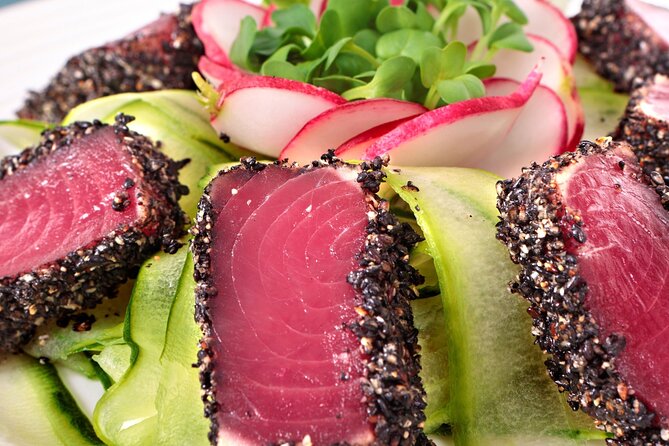
You begin with a starter that wakes up your palate: tuna sesame salad, made with fresh tuna and sesame plus a light dressing. This is a good warm-up because it reminds you that sushi isn’t only about rolling. It’s also about clean flavors and small, balanced touches—salty, nutty, and bright.
Second course: Assorted maki rolls
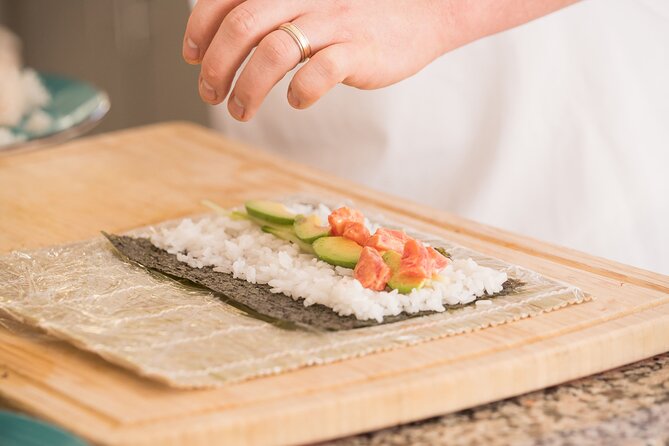
Next comes your maki practice—rolling in a classic way, then experimenting with fillings. The menu includes spicy tuna and avocado cream cheese rolls, so you work through both a bold, spicy profile and a creamy one. This course is where technique starts to matter more: how you distribute fillings, how you shape the roll, and how consistency affects the final bite.




Third course: Special rolls
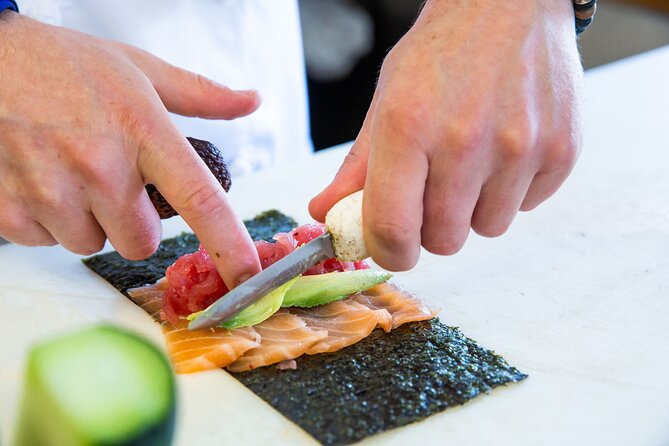
Then the menu steps up with special rolls, including the caterpillar roll and a spicy double tuna roll. The caterpillar roll is described as visually layered with avocado slices, so you’re not only focused on taste. You’re also learning presentation and how to layer without ruining the structure. The spicy double tuna roll is for tuna lovers who want heat and depth in a single roll.
Fourth course: Hand rolls
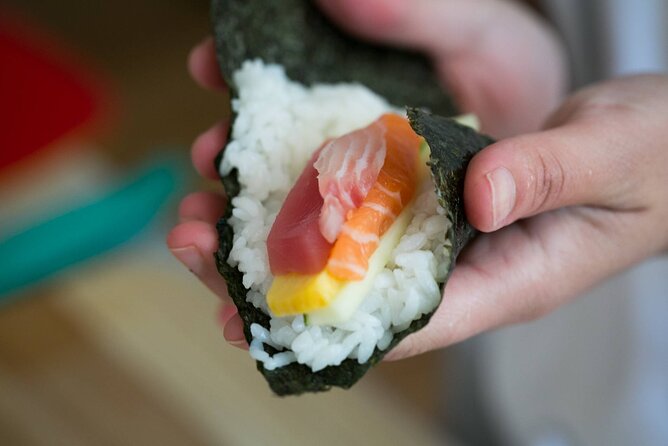
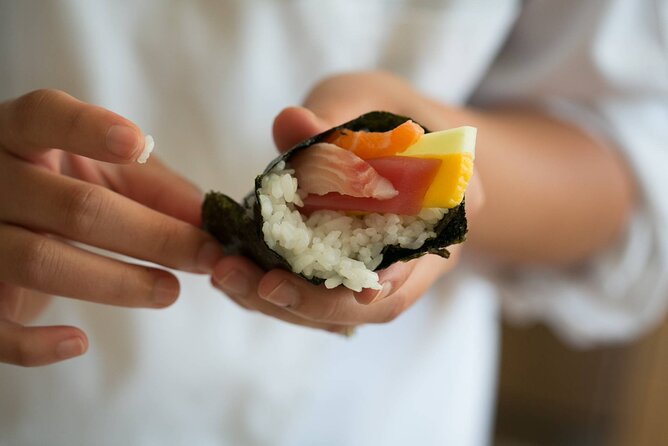
The finale is hand rolls—cone-shaped bites with finger-friendly structure. Your options include tuna, eel, and California hand rolls. These are great to end on because hand rolls feel more direct and forgiving: you’re not fighting a full-length roll, and you can focus on building a tight, neat bite.
What You Actually Learn: Rice, Knife Skills, and Rolling Precision
This class isn’t built around a single trick. It’s built around fundamentals that show up in every roll you make.
You’re taught seasoned sushi rice, which is where most at-home sushi attempts go off track. Rice isn’t just rice. Seasoning changes flavor balance, and texture affects everything that comes after. Even if you’ve eaten sushi your whole life, cooking rice the right way gives you a totally different understanding of why good sushi tastes clean instead of heavy.
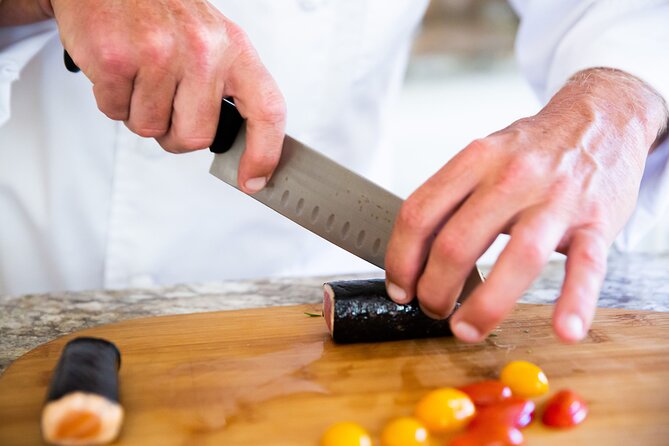
You’ll also work on knife techniques. You’ll feel the difference quickly. Even with good fillings, a sloppy cut can make rolls fall apart or look messy. Knife practice helps you build control—especially when you move from prep to making something you’ll eat in the same session.
And because the class is small, you get the kind of attention that helps you correct early. Sushi technique rewards quick fixes. If you’re rolling too loosely, the teacher can point it out before the roll gets stuck in your muscle memory.
The Menu You’ll Make: Tuna, Avocado, Eel, and a Spicy Lineup
Let’s talk about what’s on your plate and why it’s a smart mix for learners.
You’re working with a tuna-heavy lineup throughout the menu—tuna shows up in the sesame salad, spicy tuna rolls, tuna hand rolls, and even the spicy double tuna roll. That repetition isn’t accidental. It helps you practice the same protein while changing the form: salad, maki, special roll, and hand roll. You get pattern recognition fast.
You also get creamy and savory contrasts:
- Avocado cream cheese roll brings softness and mild flavor
- California hand roll pairs avocado with crab for a classic combo
- Eel hand roll adds a richer, sweet-savory element that balances tuna’s punch
Then there’s the spice factor. Several rolls are described as spicy (spicy tuna roll, spicy California roll, spicy double tuna roll). That means you can learn how heat sits with creaminess and tuna. If you’re sensitive to spice, this is a place to ask ahead about how the flavors will be handled—because the names alone don’t tell you how hot your version will be.
Location, Timing, and the BYOB Factor (What Changes for Your Day)
The experience runs about 3 hours. That’s long enough to learn multiple techniques and eat a full meal, but short enough that it doesn’t swallow your entire evening. I like that balance because it fits typical sightseeing days around D.C.
The BYOB element is another practical twist. This is not a packaged meal where you’re stuck with whatever’s served. You can bring wine and beer to enjoy during the class. That makes it easier to turn the experience into a date-night plan or a fun small-group evening.
A small logistics note: the start point is in Centreville, VA. You’ll want to check your route and leave buffer time, especially if you’re coming from downtown D.C. on a weekday or after dark.
Also, the class uses a mobile ticket, and you’ll get confirmation at booking. That’s helpful if you’re juggling multiple reservations.
Price and Value: Is $125 Fair for a 4-Course Sushi Class?
At $125 per person, this isn’t a budget snack. But it is a value question you can answer with your own priorities.
Here’s what you’re paying for, based on what’s included:
- A small-group cooking class with personalized instruction
- A full 4-course meal made during the session
- Hands-on teaching for sushi rice, knife skills, and both maki and hand rolls
- The ingredients and tools needed to practice (including seafood-heavy dishes)
If you were to buy sushi and take a separate lesson, you’d usually be paying for the teaching time on top of the food anyway. In this format, the meal and the lesson are tied together. You leave with something more useful than leftovers: skills you can repeat at home.
One more value angle: small class sizes mean you’re more likely to get feedback. In cooking classes, that feedback is often the difference between enjoying the session and actually learning something you can use later.
Who This Fits Best (And Who Might Want to Think Twice)
I’d put this class in the sweet spot for:
- Couples and friends who want a shared activity and a real meal
- People who love sushi and want to learn what makes it work
- Anyone who likes hands-on instruction and doesn’t want to spend the whole time watching
It might be less ideal if:
- You strongly prefer staying in central D.C. and don’t want to travel to Centreville
- You don’t like seafood-based menus (the listed dishes are tuna-forward, plus eel and crab)
- You need very specific dietary changes; the class says it can accommodate different dietary needs, but you’ll still want to message ahead and confirm what’s possible for your restrictions
The good news is that dietary accommodations are explicitly part of the setup. You just have to let the organizers know in advance so they can do their best to tailor the experience.
Should You Book This Sushi Masterclass?
Yes, if you want a sushi class where you actually learn technique, not just taste a few things and leave with photos. The standout theme from the guidance you provided is the teaching. Chef Made Master’s energy and the fact that you should leave with lasting skills is the reason I’d trust this to be worth your time.
Book it especially if you like structured practice: rice first, then maki, then special rolls, then hand rolls. It’s a clean learning path. And the BYOB-friendly setup makes it feel like an evening plan, not a chore.
One final tip: because booking runs about 39 days in advance on average, don’t wait until the last moment if you have a specific date in mind.
FAQ
FAQ
What is included in the sushi masterclass?
You’ll prepare and enjoy a full 4-course menu: tuna sesame salad, assorted maki rolls, special rolls, and hand rolls.
How long does the class last?
The class runs for about 3 hours.
Is this class BYOB?
Yes. Guests are welcome to bring wine and beer.
How big is the group?
This activity is limited to small group size, with a maximum of 6 travelers, and the class is described as limited to 8 guests.
Where is the meeting point?
The meeting point is at 14327 Watery Mountain Ct, Centreville, VA 20120, USA.
Can the class accommodate dietary needs?
Yes. The experience is designed to accommodate a variety of dietary needs. You should let them know in advance so they can tailor the experience as best they can.
More Tour Reviews in Washington DC






Just Added: Fresh Washington DC Reviews
- Washington : Private Custom Walking Tour With A Guide (Private)★ 3.5 · 3 reviews
- 3-Hour Small Group Memorial Tour in Washington, D.C.★ 4.0 · 3 reviews
- Washington DC Private Guided Bus Day Tour with Step Off Guide★ 5.0 · 3 reviews
- Washington, DC: The Good Liar: Brian Curry★ 5.0 · 3 reviews
- DC Monuments Walking Tour: Small Group, Big Ideas★ 5.0 · 3 reviews
- Washington DC: Library of Congress Private Tour with Tickets★ 5.0 · 3 reviews