
Review · NIGHT MONUMENT TOURS
Semi-Private Evening Tour of Washington D.C.
Late-night monuments hit different. This small-group evening loop shows you the capital’s biggest icons when they glow. I like that you get hotel round-trip transfers plus a spacious air-conditioned vehicle for a low-stress night out. The other big plus: with a maximum of 14 travelers, the guide can actually answer questions as you go. One thing to consider: the whole route is fast-paced, so you’re enjoying brief stops and photo moments rather than slow, in-depth exploring.
This is a tight, 7:00 pm start, roughly 3 hours long, built for first-time orientation and easy photos. Many of the stops note free admission, while several major memorials list admission as included, so you’re not burning your evening hunting for tickets. If you’re sensitive to standing in lines or you want long time at any one site, this format may feel short.
In This Review
- Key Points Before You Go
- Evening D.C. in a Small Van: Comfort, Timing, and Guides
- Your 3-Hour Route: How the Night Schedule Works
- Where It Starts: Meeting at the Air and Space Museum (and Why That’s Convenient)
- The White House Area and Federal Buildings: First Views and Big Context
- National Archives and the National Mall Art Stops: Where Stories Get Human
- U.S. Capitol and Monument Photo Time: Garfield, Grant, and the Peace Memorial
- World War II Memorial to Washington Monument: Scale, Silence, and a 169-Meter Moment
- Martin Luther King Jr. and Lincoln: When the Lighting Turns Reflective
- Vietnam to Korean War Memorials: Names, Statues, and Quiet Impact
- Marine Corps War Memorial and the Pentagon: Finish With Power and Presence
- Price and Value: What $80 Buys in a Night-Drive Format
- Who Should Book This Evening Monument Tour
- Who Might Want a Different Option
- Should You Book This Evening Monument Tour?
- FAQ
- How long is the Semi-Private Evening Tour of Washington D.C.?
- What time does the tour start?
- How much does the tour cost?
- Where does the tour meet, and where does it end?
- How many people are in the group?
- Is admission included for some monuments?
Key Points Before You Go
- Small group (max 14) keeps the van calm and makes Q&A realistic.
- Hotel pickup and drop-off saves time and avoids the hassle of coordinating transport at night.
- Bottled water on board is a practical touch for a multi-stop evening.
- Night lighting changes everything—the monuments feel less like landmarks and more like mood.
- Memorial time adds up: you get multiple 15–25 minute stops at the most meaningful sites.
The memorials after dark, other evenings out
- DC Memorials Night Tour: Glass-Roof Convertible Upgrade Option
★ 4.5 · 6,933 reviews - National Mall Monuments Night Tour with 10+ Stops, Entry Tickets
★ 4.5 · 4,863 reviews - Washington DC Monuments by Moonlight Tour by Trolley
★ 4.5 · 3,956 reviews - Washington DC Moonlight Tour by Electric Cart
★ 5.0 · 2,610 reviews
Evening D.C. in a Small Van: Comfort, Timing, and Guides
Think of this as your guided “greatest hits” loop, but done in a way that still feels personal. The tour runs from 7:00 pm for about 3 hours, which is a smart window: dark enough for dramatic lighting, early enough that you’re not stuck out super late.
The group size matters. With a maximum of 14 travelers, you’re not fighting for space or listening through a megaphone. You ride in an air-conditioned vehicle, and the tour includes bottled water, which sounds basic until you’re doing stop after stop in the evening. You’ll also get a mobile ticket, so there’s less fumbling at the start.
My favorite part of the format is the guide quality. Several guides have been praised for bringing energy and clarity to the route—names like Nader, Nate, Victor, and Kia show up in the standout feedback. That matters because monuments can blur together when you don’t know what you’re looking at. With the right guide, you’re not just seeing shapes and statues; you’re learning what each one is trying to say.
One practical note: this is a drive-and-photo tour. You’ll be outside at each stop, but the schedule is tight, so it’s best for people who like a plan and hate wasting time.
Your 3-Hour Route: How the Night Schedule Works
The itinerary is built around short, well-timed visits. Some stops are around 10 minutes, others are 15 to 25 minutes, and the bigger memorial clusters get the longer holds. That’s how the tour fits so much in without turning it into a marathon.
Here’s the rhythm you can expect:
- You arrive at each key landmark for a set photo window.
- The guide connects the sight to the story behind it.
- You move on before the evening crowds swallow the best angles.
- The tour ends back at the starting meeting point.
Also, many of the stops list admission as free, while several major memorials list admission as included. The result is that your ticket value is largely about the guided routing, access timing, and having someone explain what matters—rather than spending your night on entry paperwork.
Where It Starts: Meeting at the Air and Space Museum (and Why That’s Convenient)
You’ll begin at Smithsonian National Air and Space Museum, 600 Independence Ave SW, Washington, DC 20560. Starting here is convenient because it places you near the heart of the downtown museum zone, so the drive to major monuments is quick and efficient.
The tour also states that it includes round-trip transfers from your Washington D.C. hotel, which is a huge quality-of-life improvement for an evening outing. Instead of figuring out rides after dark, you get picked up and returned.
If you’re using public transportation, the listing notes it’s near public transportation, which can help if you’re not staying in a place with easy pickup.
The White House Area and Federal Buildings: First Views and Big Context
Your first major stop is the White House, with about 10 minutes on-site. Even if you can’t tour the residence (the itinerary doesn’t promise an interior visit), you’ll get the classic evening framing: the building lit up, the streets calmer than during daytime peaks, and a guide giving you the quick context you need to make it more than a photo.
From there, the route continues through the city’s official-core feel with stops that focus on what powers the U.S. government and how Washington’s identity formed:
- Old Post Office Building and Clock Tower (view stop)
- FBI headquarters in Washington, D.C. (view stop)
These aren’t the sites people always think about for a first D.C. trip. That’s part of why the route works. The White House gives you the symbol, then the federal buildings add the reality of how the system operates.
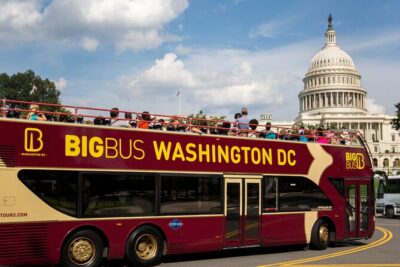
National Archives and the National Mall Art Stops: Where Stories Get Human
Next up, you’ll hit the kind of stops that make Washington feel more personal. The National Archives holds more than three billion documents, including the Declaration of Independence, the Constitution, and the Bill of Rights. Even in a short visit, that’s the moment where the tour goes from scenic to meaningful—because these are the actual documents people argue about, study, and protect.
From there, you move into the National Mall zone with:
- National Gallery of Art and its annexed Sculpture Garden
- A stop connected to the National Museum of the American Indian
The museum time is mostly about location and orientation rather than a long sit-down visit. Still, the value is real: you learn where these major cultural anchors sit in the same corridor as the monuments. After the tour, it becomes easier to plan a daytime return to whichever building you’re most curious about.
If you’re the type who likes art as much as architecture, the Sculpture Garden mention is a nice nudge. Even if you don’t spend a full afternoon inside, you’ll know exactly where it is for later.
U.S. Capitol and Monument Photo Time: Garfield, Grant, and the Peace Memorial
The tour then heads to the U.S. Capitol for about 20 minutes. You’ll have time for photos in front of the Capitol, but the itinerary also points you toward memorials nearby, including:
- Memorials to President Garfield
- Memorials to General Grant
- The Peace Memorial
This is a smart stop for an evening tour because the Capitol area gives you multiple “photo lines” in one concentrated area. It’s also an easy place to get your bearings—after seeing the federal-core buildings earlier, the Capitol is the big milestone that locks the whole map into place.
The main drawback is also tied to the same strength: 20 minutes goes fast. If you want deep time in this neighborhood, this won’t replace a daytime walk. But as a first pass, it’s excellent.
World War II Memorial to Washington Monument: Scale, Silence, and a 169-Meter Moment
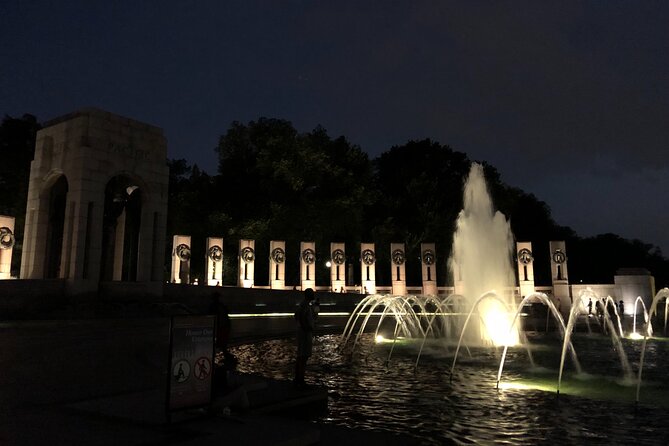
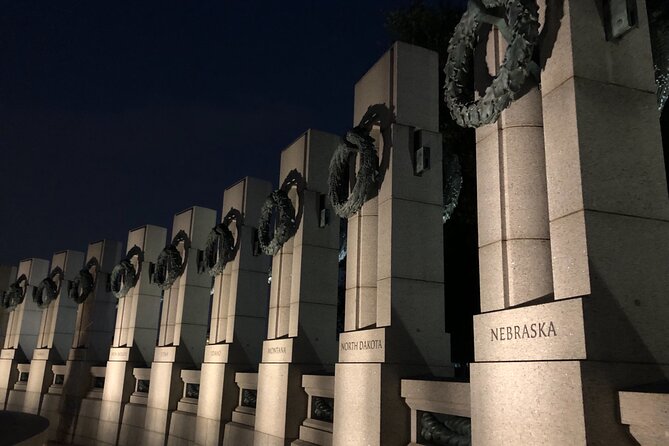
One of the emotional anchors comes with the National World War II Memorial, an open-air memorial honoring 16 million Americans who served in World War II. You’ll have about 20 minutes here, and the itinerary lists admission as included, so you’re not scrambling on arrival.
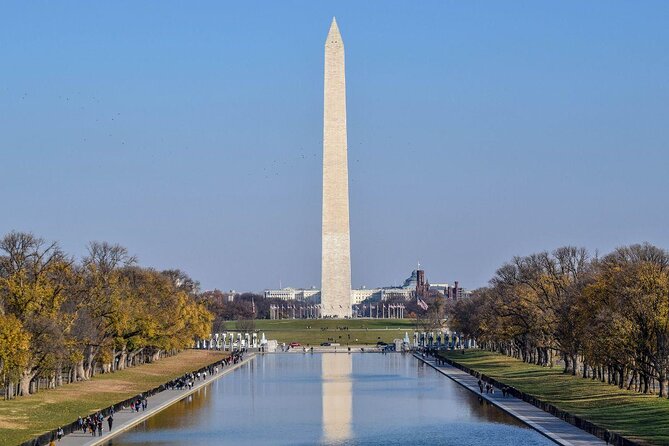
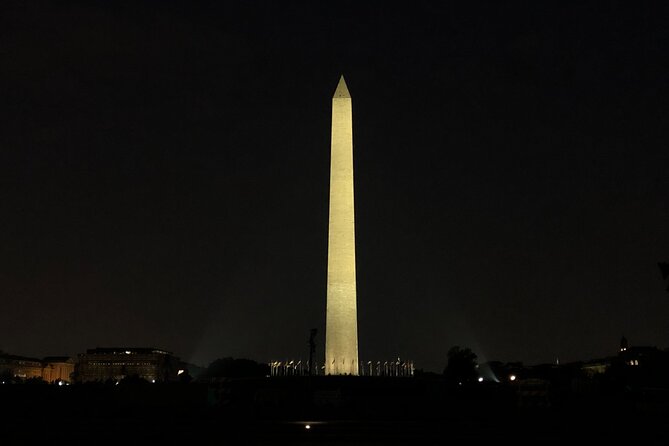
From there, you’ll reach the Washington Monument, described as a 169-meter landmark honoring the first U.S. president. You get around 10 minutes. It’s short, but it’s the kind of stop where a few minutes of standing still does a lot. At night, the monument’s presence feels more concentrated—less like a daytime sightseeing item and more like a beam in the dark.
There’s also a quick stop for the roundabout with columns in the style of the Pantheon of Rome, located next to the Tidal Basin. Even though the description is brief, this kind of feature is useful because it connects the Mall area to classic European design language. It’s a reminder that D.C. wasn’t built only to honor events; it also borrows visual language to communicate ideals.
Martin Luther King Jr. and Lincoln: When the Lighting Turns Reflective
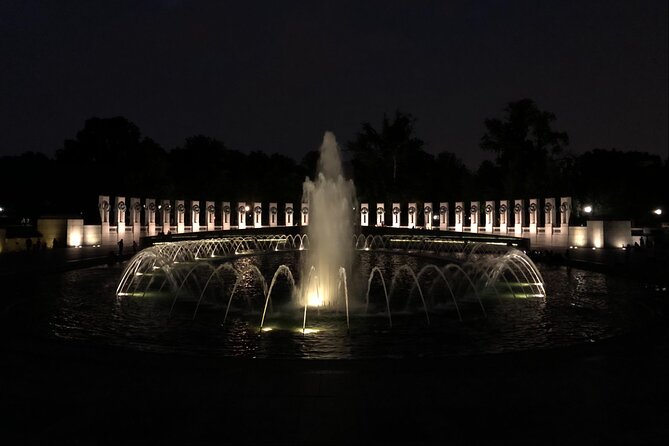
Now the tour hits the memorial stretch that many visitors consider the heart of the evening.
First, you’ll visit the Martin Luther King, Jr. Memorial for about 15 minutes. Admission is listed as included. This stop is especially powerful at night because the setting tends to slow people down. The itinerary notes the memorial overlooks the Jefferson Memorial and the Tidal Basin, which means you’re getting a layered view rather than a single isolated statue.
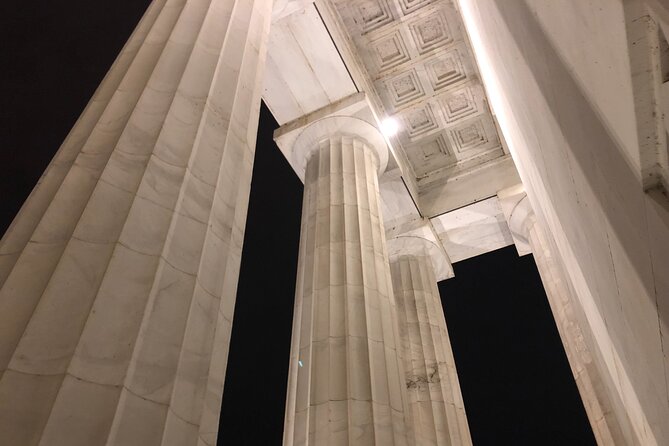
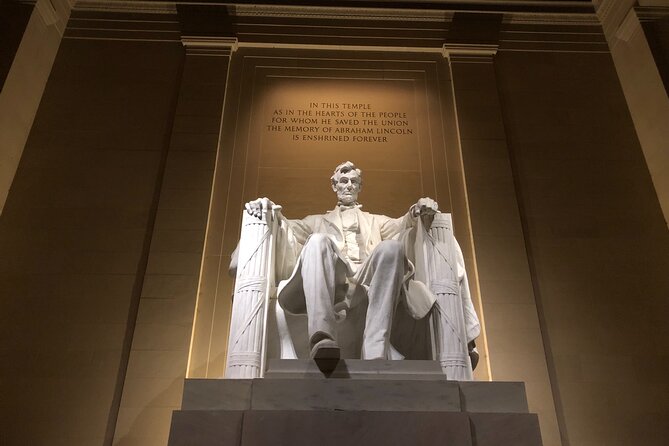
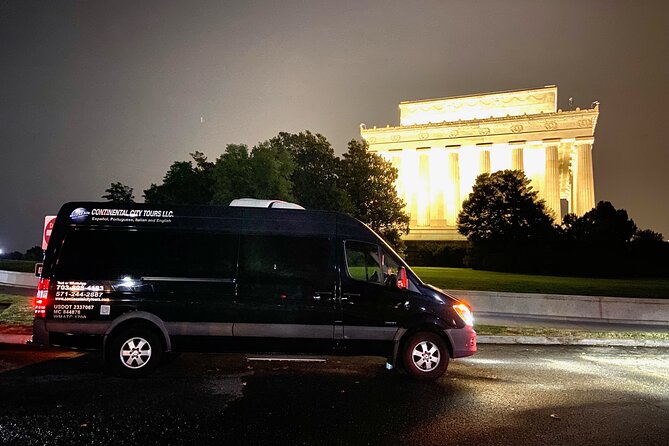
Then comes the big one: the Lincoln Memorial, with about 25 minutes and admission listed as included. It’s described as a parthenon-style tribute with a 6-meter marble statue, plus murals and a reflecting pool. Even with a shorter visit, that combination makes it a visually dense stop. The guide’s job here is crucial: otherwise you just get a photo. With commentary, you start noticing symbols and the why behind the design.
If you like your tours to feel emotional, not just educational, this is where that happens.
Vietnam to Korean War Memorials: Names, Statues, and Quiet Impact
After Lincoln, the tour continues into the memorials that focus on individual sacrifice and collective remembrance.
- Vietnam Veterans Memorial: about 25 minutes, admission included. It’s described as a wall with more than 58,000 names.
- Korean War Veterans Memorial: about 15 minutes, admission included. It includes realistic statues commemorating Korean War veterans.
These are heavy subjects, and it’s worth going in with the right expectation. The schedule doesn’t allow you to read every name or linger for hours, but it does give you enough time to understand what you’re seeing. In a short window, you want to at least absorb the structure and what it represents: this is memory built from details.
The payoff is that these memorials don’t feel abstract once you see them in sequence. The tour design helps you move from Lincoln’s ideals to Vietnam and Korean War remembrance without losing momentum.
Marine Corps War Memorial and the Pentagon: Finish With Power and Presence
You’ll end with:
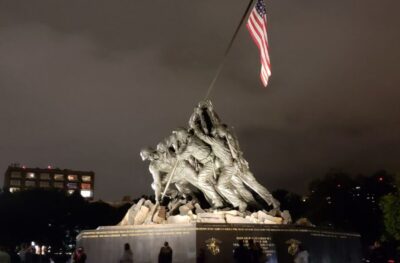
- U.S. Marine Corps War Memorial: about 10 minutes, admission included. It’s described as honoring Marines and depicting the scene of Iwo Jima in 1945.
- A final stop for the pentagonal building that serves as the headquarters of the U.S. Department of Defense (the itinerary describes it, even if it doesn’t name it in the stop list).
That closing stretch works because it shifts back from reflective to forceful symbolism. It also gives you a sense of how Washington’s monuments cover multiple angles of national identity: government, ideals, and military history.
As with earlier stops, the time is short. The guide’s commentary is what keeps it from feeling like a checklist.
Price and Value: What $80 Buys in a Night-Drive Format
At $80 per person, this isn’t a cheap “hop-on, hop-off” bus deal. But it’s also not priced like a museum ticket day with timed entries and long admission fees. The value comes from a few key pieces you can’t easily replicate on your own without effort:
- Small-group routing (max 14): you’re not getting the cheapest experience, you’re getting fewer people and more attention.
- Hotel round-trip transfers: this alone can save real money and time if you’re staying outside the immediate core.
- A professional guide: with a good guide, the monuments become legible instead of just photogenic.
- Air-conditioned vehicle + water: in summer or on a long walking day, that comfort matters.
Also, the itinerary marks several memorials as admission included, while others list free admission. That suggests the tour is built to minimize extra costs during the evening.
Is $80 “worth it” for you? If you like understanding what you’re photographing and you want a plan that takes care of the hard parts—transport, timing, and explanation—then yes. If you prefer wandering solo at your own pace and reading quietly, you might get more out of a self-guided approach or a daytime tour.
Who Should Book This Evening Monument Tour
This tour is a strong match if you:
- Want an efficient first-time overview of the National Mall and major memorials
- Like the idea of seeing monuments lit up and having a guide connect the dots
- Travel with family and want a schedule that keeps everyone from getting bored or lost
- Prefer a semi-private feel rather than a large coach crowd
It also tends to work well for people who don’t want to plan a night route. You show up, follow the schedule, and get explanations where it counts.
Who Might Want a Different Option
Consider skipping (or pairing with another day) if:
- You want to spend lots of time reading memorials. The itinerary’s stop lengths are designed for coverage, not deep study.
- You plan to do museums inside. The stops emphasize monuments and quick windows rather than long museum visits.
- You dislike structured schedules. This is built for moving from site to site on a set clock.
Should You Book This Evening Monument Tour?
If your goal is to see D.C. monuments at night with minimal hassle, this is an easy yes. The combination of small-group size, hotel transfers, and a guide who can make the sites click turns the evening into more than just photos.
My “book it” checklist is simple:
- You want a guided plan with short, well-timed stops
- You value comfort and don’t want to manage transportation after dark
- You’d rather understand the meaning now than figure it out later
If that sounds like your kind of trip, reserve your spot. If you want a long, slow memorial-reading day, pair this with a daytime visit instead.
FAQ
How long is the Semi-Private Evening Tour of Washington D.C.?
The tour lasts about 3 hours.
What time does the tour start?
It starts at 7:00 pm.
How much does the tour cost?
The price is $80.00 per person.
Where does the tour meet, and where does it end?
The meeting point is Smithsonian National Air and Space Museum, 600 Independence Ave SW, Washington, DC 20560, and the tour ends back at the meeting point.
How many people are in the group?
This experience has a maximum of 14 travelers.
Is admission included for some monuments?
The itinerary notes admission ticket free for several stops, and admission ticket included for others (for example, multiple major memorial stops are listed as included). Service animals are allowed, and the tour requires good weather.
More Tour Reviews in Washington DC






The Memorials After Dark



Just Added: Fresh Washington DC Reviews
- Washington : Private Custom Walking Tour With A Guide (Private)★ 3.5 · 3 reviews
- 3-Hour Small Group Memorial Tour in Washington, D.C.★ 4.0 · 3 reviews
- Washington DC Private Guided Bus Day Tour with Step Off Guide★ 5.0 · 3 reviews
- Washington, DC: The Good Liar: Brian Curry★ 5.0 · 3 reviews
- DC Monuments Walking Tour: Small Group, Big Ideas★ 5.0 · 3 reviews
- Washington DC: Library of Congress Private Tour with Tickets★ 5.0 · 3 reviews
Night Monument Tours, side by side.
 ★ 4.5DC Memorials Night Tour: Glass-Roof Convertible Upgrade OptionFrom $696,933 reviews
 ★ 4.5National Mall Monuments Night Tour with 10+ Stops, Entry TicketsFrom $654,863 reviews
 ★ 4.5Washington DC Monuments by Moonlight Tour by TrolleyFrom $483,956 reviews
 ★ 5.0Washington DC Moonlight Tour by Electric CartFrom $742,610 reviews
 ★ 4.5National Mall Night Tour with 10+ Monuments (Public or Private)From $682,207 reviews
 ★ 5.0Small Group National Mall Night Tour with 10 Top AttractionsFrom $991,658 reviews
 ★ 4.6Monuments by Moonlight Nighttime Trolley TourFrom $481,529 reviews
 ★ 4.5Big Bus DC: Monuments & Memorials Night Tour by Open-top BusFrom $491,174 reviews
The lists this tour appears in