
Review · NIGHT MONUMENT TOURS
Night of Lincoln Assassination: from White House to Ford Theatre
Lincoln’s last hours still feel close. This evening walk follows the trail from the White House area to Ford’s Theatre, using period photographs and tight storytelling to put DC in 1865 right in front of you. You’ll stand outside the key stops tied to the assassination, then end with a look at where John Wilkes Booth made his escape.
I particularly liked two things: the way the guide makes the events feel chronological (from Lincoln’s final day to what happened right after the shot) and the fact that the tour stays doable—about a one-mile walk in roughly 2 hours. Also, the experience is built for mixed history interest levels; I’ve seen firsthand how guides can keep it fun even when people don’t consider themselves Lincoln fans.
One consideration: you won’t enter any buildings during the tour, and Ford’s Theatre is viewed from the outside. If you’re hoping for a full inside-theatre visit, you’ll need to plan that separately (or adjust expectations).
In This Review
- Quick hits before you go
- Lincoln’s last hours, mapped into one walk
- St. John’s Church and Lafayette Square: getting your DC bearings fast
- The White House area and the Treasury’s “temporary White House” role
- National Theatre and the Kirkwood House Hotel link to the conspiracy
- Pennsylvania Avenue at night: how DC’s main street fit the story
- Ford’s Theatre exterior and Booth’s escape path behind the venue
- Petersen Boarding House: where Lincoln was taken after the shooting
- Price and logistics: what $49 buys you at night
- What to expect from the guide (and why it matters)
- Who this walking tour is best for
- Tips to make the evening smoother
- Should you book this Lincoln assassination walk?
- FAQ
- What’s the duration of the Night of Lincoln Assassination walking tour?
- Where does the tour start and end?
- What time does the tour begin?
- Is the tour mostly walking, and how far is it?
- Does the tour enter Ford’s Theatre or other buildings?
- What sites are included during the walk?
- What’s included in the ticket price?
- Is there a refund if I cancel?
Quick hits before you go
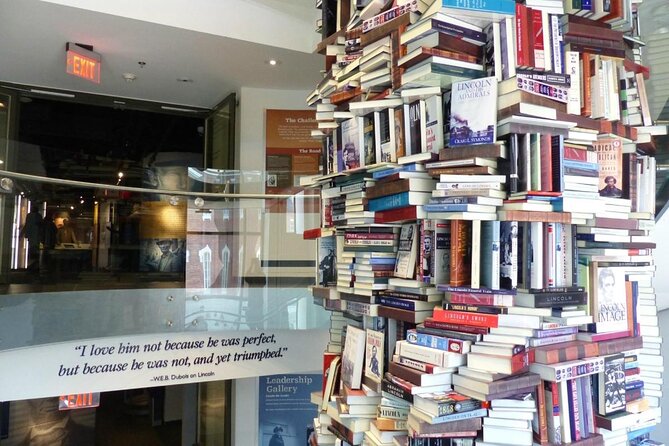
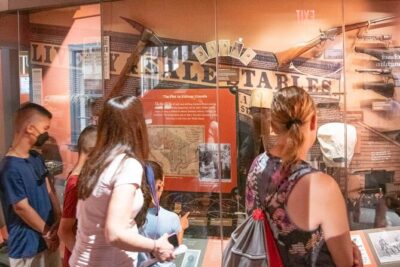
- Guides who keep the pace moving with lots of facts and story flow, often with visual aids like photos on an iPad and even sound effects
- Photo-based storytelling that helps you picture mid-1800s Washington as you walk
- A simple route length: about a one-mile walk, mostly along major downtown streets
- Real “after the shot” locations outside—where Lincoln was taken and where Stanton interviewed witnesses
- Ford’s Theatre ending point plus escape context, including the alley route Booth used
- Small group size (max 15) for questions and a less chaotic feel
The memorials after dark, other evenings out
- DC Memorials Night Tour: Glass-Roof Convertible Upgrade Option
★ 4.5 · 6,933 reviews - National Mall Monuments Night Tour with 10+ Stops, Entry Tickets
★ 4.5 · 4,863 reviews - Washington DC Monuments by Moonlight Tour by Trolley
★ 4.5 · 3,956 reviews - Washington DC Moonlight Tour by Electric Cart
★ 5.0 · 2,610 reviews
Lincoln’s last hours, mapped into one walk
This is the kind of Washington DC tour that works well at night. Starting at 7:00 pm, you head out after the city’s daytime rush fades, but before everything goes quiet. The advantage is practical: you get darker, moodier streets and fewer museum crowds, while still being able to see the key sites clearly from the sidewalk.
You’ll walk roughly one mile (1.6 km) over about two hours. That’s a big deal. Many “history of a single event” tours sprawl all day. Here, the structure stays tight: you get the story, the scenes, and the physical geography without needing a marathon schedule.
The small group limit (up to 15) also matters. When you’re outside and moving, you can hear your guide better and your group doesn’t get stretched out. In real-world terms, it’s easier to stay together when you hit busy blocks.
St. John’s Church and Lafayette Square: getting your DC bearings fast
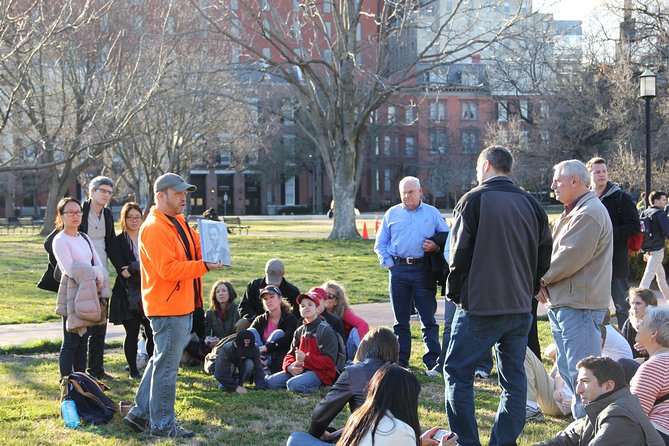
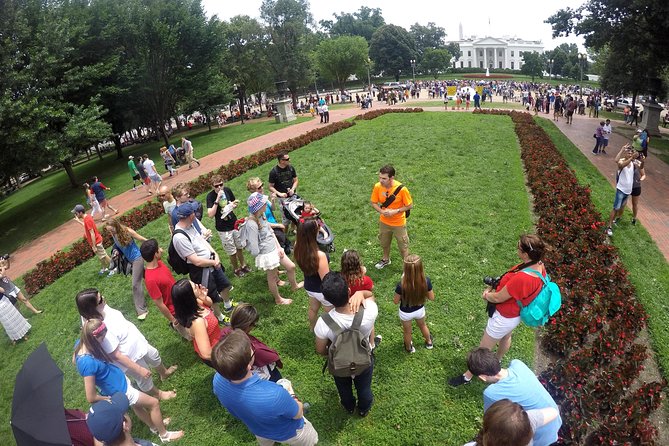
You start outside St. John’s Episcopal Church (1525 H St NW). It’s often nicknamed the Church of the Presidents, and that nickname isn’t random—it fits the role this area played in national life during the 1800s. The best part is that the tour doesn’t try to cram in building time. You get an overview first, then you move.
From there you head to Lafayette Square, the kind of place that’s basically made for this storyline. The surrounding row houses and Civil War–era setting help you understand why Washington felt different in 1865—less sleek, more residential, and more intimate than people imagine. Your guide connects the dots between Lincoln’s final months and the people who orbited him.
These first two stops do something quietly valuable: they set the stage so later details don’t feel like random facts. When you understand the layout and the character of the neighborhood, the assassination night becomes a route you can follow—not just a headline you already know.
The White House area and the Treasury’s “temporary White House” role
Next comes a look around the White House area, focusing on Lincoln’s presidency in the Civil War and his final speech. The tour specifically ties that moment to the presence of John Wilkes Booth—the name that anchors the whole night.
You won’t go inside the White House, and you shouldn’t expect that here. But standing nearby while your guide frames what Lincoln was doing, and who was close enough to matter, can still hit hard. Even without doors and halls, the story lands because the geography is right.
Then you’ll walk past the US Treasury Building, described as a temporary White House after the assassination. That detail is useful because it shows you the immediate aftermath wasn’t some clean break. Government didn’t pause. It shifted locations and kept functioning even while the nation absorbed shock.
National Theatre and the Kirkwood House Hotel link to the conspiracy
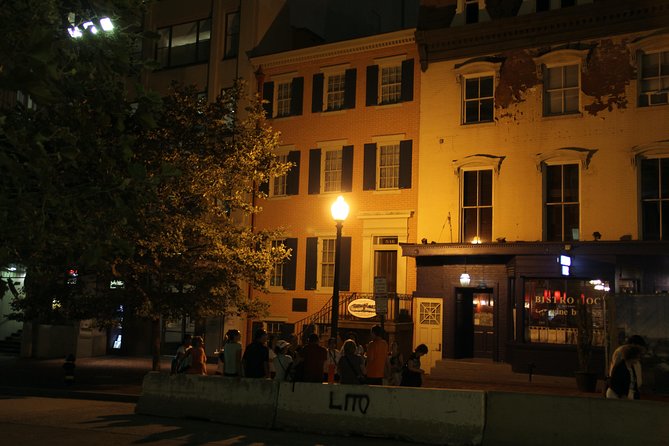
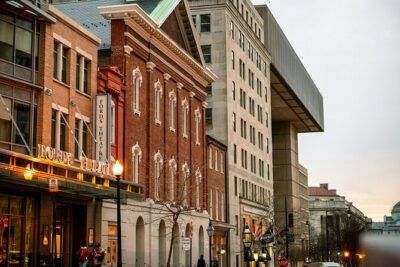
One of the most interesting ways this tour teaches you is by expanding beyond the single shot. You stop outside the National Theatre, where John Wilkes Booth had connections earlier on. Later that evening, Lincoln’s son Tad was at this theater watching a play: Aladdin or his Wonderful Lamp.
That contrast is striking. Your guide uses it to show how normal life and theatrical entertainment sat right alongside political danger. It’s not just name-dropping—it’s a reminder that people around Lincoln were living in the same city, with the same streets, under the same sky.
You then move toward the Old Post Office Pavilion area, across from where the Kirkwood House Hotel stood. This is where Vice President Andrew Johnson stayed. The tour ties in conspiracy planning here too: conspirator George Azerodt rented a room at the hotel and was given the task to attack Johnson that same night.
Even if conspiracy details aren’t your thing, this section gives the bigger picture. It turns the assassination from a single dramatic act into a coordinated attempt—something your brain can hold onto better than a list of names.
Following the Lincoln assassination trail, a few more walks
Pennsylvania Avenue at night: how DC’s main street fit the story
As you walk, you follow Pennsylvania Avenue, and the tour uses that as an interpretive tool. This is the kind of street where you can almost feel layers stacking: presidential processions in the past, everyday movement in the present.
Your guide frames how residents in Civil War Washington navigated the city, and how the avenue served as a major “main street” corridor for prominent public life. You also get context about the city’s energy during the years of the Civil War through photos and guided story.
This is a good stretch for photos, too—especially in the evening light. If you like understanding how cities work as systems (routes, sightlines, crowd flow), you’ll get more from this part than just “walk to the next stop.”
Practical tip: keep your phone power for later. You’ll want it when you reach Ford’s Theatre and the final scenes.
Ford’s Theatre exterior and Booth’s escape path behind the venue
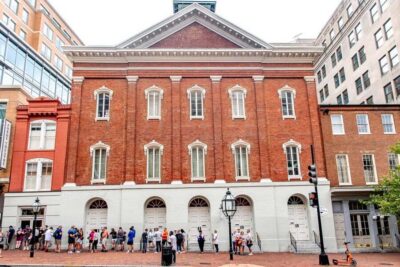
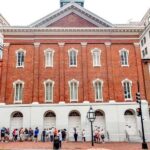
The climax is Ford’s Theatre—where the assassination happened. Today, it’s a working theater and has been restored to its Civil War–era grandeur. You won’t go inside on this walk, but you do get a look at the venue’s role in the night’s events.
What makes the end section more than a photo stop is the focus on movement after the shot. You’ll be directed behind the venue to understand where John Wilkes Booth made his escape. The tour’s framing helps you picture the immediate scramble: chaos on one side, a fast retreat on the other.
There’s also a useful follow-up option. The tour notes the original alley behind Ford’s Theatre—the escape route context—stays open to the public. If you’re still energized after the tour, you can ask your guide about it and then walk there afterward to see the area for yourself.
If you’re visiting Ford’s Theatre for the first time, this tour makes the visit feel sharper. You’re not just seeing the building; you’re understanding why the building mattered in the choreography of that night.
Petersen Boarding House: where Lincoln was taken after the shooting
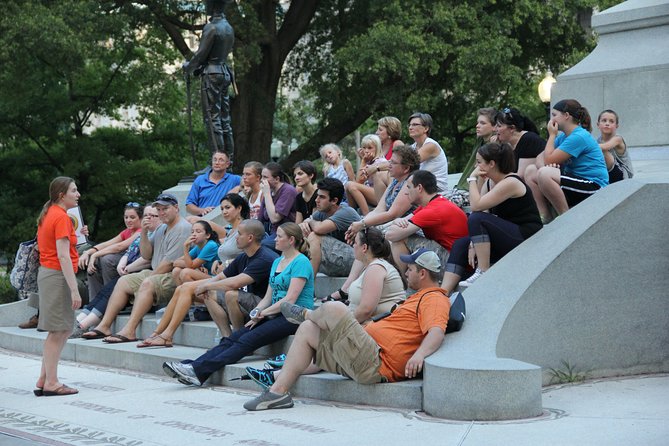
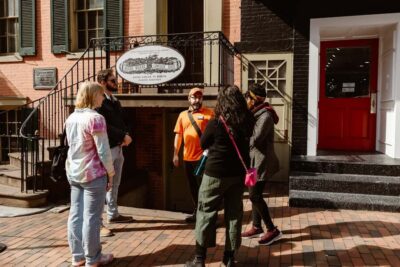
After Ford’s Theatre, the tour shifts to what happened right after the gunshot—when the story becomes painfully human. You’ll stop at the Petersen Boarding House, a small row house that served as a boarding place during the Civil War.
Your guide explains that after Lincoln was shot, he was taken to a room on the first floor while doctors attended to his condition. Then it gets especially specific: Secretary of War Edwin Stanton interviewed witnesses there that night, and Robert Todd Lincoln arrived from the White House and stayed by his father’s side.
This is the part that tends to affect people most, because it moves beyond villains and famous speeches into witnesses, family, and the frantic hours afterward. You’re standing outside a simple building while someone reconstructs the night’s schedule for you.
Even though you don’t enter, the story gives the exterior a purpose. It stops being “a historic house” and becomes “a place where time tightened.”
Price and logistics: what $49 buys you at night
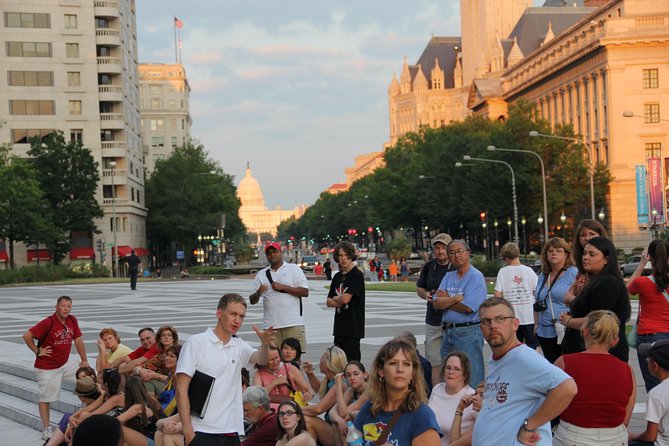
At $49 per person for about two hours, this tour is reasonably priced for DC’s usual standards—especially because it includes a professional, licensed guide and historic photographs used on the walk. The most “value” part isn’t the sites alone. It’s the fact that the guide turns those sites into a connected narrative you can understand without spending extra time researching.
You also get what I’d call low-friction convenience:
- You meet at a clear downtown location, then walk a short, manageable loop.
- The group is small (max 15), so you’re less likely to feel like you’re just being herded.
- You get a mobile ticket, which is handy for last-minute coordination.
The one place to watch: Ford’s Theatre entrance isn’t included for the tour, and you won’t go inside. If you want the full museum/theater experience, you’ll need to add that separately.
What to expect from the guide (and why it matters)
The best part of this walk is how the guide teaches with story, photos, and timing. Multiple named guides in feedback—like Becca, Trevor, Katherine, Jim, Emma, Cecilia, Rebecca, Wesley, and Kathrine—are praised for keeping the delivery engaging and for making the facts easier to follow.
You can also expect the storytelling to adjust to the moment. Evening weather in DC can be harsh, and guides are known to keep things comfortable even when it’s bitter cold, rainy, or snowy. That matters because a history tour is only fun if you can stay focused through the discomfort.
If you like sound bites of big events plus the smaller “how did people move, where did they stand, what did they see” details, this is a strong match.
Who this walking tour is best for
This is a good fit if you fall into any of these camps:
- You like history with a storyline, not a textbook. The route follows events in a way that makes sense.
- You’re curious about the role of DC itself—street layout, theater life, presidential presence—during the Civil War.
- You want a short evening activity that doesn’t require museum stamina.
- You’re traveling with family members who might not want hours of lectures but do want meaningful stops.
It’s less ideal if you’re expecting interior access. Because the tour does not enter buildings, your experience will depend on your interest in outdoor interpretation and your guide’s ability to make the exterior scenes come alive.
Tips to make the evening smoother
DC nights can be cold, and this tour keeps you outside for the whole walk. Dress for wind, not just temperature. If you’re visiting during winter months, gloves and layers are not optional.
Wear shoes you can walk in for about a mile on city sidewalks. Also, plan for the fact that downtown streets can be unpredictable around major attractions. If road conditions shift, your tour timing can run a bit longer.
Finally, arrive a little early at the starting address so you can settle in before the first stop. That helps the guide start on time and keeps the group together.
Should you book this Lincoln assassination walk?
If you want a focused, story-driven way to understand Lincoln’s assassination night—without the all-day commitment—this tour is worth your time. At $49, you get a licensed guide, photo-based scene-setting, and a short walk that hits the key locations, including what happened right after the shooting.
Book it if you like history explained as a route and a sequence of human choices. Skip it only if you mainly want indoor entry and full theater access. For everyone else, this is one of the smarter ways to spend an evening in DC.
FAQ
What’s the duration of the Night of Lincoln Assassination walking tour?
The tour lasts about 2 hours.
Where does the tour start and end?
It starts at 1525 H St NW, Washington, DC 20005, and ends outside Ford’s Theatre at 511 10th St NW, Washington, DC 20004.
What time does the tour begin?
The start time is 7:00 pm.
Is the tour mostly walking, and how far is it?
Yes. The walking distance is roughly one mile (1.6 km).
Does the tour enter Ford’s Theatre or other buildings?
No. The tour does not enter any buildings, and Ford’s Theatre entrance is not included (the tour views it from outside).
What sites are included during the walk?
You’ll see exterior locations such as St. John’s Episcopal Church, Lafayette Square, the White House area, the National Theatre area, the Old Post Office Pavilion area (linked to the Kirkwood House Hotel), Ford’s Theatre, Petersen Boarding House, and the alley escape route area behind Ford’s Theatre.
What’s included in the ticket price?
Included features are a professional, licensed tour guide and historic photos viewed during the tour. The ticket is mobile.
Is there a refund if I cancel?
Free cancellation is available up to 24 hours in advance for a full refund. If you cancel less than 24 hours before the start time, the amount paid is not refunded.
Around the White House


The Lincoln Assassination Trail

The Memorials After Dark



Just Added: Fresh Washington DC Reviews
- Washington : Private Custom Walking Tour With A Guide (Private)★ 3.5 · 3 reviews
- 3-Hour Small Group Memorial Tour in Washington, D.C.★ 4.0 · 3 reviews
- Washington DC Private Guided Bus Day Tour with Step Off Guide★ 5.0 · 3 reviews
- Washington, DC: The Good Liar: Brian Curry★ 5.0 · 3 reviews
- DC Monuments Walking Tour: Small Group, Big Ideas★ 5.0 · 3 reviews
- Washington DC: Library of Congress Private Tour with Tickets★ 5.0 · 3 reviews
Night Monument Tours, side by side.
 ★ 4.5DC Memorials Night Tour: Glass-Roof Convertible Upgrade OptionFrom $696,933 reviews
 ★ 4.5National Mall Monuments Night Tour with 10+ Stops, Entry TicketsFrom $654,863 reviews
 ★ 4.5Washington DC Monuments by Moonlight Tour by TrolleyFrom $483,956 reviews
 ★ 5.0Washington DC Moonlight Tour by Electric CartFrom $742,610 reviews
 ★ 4.5National Mall Night Tour with 10+ Monuments (Public or Private)From $682,207 reviews
 ★ 5.0Small Group National Mall Night Tour with 10 Top AttractionsFrom $991,658 reviews
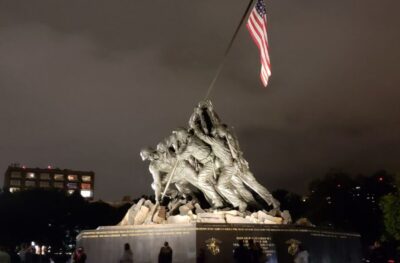 ★ 4.6Monuments by Moonlight Nighttime Trolley TourFrom $481,529 reviews
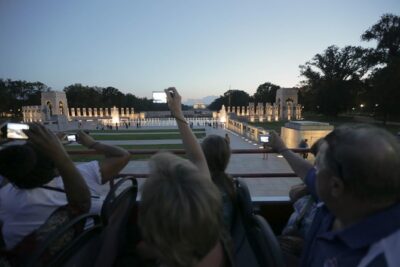 ★ 4.5Big Bus DC: Monuments & Memorials Night Tour by Open-top BusFrom $491,174 reviews
The lists this tour appears in