
Review · NATIONAL MALL & MONUMENTS
Monuments and Memorials Architectural Walking Tour
DC feels different when you notice the details. This National Mall walking tour uses a guided, architectural lens to help you read the monuments like buildings, not just postcards. You’ll get to see major sites in one compact route, with a choice of morning or evening departures. I like that it’s designed for people who want meaning and design cues, not just dates.
I also like the pacing. With a small group capped at 20 and a local guide doing the talking, it’s easy to ask questions and keep up without getting swept along. One consideration: the Washington Monument stop does not include an admission ticket, so plan on either buying that separately or treating the visit as an exterior look.
In This Review
- Key things to look forward to
- A 2-hour National Mall architecture lesson (without the museum crowds)
- Where you meet and how the route flows to Lincoln
- Stop-by-stop: what each monument teaches you about design
- Washington Monument: exterior icon, then move on
- World War II Memorial: the newest stop and a design-minded pause
- Vietnam Veterans Memorial: when architecture carries controversy
- Korean War Veterans Memorial: haunting, visceral, and brief by design
- Lincoln Memorial: the longest stop and the calm payoff
- Why the guide matters: details you might miss on your own
- Price and logistics: what $48 buys you
- Who should book this (and who should consider a different option)
- Should you book this tour?
Key things to look forward to
- Architectural focus: The guide highlights design elements as you move along the Mall.
- A tight “greatest hits” loop: Washington Monument, major war memorials, and the Lincoln Memorial in about two hours.
- Small group energy: Max 20 people makes it feel more personal than a bus tour.
- Free admissions at most stops: World War II, Vietnam, Korean War, and Lincoln Memorial are free to enter.
- A guide who gets specific: One guide named Sam is singled out for sharing interesting details and a thorough walk-through.
More of the Mall, monument by monument
- DC Memorials Night Tour: Glass-Roof Convertible Upgrade Option
★ 4.5 · 6,933 reviews - National Mall Monuments Night Tour with 10+ Stops, Entry Tickets
★ 4.5 · 4,863 reviews - Washington DC Monuments by Moonlight Tour by Trolley
★ 4.5 · 3,956 reviews - DC Monuments and Capitol Hill Tour by Electric Cart
★ 5.0 · 2,841 reviews
A 2-hour National Mall architecture lesson (without the museum crowds)
If you’re in Washington DC for a short time, you want your time to count. This tour keeps things practical: about two hours of walking, with a guide who keeps returning to the same theme—how these monuments are built and how their design shapes the message. That matters because on the National Mall, it’s easy to speed past stone and sculpture and miss why a place feels the way it does.
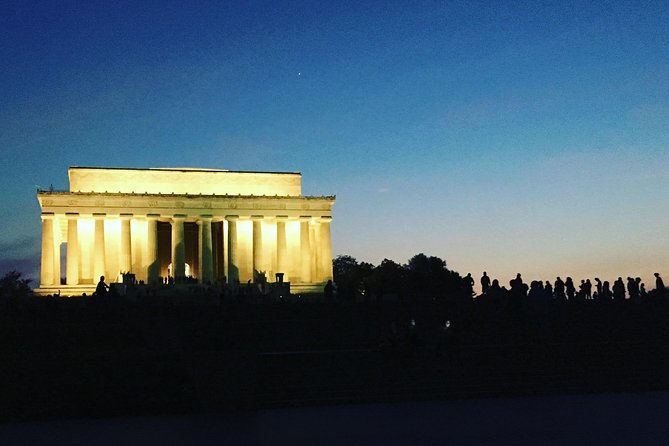
The format also helps. You’ll use a mobile ticket, the tour runs in English, and you can choose either a morning or evening start time. Evening can be great for photos and a calmer vibe, while morning often means you’re starting before your legs complain too loudly. Either way, you’ll end with several of the most recognizable monuments in one shot, without needing to stitch together multiple tickets and guides.
Group size is capped at 20, which I think is the sweet spot for a walking tour. You don’t feel like a line in a theme park, and the guide can still slow down when someone asks a good question. For people who like details, this is a stronger match than a general sightseeing walk.
Where you meet and how the route flows to Lincoln
You start at the base of the east side of the Washington Monument, facing the Capitol Building. The meeting address is 2 15th St NW, Washington, DC 20024. The tour ends at 2 Lincoln Memorial Cir NW, Washington, DC 20002. That end point is convenient if you’re planning to linger near the Lincoln Memorial area after the tour.
The route is basically “down the National Mall,” guided stop to stop. The value here is that the tour doesn’t treat monuments as isolated stops. It treats the Mall as one long design corridor—so you get context for why these sites sit where they do and how the overall urban layout frames the architecture.
What I’d recommend for you: wear comfortable shoes. This is a walking tour with multiple stops, and the timing at each monument is part of the experience. Bring water, especially in warmer months, and keep your phone ready since the tour uses a mobile ticket. Service animals are allowed, and the meeting area is near public transportation, which makes it easier to fit into a busy day.
Stop-by-stop: what each monument teaches you about design
The guide keeps the focus on architecture and design elements, and you’ll also get some commentary on the urban history of the nation’s capital and its monuments. That combination is what makes the tour work. You’re not just listening to facts; you’re learning how design choices communicate civic ideas.
Each stop is timed to balance explanation with time to look around. Some sites get a shorter look, others a bit longer. If you’re the type who likes to stand still and really absorb the space, the longer moments (like Lincoln) will likely be your favorite. If you prefer movement and quick comparisons between monuments, the shorter stops help you cover more ground without fatigue.
Here’s how the visit unfolds.
Washington Monument: exterior icon, then move on
The tour begins at the Washington Monument, described as the tallest freestanding masonry structure in the world and a global icon of Washington DC. This stop is about 10 minutes, and admission is not included.
For your planning, this is the key consideration. The guide can point out design details from the outside, but you should not assume you’re getting a ticketed climb or interior time as part of the tour. If seeing more of the Monument’s interior is a must for you, you may want to budget additional time and arrange that separately.
Still, even a short stop can be productive when you know what to look for. The guide’s architectural focus means you’ll likely notice how the monument’s form dominates the sightline and how it anchors the overall Mall experience. Think of it as the tour’s “reference point.” Once you’ve got that in your head, the war memorials and Lincoln Memorial can make more sense as a set.
DC at walking pace, more routes




World War II Memorial: the newest stop and a design-minded pause

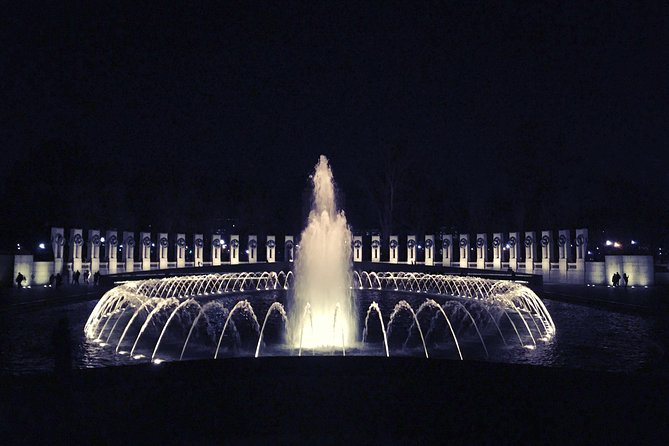
Next up is the National World War II Memorial, around 15 minutes and free to enter. It’s described as the newest memorial on the National Mall, which matters because it signals how the Mall’s memorial language has evolved over time.
What I like about this kind of stop is that it gives you a mental reset between the big icon (Washington Monument) and the more emotionally intense war memorials later. You get time to read the design and messaging in a way that doesn’t feel rushed. The guide’s role here is to keep you from just scanning names and text. You’ll be encouraged to look at how the layout and architectural choices shape the tone of the space.
If you want a tour that helps you slow down enough to actually see rather than just move, the WWII stop is a good example of that balance.
Vietnam Veterans Memorial: when architecture carries controversy
The Vietnam Veterans Memorial is a 15-minute free stop. It’s described as steeped in controversy and national struggle, and that framing is important. The guide’s job, based on the tour description and what the guide Sam is praised for in one standout review, is to walk you through the memorial’s design elements and meaning so you understand what you’re looking at.
This is one of the spots where I’d encourage you to take the stop seriously. Even if you don’t know the full historical context going in, the tour approach helps you read the space as a designed experience, not just a wall or walkway. The architecture here is meant to affect how people process memory, grief, and reflection.
Timing helps too. Fifteen minutes gives you room to look carefully while still keeping the tour moving. If you’re someone who gets overwhelmed in solemn spaces, you might appreciate that the guide keeps things organized, moving you through without leaving you stranded.
Korean War Veterans Memorial: haunting, visceral, and brief by design
Then you’ll reach the Korean War Veterans Memorial, about 10 minutes and free to enter. It’s described as one of Washington’s most haunting and visceral war memorials. Short stop or not, the emotional weight is the point.
In a walking tour, shorter timing can actually be an advantage. It helps you stay present instead of turning a reflective space into a sightseeing checklist. The guide’s architectural focus matters here because the memorial’s impact isn’t just in the story—it’s also in how the design makes you feel as you stand there.
This is also a good stop for mindful pacing. Don’t rush photos. Don’t force conversation at full volume. Let the space do its job, and use the guide’s design cues to guide your attention.
Lincoln Memorial: the longest stop and the calm payoff
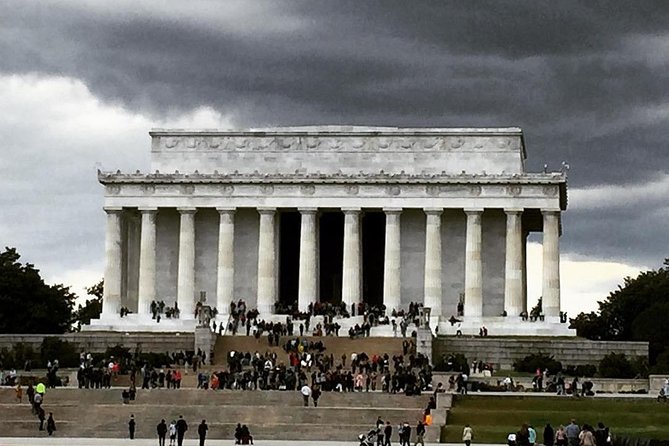
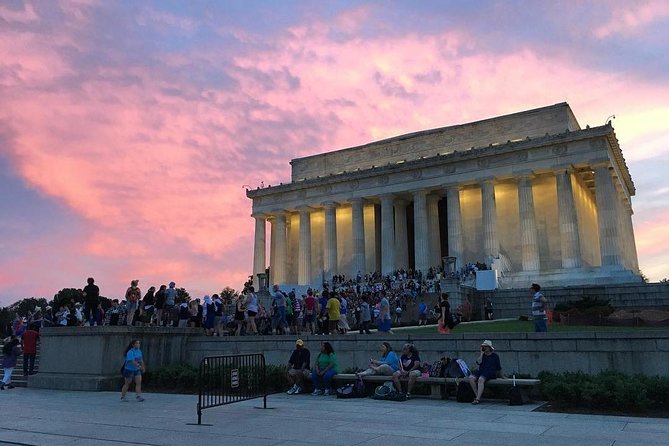
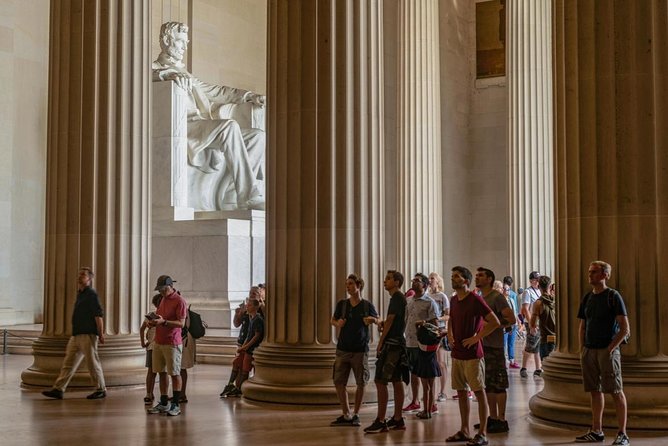
Your final stop is the Lincoln Memorial, about 20 minutes and free. It’s described as a breathtaking temple to the Nation’s most revered President. That’s a strong description, and it hints at why this one gets more time than the earlier war memorials.
This longer window is where the tour’s value really shows. After you’ve walked through different war memory styles, you’ll spend enough time at Lincoln to notice how its architecture changes the atmosphere—shifting from grief-encoded memorial spaces to something more like civic reverence.
In practical terms, it’s also a good place to slow down and reset before you head to whatever’s next in your day. If you’re the type to stand back, take in the scene, and then look closer, Lincoln is the stop that supports that rhythm.
Why the guide matters: details you might miss on your own
The tour is only as good as the guide, and the best signal here is consistency in the praise. The overall rating is 4.8, and 94% of people recommend the tour. The biggest theme is that the guide brought up small details and made them easy to understand.
One guide name that comes through clearly is Sam. In the strongest feedback, Sam is praised for being enthusiastic, personable, and for sharing facts about the Washington Monument, White House, and Lincoln Memorial that felt new even to someone who already knew the basics. Sam is also credited with a thorough explanation of the Vietnam Memorial and World War II Memorial.
That’s the difference between a “walk and point” tour and a design-minded guide. With this one, you get help noticing the way the space is composed and why that composition is part of the message. If you’re the kind of person who likes to learn just one level deeper—why this feels solemn, why this looks monumental, why this is arranged this way—you’ll likely enjoy the experience.
Price and logistics: what $48 buys you
The price is $48.00 per person for about two hours with a local guide. Here’s the value logic I’d use if you’re deciding whether it’s worth it.
You’re paying mainly for guided interpretation—turning a self-guided stroll into something you can actually learn from. Admission is free for the World War II Memorial, Vietnam Veterans Memorial, Korean War Veterans Memorial, and Lincoln Memorial. Only the Washington Monument stop explicitly notes that an admission ticket is not included.
So, if you’re comfortable viewing the Washington Monument from the outside, the cost stays more straightforward. If you need a ticketed visit at the Monument, you’ll want to plan that separately so you don’t feel time-pressured.
Logistics are also fairly friendly. The tour uses a mobile ticket, runs in English, and is near public transportation. The group size max is 20, and most people can participate. Service animals are allowed. All of that makes this tour easier to plug into a DC schedule without too much stress.
Who should book this (and who should consider a different option)
This is a strong match if:
- you want a guided walk that focuses on architecture and design, not just names
- you like covering several major monuments in a short window
- you’re curious about how civic space shapes emotion and memory, especially at war memorials
- you prefer smaller groups and a guide who can explain details
It may not be the best fit if:
- you plan to spend extra time inside the Washington Monument and need ticketed access as part of the experience
- you strongly prefer a fully flexible pace with no fixed stop durations
One more note for your expectations. There was a low rating tied to a guide not showing up and unanswered messages, and the provider response said it was due to a medical emergency en route and that it was an isolated incident. That doesn’t erase the frustration, but it does suggest this is not the normal pattern. Still, it’s smart to keep your confirmation details handy and have your own plan for what you’ll do if something unexpected happens.
Should you book this tour?
I’d book it if your main goal is to understand the National Mall monuments through their design—why they’re built this way, how they guide your attention, and how the spaces carry meaning. The small group size, the guide-led architectural focus, and the fact that most stops are free make the $48 feel reasonable for what you get.
I would not book it expecting unlimited time at every site or included Washington Monument admission. Treat the Monument stop as a fast, guided exterior look, then decide whether you want to add interior time later.
If you want a straightforward, design-minded way to see Washington DC’s most famous memorials in one efficient walk, this tour is a solid choice.
DC on Foot: More Walks






More Tour Reviews in Washington DC






The Mall, Monument by Monument


Just Added: Fresh Washington DC Reviews
- Washington : Private Custom Walking Tour With A Guide (Private)★ 3.5 · 3 reviews
- 3-Hour Small Group Memorial Tour in Washington, D.C.★ 4.0 · 3 reviews
- Washington DC Private Guided Bus Day Tour with Step Off Guide★ 5.0 · 3 reviews
- Washington, DC: The Good Liar: Brian Curry★ 5.0 · 3 reviews
- DC Monuments Walking Tour: Small Group, Big Ideas★ 5.0 · 3 reviews
- Washington DC: Library of Congress Private Tour with Tickets★ 5.0 · 3 reviews
National Mall & Monuments, side by side.
 ★ 4.5DC Memorials Night Tour: Glass-Roof Convertible Upgrade OptionFrom $696,933 reviews
 ★ 4.5National Mall Monuments Night Tour with 10+ Stops, Entry TicketsFrom $654,863 reviews
 ★ 4.5Washington DC Monuments by Moonlight Tour by TrolleyFrom $483,956 reviews
 ★ 5.0DC Monuments and Capitol Hill Tour by Electric CartFrom $552,841 reviews
 ★ 4.5National Mall Night Tour with 10+ Monuments (Public or Private)From $682,207 reviews
 ★ 5.0Small Group National Mall Night Tour with 10 Top AttractionsFrom $991,658 reviews
 ★ 4.6Monuments by Moonlight Nighttime Trolley TourFrom $481,529 reviews
 ★ 4.8National Mall Tour by Electric VehicleFrom $531,252 reviews
The lists this tour appears in