
Review · WASHINGTON DC
District of Punk
Punk in DC is more than a footnote. This tour traces how the city’s punk and hardcore scenes grew in response to a cold, soulless government mood—then shows how those sounds left a lasting mark. You’ll finish at the DC Punk Archive at the MLK Jr. Memorial Library, where the paper trail of the scene lives.
What I like most is the way the tour turns music lore into street-level geography. In about 1.5 hours, you hit key former venues around Gallery Place and beyond, so you can see where the action happened, even if the clubs are gone. I also like the format: the group stays small (max 20), the stops are quick, and you use a mobile ticket that keeps things simple.
One consideration: this is a walking tour with short stops, so you won’t have long time at each location. And it depends on good weather, so check the forecast before you go.
In This Review
- Key things to know before you go
- From Selective Service to Street Gigs: Why DC Punk Felt Different
- Price and logistics: why $30 feels fair here
- The monthly schedule in March 2025: don’t guess, confirm
- Stop 1: 443 7th St NW and the d.c. Space legacy
- Stop 2: The Lansburgh Center site and the 1980s punk circuit
- Stop 3: The first 9:30 Club location and how icons begin
- Stop 4: MLK Jr. Memorial Library and the DC Punk Archive
- What makes this tour worth your time (even if you only sort of like punk)
- Weather and walking: the only real downside is the obvious one
- Who should book District of Punk, and who might not
- Should you book District of Punk?
- FAQ
- FAQ
- How much does District of Punk cost?
- How long is the tour?
- When does the tour run starting in 2025?
- Where does the tour start and end?
- What is the maximum group size?
- Does the tour depend on weather?
Key things to know before you go
- A tight 90-minute route built around former clubs and what they contributed to DC’s punk story
- Gallery Place focus with multiple stops tied to the scene’s growth and changes over decades
- Free admissions at the stops listed, so your money goes to the guide and the walking time
- Ends at the DC Punk Archive at the MLK Jr. Memorial Library for a focused place to land your questions
- Small group size (up to 20), which makes it easier to ask questions as you walk
- Runs monthly starting March 2025 on the second Saturday, so you can plan around the schedule
Still deciding? Line this one up against a few DC favorites before you book.
- DC Memorials Night Tour: Glass-Roof Convertible Upgrade Option
★ 4.5 · 6,933 reviews - National Mall Monuments Night Tour with 10+ Stops, Entry Tickets
★ 4.5 · 4,863 reviews - Washington DC Monuments by Moonlight Tour by Trolley
★ 4.5 · 3,956 reviews - Hop-on Hop-off Sightseeing Tour by Open-top Bus with 18 Stops
★ 3.5 · 3,848 reviews
From Selective Service to Street Gigs: Why DC Punk Felt Different
To understand DC punk, you have to understand the vibe of the era. In the 1980s, the Reagan Administration was reinstating the Selective Service, hippies were turning into yuppies, and it all created a feeling that government life was dry and impersonal. Punk rose as a reaction to that sense of soullessness, but in Washington it didn’t just mimic what was happening in London, New York, or LA—it developed with its own local rhythm and venues.
This tour doesn’t treat punk like one fixed style. It maps the evolution you can connect to the city itself: DC’s early punk energy, then the hardcore push in the 1980s, and the post punk turn later on. If you like tracing how genres change as neighborhoods, venues, and audiences change, you’ll get a lot out of the way each stop connects to a specific phase of the scene.
And because the tour ends at the MLK Jr. Memorial Library, it quietly reframes what punk tourism can be. Instead of only chasing exterior buildings, you land at a place that holds the DC Punk Archive, the only collection of punk ephemera documenting the DC scene. That matters if you’re the kind of person who likes proof—flyers, artifacts, and the messy physical bits that show a scene was real.
Price and logistics: why $30 feels fair here
At $30 per person, this is priced like a small walking tour, not a big museum production. The value comes from the concentrated time and the venue density. You’re paying for a guide to explain what each former site meant, plus the route plan that strings those sites together in about 90 minutes.
A helpful practical detail: the stop admissions listed are ticket free at each location on the route. That means your cost isn’t getting swallowed by add-on fees. What you’re funding is the walking narrative—someone connecting dots between clubs, eras, and local culture—so you don’t have to do the detective work yourself.
You also get a mobile ticket, which usually means less fumbling and fewer printed documents to manage in a city that already asks a lot of your attention. And with a maximum group size of 20, it’s not the kind of tour where you feel swallowed by the crowd.
One thing to plan for: the tour runs on good-weather days. If the forecast is messy, you may need to shift dates if the experience is canceled for weather. That’s not unique to this tour, but it’s worth factoring in if you’re in DC during a rainy week.
The monthly schedule in March 2025: don’t guess, confirm
The tour starts in March 2025 and is offered on the second Saturday of the month at 1pm. That’s the key planning detail.
One more thing to watch: the start time listed in the tour details also shows 10:30 am. Since the confirmation you receive is what matters, treat your booking message as the source of truth for the exact start time on your date. If you’re coordinating with other plans, leave a little buffer so you don’t arrive half an hour early or late.
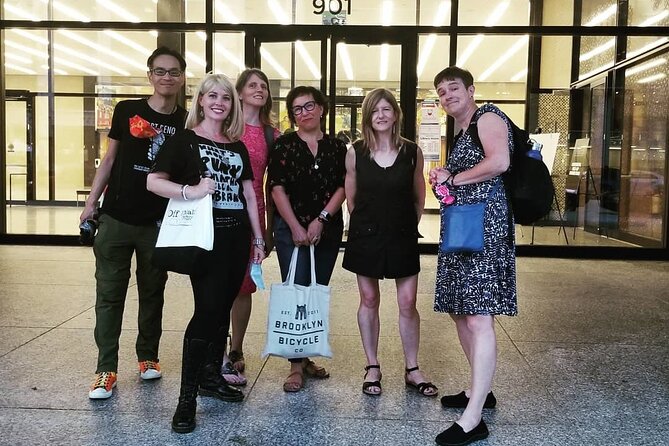
The meeting point is at Gallery Place Chinatown Station, Washington, DC 20001. The end point is the Martin Luther King Jr. Memorial Library, 901 G St NW, Washington, DC 20001. That matters because the tour finishes in a spot that’s easy to transition from—especially if you want to stay in the area and keep exploring.
Stop 1: 443 7th St NW and the d.c. Space legacy
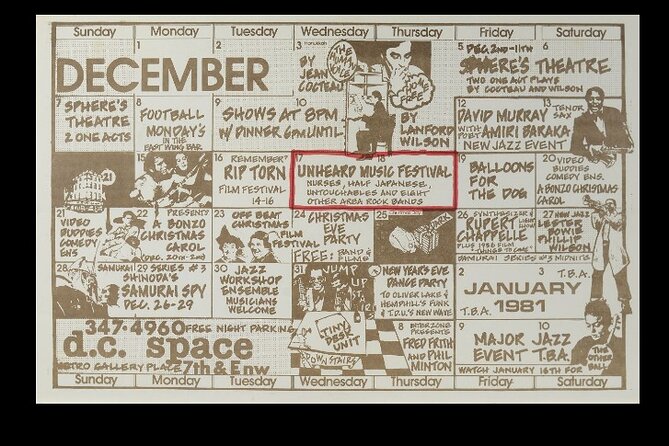
Your first stop is at 443 7th St NW, tied to a former venue called d.c. Space. This site is notable because it was the first club to host the Unheard Of Music Festival. That’s a strong anchor detail: it places the venue not just in a local scene, but in a moment where DC punk was building momentum and visibility.
This location also sets the tone for the whole tour. Instead of talking punk as a vague cultural label, you get concrete: a specific street address, a specific venue name, and a specific role in the punk ecosystem. That’s the kind of grounding that makes later stops easier to understand.
Practical note: the stop is scheduled for about 15 minutes. So come ready with a couple of questions in your head—like what role that kind of festival played for an under-recognized scene, or how venues like this shaped who showed up and what bands had a chance to grow.



Stop 2: The Lansburgh Center site and the 1980s punk circuit
Next you’ll stand by The Lansburgh, the former location of the Lansburgh Center, which was a popular venue for punk shows in the 1980s. The reason this stop works is simple: it connects punk to a major performance infrastructure that DC already had. Punk didn’t just happen in basements; it used the city’s show spaces and its crowd flow.
If you’re the type who likes to understand how scenes survive, this stop gives you that angle. Venues like the Lansburgh Center helped punk move from fringe attention to something more organized. The city’s geography mattered, and the tour helps you track that geography.
Because the scheduled time is again about 15 minutes, you won’t get a long digression. That can be a plus: you learn what you need, then you walk to the next site before your attention drifts.
Stop 3: The first 9:30 Club location and how icons begin
Then you hit 9:30 Club, visiting the former location of the first 9:30 Club—now one of DC’s most iconic performance venues. That’s a big deal for anyone who cares about how institutions start. Icon status doesn’t appear from nowhere. It starts with a first location, early momentum, and the kind of audiences that keep showing up.
This stop also helps you connect past and present. Even though the current club is famous, the tour reminds you that its reputation had an earlier physical footprint. You’ll likely find yourself seeing the neighborhood differently afterward, because the tour gives you historical “placement” for something you might otherwise treat as just a modern entertainment stop.
Again, the duration is about 15 minutes. That short window pushes the guide to focus on what matters: what this venue meant to the DC punk ecosystem and why it became a long-term stage rather than a short-term fad.
Stop 4: MLK Jr. Memorial Library and the DC Punk Archive
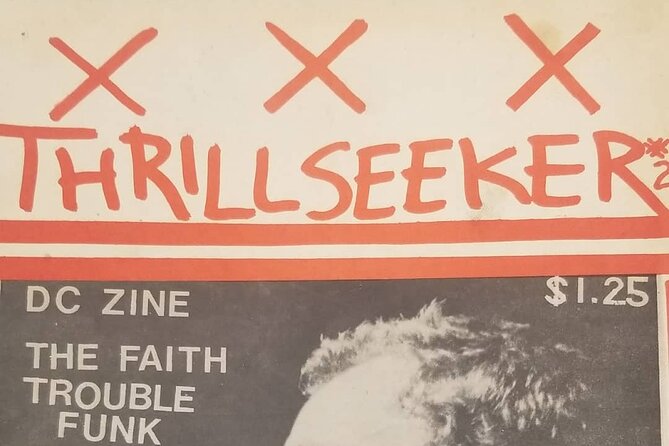
The final stop is the Martin Luther King Jr. Memorial Library, which houses the D.C. Punk Archive. The archive is described as the only collection of punk ephemera documenting the DC scene. That claim alone makes the ending feel purposeful, not just convenient.
This is where the tour’s “why it matters” layer clicks. Punk is often treated like sound and attitude. But scenes also live in the paper trail: flyers, photos, and the artifacts that prove who played, who organized, and how fans shared information. Ending at a library archive turns punk memory into something you can examine as a cultural record.
The scheduled time here is about 10 minutes, so don’t expect a deep research session. But you will end with a sense of direction. If you want to keep learning after the walk, the archive connection tells you exactly where to look for more.
What makes this tour worth your time (even if you only sort of like punk)
I like that the tour is built to make DC feel specific. Instead of telling you punk is punk everywhere, it emphasizes what makes DC punk distinct. The city’s relationship to politics, the way neighborhoods function around major venues, and the way scenes change across time all get attention.
I also like that it’s an easy on-ramp for people who don’t already know DC bands by name. You’re not required to show up as an encyclopedia. You just need curiosity. The route is short, the stops are clearly labeled, and the story is delivered through places rather than long lecture.
And the small group size helps. With a maximum of 20 people, the tour doesn’t feel like you’re shouting over noise the whole time. It’s the kind of group size where you can actually take in what the guide points out and ask one or two questions without feeling rushed.
If you’re a history-minded traveler, you’ll appreciate the way the tour frames punk as a response to the political and social atmosphere of the time. If you’re a music-minded traveler, you’ll appreciate the venue-to-genre connections across decades. Either way, it’s a more practical approach than reading a list of famous DC names and calling it done.
Weather and walking: the only real downside is the obvious one
This experience requires good weather. So if you’re traveling during DC’s rainy stretch or you know you’ll be miserable outdoors, factor that in. The tour is only about 90 minutes, but it’s still a city-walking format with multiple stops.
Also, because each location gets a limited amount of time (mostly 15 minutes, then 10 at the end), you’ll need to accept that this is a spotlight, not a long historical seminar. That’s not a flaw. It’s how the tour stays focused and keeps your feet moving.
If you want deeper detail, come prepared to follow up afterward—especially because you end at a place that stores actual punk ephemera.
Who should book District of Punk, and who might not
This tour is a good fit if you want:
- DC-specific music culture tied to real addresses near Gallery Place
- A quick, efficient way to learn how punk evolved from earlier styles into hardcore and post punk eras
- A low-cost tour that ends with a meaningful archival stop at the MLK Jr. Memorial Library
It may be less satisfying if you only want indoor museum time, because most of your experience happens outdoors at former locations. And if you’re not interested in punk at all, the tour’s whole structure—venue names, scene changes, and local contributions—won’t click for you.
Should you book District of Punk?
Yes, I think you should book it if you’re in Washington DC with even a mild interest in punk culture or music history. For $30, you get a tight route, free admission at the listed stops, and an ending tied to the DC Punk Archive, which gives the experience more substance than a typical “history walk.”
Book it especially if you like walking tours that connect culture to geography. This one does that fast. You’ll leave with a clearer sense of how the DC punk scene formed, where it gathered around Gallery Place, and how local venues helped the scene survive long enough to become part of DC’s identity.
FAQ
FAQ
How much does District of Punk cost?
It costs $30.00 per person.
How long is the tour?
The duration is approximately 1 hour 30 minutes.
When does the tour run starting in 2025?
Starting in March 2025, it is offered on the second Saturday of each month at 1pm.
Where does the tour start and end?
It starts at Gallery Place Chinatown Station in Washington, DC and ends at Martin Luther King Jr. Memorial Library, 901 G St NW, Washington, DC.
What is the maximum group size?
The tour has a maximum of 20 travelers.
Does the tour depend on weather?
Yes. The experience requires good weather. If it is canceled due to poor weather, you will be offered a different date or a full refund.
More Tour Reviews in Washington DC




Just Added: Fresh Washington DC Reviews
- Washington : Private Custom Walking Tour With A Guide (Private)★ 3.5 · 3 reviews
- 3-Hour Small Group Memorial Tour in Washington, D.C.★ 4.0 · 3 reviews
- Washington DC Private Guided Bus Day Tour with Step Off Guide★ 5.0 · 3 reviews
- Washington, DC: The Good Liar: Brian Curry★ 5.0 · 3 reviews
- DC Monuments Walking Tour: Small Group, Big Ideas★ 5.0 · 3 reviews
- Washington DC: Library of Congress Private Tour with Tickets★ 5.0 · 3 reviews