
Review · NATIONAL MALL & MONUMENTS
DC Monuments: Small Groups, Big Ideas Walking Tour
Monuments make more sense on foot. On this small-group National Mall walk, I like the focus on the people behind the stone—so the monuments feel personal, not like a worksheet of dates.
Two things I really appreciate are the thoughtful, not-date-heavy commentary and the unhurried pace that leaves room to actually look, not just hurry past. Guided by Shelley, a former National Park Service ranger with a museum studies master’s and anthropology background, the vibe stays smart and human.
One consideration: it’s still a walk outside most of the time, and the tour is not a great match if you have back problems. Expect about 1 mile (1.6 km) of walking, with benches not at every stop.
In This Review
- Why this National Mall tour feels different
- Meet Shelley: a guide with a ranger’s way of explaining
- Price and time: $85 for 150 minutes on the Mall
- The walk starts near the World War II Memorial, and it sets the tone fast
- Stop 1: Washington Monument from a distance, with an important heads-up
- World War II Memorial: the scale of service and the weight of memory
- Vietnam Veterans Memorial: three separate parts that tell one story
- The Vietnam Women’s Memorial: why that additional perspective matters
- Three Servicemen Statue: a short stop with a clear purpose
- Korean War Veterans Memorial: the Wall of Remembrance plus 19 service men statues
- Lincoln Memorial finish: ending slavery is part of the point
- Pace, comfort, and what to bring (so you don’t hate the walk)
- Photo plan: get iconic images without rushing your brain
- Who this tour is best for
- When you might want something else
- Should you book this DC Monuments: Small Groups, Big Ideas Walking Tour?
- FAQ
- How long is the DC Monuments walking tour?
- How much walking should I expect?
- What monuments and memorials will we see?
- Where do I meet the guide?
- Is bottled water provided?
- Is food included?
- Is the tour wheelchair accessible?
- Are pets allowed?
Why this National Mall tour feels different

- Small group (up to 8) means less crowd-jousting and more time to ask questions.
- People-first stories: you’re guided through why monuments exist, not just what year they happened.
- Real photo opportunities at major memorials, without the race-through feel.
- Interactive group talk about meaning, honor, and who gets remembered.
- A manageable route: about a mile total, paced for appreciating the sites.
More of the Mall, monument by monument
- DC Memorials Night Tour: Glass-Roof Convertible Upgrade Option
★ 4.5 · 6,933 reviews - National Mall Monuments Night Tour with 10+ Stops, Entry Tickets
★ 4.5 · 4,863 reviews - Washington DC Monuments by Moonlight Tour by Trolley
★ 4.5 · 3,956 reviews - DC Monuments and Capitol Hill Tour by Electric Cart
★ 5.0 · 2,841 reviews
Meet Shelley: a guide with a ranger’s way of explaining
The guide on this tour is Shelley, and her background shows in how she teaches. She started her career as a ranger with the National Park Service, including time at places like the Frederick Douglass House, Cape Cod National Seashore, and the Chesapeake and Ohio Canal—so she knows how to connect history to real people and real places.
She also has a Master’s in museum studies and a Bachelor’s in anthropology and linguistics. That combination tends to create tours that explain both the story and the meaning, without turning your brain into a timeline.
If you like learning from a guide who makes history feel like human experience, this is the kind of tour that fits.
Price and time: $85 for 150 minutes on the Mall
At $85 per person for 150 minutes, you’re paying for a guided, small-group walk plus expert interpretation at multiple stops. For DC, where a lot of “guided experiences” are either short photo ops or long bus rides, this format is a solid value: you get context without losing half your day to transportation.
You should plan for a start and finish in the core monument area: you meet near the World War II Memorial area and end at the Lincoln Memorial. The tour stays on the National Mall, so you’re not constantly re-orienting yourself.
One more practical point: this tour is outdoors, so bring what keeps you comfortable. A reusable water bottle is smart because you’ll have refill stations along the way, and you’ll want snacks since food isn’t included.
The walk starts near the World War II Memorial, and it sets the tone fast

You meet on 17th St. SW, next to a crosswalk at the World War II Memorial area, on the east side of the street (the side closer to the Washington Monument). If you’re coming from Constitution Avenue, it’s the first crosswalk after the intersection. Find the guide in a green shirt.
That meeting point matters because it places you right where the tour’s central theme begins: how DC uses monuments to tell stories about service, sacrifice, and national identity.
Before you even hit the first major stop, the guide frames what you’ll do for the next couple hours. You’ll talk as a group about why these monuments exist and what they mean. The goal isn’t to memorize facts—it’s to understand the human purpose behind the design.
Stop 1: Washington Monument from a distance, with an important heads-up
The tour begins at the Washington Monument area, and you’ll view and discuss it from a distance. The guide’s approach here is more about context than up-close viewing.
If you specifically want close-up views of the Washington Monument itself, the guidance is to do that before the tour. On this one, you’re mainly working with sightlines and symbolism rather than trying to get that postcard shot from a step-away vantage.
Still, seeing it early helps you “set the DC compass” in your mind. Even if you’ve been to Washington before, the Monument tends to act like an anchor point for how you interpret the rest of the Mall.
DC at walking pace, more routes



World War II Memorial: the scale of service and the weight of memory

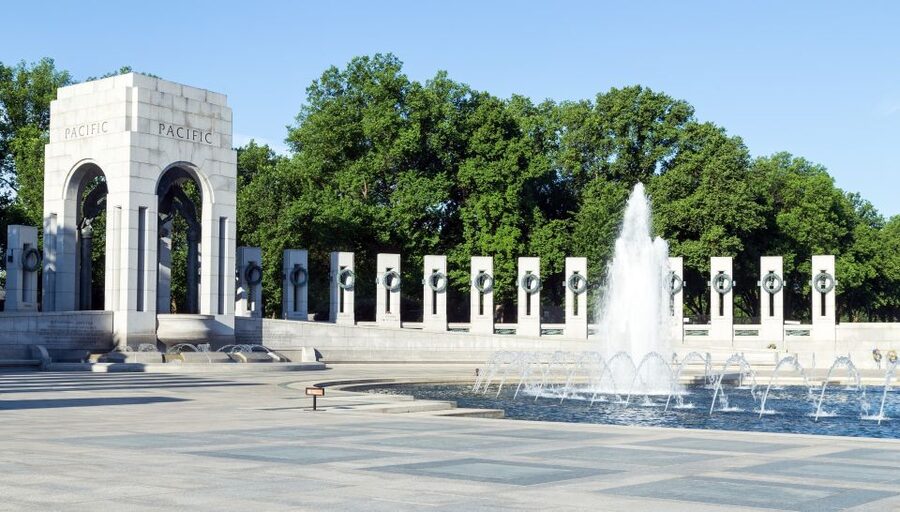
Next comes the National World War II Memorial, where you’ll have guided time to visit and learn the big picture. This memorial honors multiple parts of the WWII story: the service of 16 million Armed Forces members, the support from millions on the home front, and the 405,399 Americans who made the ultimate sacrifice.
What I like about handling WWII here is that the lesson isn’t just about the fighting. It’s about the whole system of war—how nations mobilize and how people carry the cost. That broader framing also helps later memorials feel more connected instead of like separate stops.
You get enough time to pause and look, not just to march by. That matters because memorial design often works differently up close than it does in photos.
Vietnam Veterans Memorial: three separate parts that tell one story
The Vietnam Veterans Memorial stop is built around how the memorial is structured. You’re not just told about The Wall; you learn that the memorial includes three components: the Three Soldiers statue, the Vietnam Women’s Memorial, and the Vietnam Veterans War Memorial (often referred to as The Wall).
The guided focus here is on creation and how the memorial is used today. That’s a useful angle because memorials aren’t only “history objects.” They’re places where people return, reflect, and learn over time.
Practical tip: if you’re photographing this stop, don’t treat it like a quick “click and go.” The emotional impact of the names and layout is what pulls people in—so give yourself the chance to slow down. The tour’s pacing helps with that.
And because the stop is split across the parts, it’s easier to understand why the memorial feels both specific and collective.
The Vietnam Women’s Memorial: why that additional perspective matters
After the main Vietnam segment, there’s a dedicated stop for the Vietnam Women’s Memorial. Even if you think you already know the story of the Vietnam era, this added focus brings the perspective of women into the foreground, rather than leaving it as a side note.
The tour keeps moving, but the brief stop is still long enough for the guided talking points to land. This is a good example of how the tour avoids being a checklist: it gives each part a reason to exist.
If you tend to read memorial panels fast and move on, this stop is where you’ll likely feel the guide’s push to notice what you might otherwise miss.
Three Servicemen Statue: a short stop with a clear purpose
You’ll also visit the Three Servicemen statue, which is guided and scheduled for a shorter window. In a compact tour, that can feel quick on paper, but the value here is that you get the “why” behind it instead of just a photo opportunity.
This is the kind of stop where context turns a statue into a story. Rather than treating it like decoration, you learn how it fits into the larger memorial meaning.
Korean War Veterans Memorial: the Wall of Remembrance plus 19 service men statues
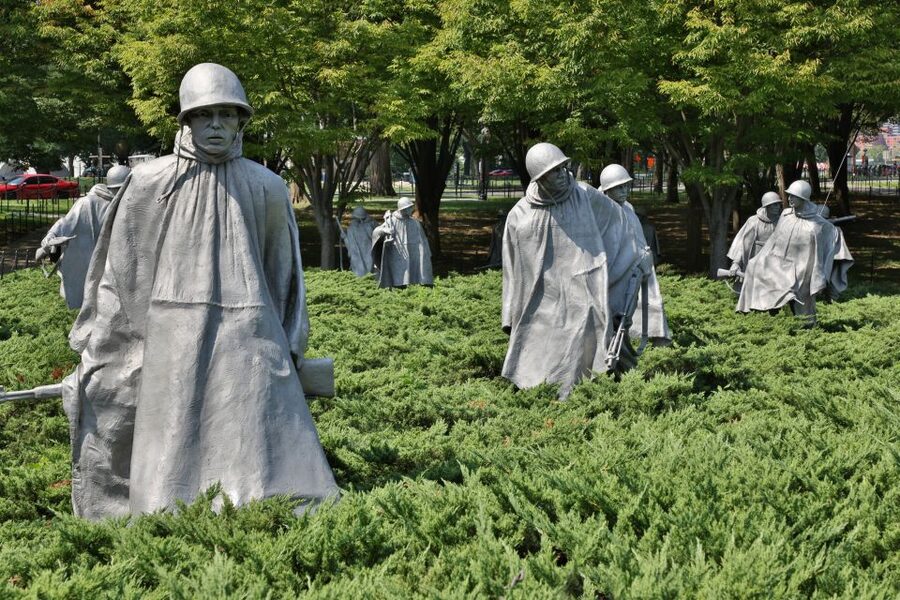
Next up is the Korean War Veterans Memorial. This one includes a moving Wall of Remembrance and 19 service men statues.
The guided time here gives you room to understand how the memorial balances solemn remembrance with a human, figure-based scale. It’s not only about names on a wall. The statues help you feel individual presence even within a national story.
Again, this isn’t rushed. You should be ready to slow down for a moment, step back, and then look again. Memorials work that way.
Lincoln Memorial finish: ending slavery is part of the point
The tour ends at the Lincoln Memorial. The guided discussion focuses on Lincoln as the nation’s 16th president and his leadership during the American Civil War, with special emphasis on the fact that he was crucial to ending slavery.
Ending here makes thematic sense. Earlier stops are about who is honored and how sacrifice is remembered. Lincoln adds the idea of national change—how decisions by leaders shape lives far beyond the moment.
You’ll get guided time to visit and interpret the memorial, and you’ll finish at the Lincoln Memorial (so plan to continue your own sightseeing from there).
Pace, comfort, and what to bring (so you don’t hate the walk)
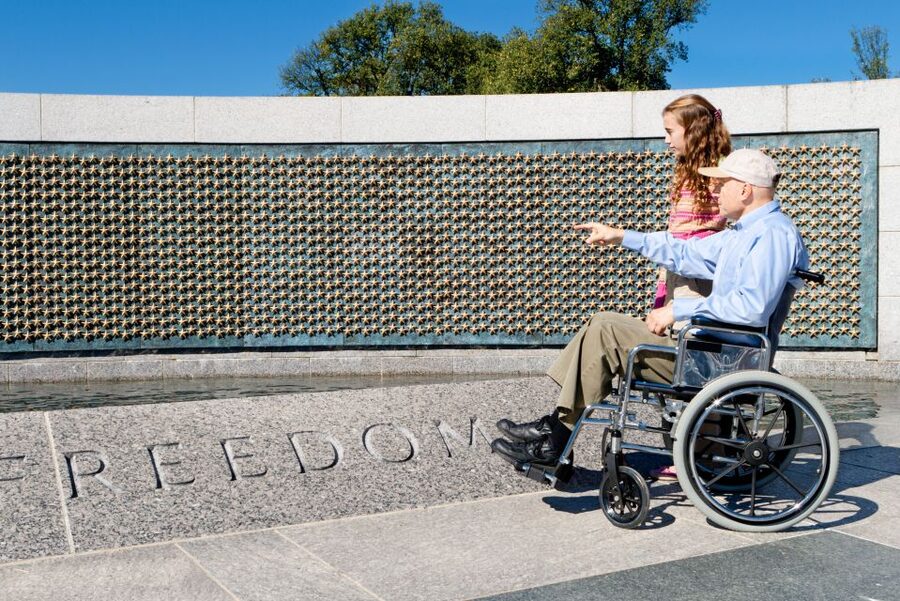
This tour is listed as wheelchair accessible, which is a big plus for the National Mall. Still, it’s not recommended for people with back problems. Benches exist, but not at every stop.
Plan around that. Comfortable shoes matter. You’ll be walking about a mile (1.6 km) total, and you’ll be outside through the full experience.
Bring a reusable water bottle so you can refill. Bottled water isn’t included, and the plan assumes you’ll use the refill stations along the way. Since food isn’t included either, pack snacks you can nibble between memorial moments.
Also, the National Mall is one of the most visited places in DC. You should expect lots of people around the monuments. The good news is the group is limited to 8 participants, which helps keep your experience from turning into a moving crowd-control problem.
Photo plan: get iconic images without rushing your brain
This tour is clearly built for photography. You’ll see the Washington Monument, the WWII memorial, multiple components of the Vietnam memorial area, the Korean War memorial, and end at the Lincoln Memorial.
But the way it’s paced is what helps photos turn out better. Instead of sprinting, you get guided pauses that encourage you to compose shots thoughtfully—like taking a step back for the Monument in context, then moving in for the memorial feel.
If you’re doing this as a camera-first trip, set aside some time to put the phone down. You’ll get better photos when you’re actually looking, not just shooting over your shoulder.
Who this tour is best for
This is a strong match if you:
- Want meaning, not just dates and numbers
- Prefer a small group experience that stays calm enough to ask questions
- Care about how monuments honor people and how communities use these sites today
- Want a manageable walking tour on the National Mall that doesn’t feel like a bus tour remake
It also works well if you’ve been to DC before and think you already know the major names. The tour format makes you look again, this time with the human stories threaded through the design.
When you might want something else
You might want a different DC option if:
- You have back problems and don’t want a mostly outdoor walk with limited bench coverage
- You want the Washington Monument up close during the tour (the guidance here is that you view it from a distance)
- You’re looking for a heavy, exhaustive timeline lecture (this tour is specifically not built around long lists of dates)
If your ideal tour is more about “standing near the monument and reading everything word-for-word,” you may find you want extra self-guided time after this ends.
Should you book this DC Monuments: Small Groups, Big Ideas Walking Tour?
If you like your DC with a human scale, this is a solid pick. The small group size, the guided focus on why monuments exist, and the pace that lets you truly take in the memorials all point in the same direction: you’ll leave understanding the stories behind the stone.
I’d book it if you’re coming for iconic sites but you also want context that makes the memorials matter. I’d reconsider if you need close access to the Washington Monument or if you know your body will struggle with an outdoor mile-and-a-bit walk.
FAQ
How long is the DC Monuments walking tour?
The tour runs for 150 minutes.
How much walking should I expect?
Plan to walk about a mile (1.6 km).
What monuments and memorials will we see?
You’ll see the Washington Monument, the National World War II Memorial, the Vietnam Veterans Memorial (including the Three Soldiers statue, the Vietnam Women’s Memorial, and The Wall), the Korean War Veterans Memorial, and you’ll end at the Lincoln Memorial.
Where do I meet the guide?
Meet on 17th St. SW next to one of the crosswalk at the World War II Memorial area. It’s about halfway between Independence Ave and Constitution Ave on the east side of the street. The guide wears a green shirt.
Is bottled water provided?
No. Bring a reusable water bottle, since there are refill stations along the way.
Is food included?
No. You’ll be outside the whole tour, so bring snacks.
Is the tour wheelchair accessible?
Yes, it is wheelchair accessible.
Are pets allowed?
Pets are not allowed, but assistance dogs are allowed.
DC on Foot: More Walks






More Tour Reviews in Washington Dc






The Mall, Monument by Monument


Just Added: Fresh Washington DC Reviews
- Washington : Private Custom Walking Tour With A Guide (Private)★ 3.5 · 3 reviews
- 3-Hour Small Group Memorial Tour in Washington, D.C.★ 4.0 · 3 reviews
- Washington DC Private Guided Bus Day Tour with Step Off Guide★ 5.0 · 3 reviews
- Washington, DC: The Good Liar: Brian Curry★ 5.0 · 3 reviews
- DC Monuments Walking Tour: Small Group, Big Ideas★ 5.0 · 3 reviews
- Washington DC: Library of Congress Private Tour with Tickets★ 5.0 · 3 reviews
National Mall & Monuments, side by side.
 ★ 4.5DC Memorials Night Tour: Glass-Roof Convertible Upgrade OptionFrom $696,933 reviews
 ★ 4.5National Mall Monuments Night Tour with 10+ Stops, Entry TicketsFrom $654,863 reviews
 ★ 4.5Washington DC Monuments by Moonlight Tour by TrolleyFrom $483,956 reviews
 ★ 5.0DC Monuments and Capitol Hill Tour by Electric CartFrom $552,841 reviews
 ★ 4.5National Mall Night Tour with 10+ Monuments (Public or Private)From $682,207 reviews
 ★ 5.0Small Group National Mall Night Tour with 10 Top AttractionsFrom $991,658 reviews
 ★ 4.6Monuments by Moonlight Nighttime Trolley TourFrom $481,529 reviews
 ★ 4.8National Mall Tour by Electric VehicleFrom $531,252 reviews
The lists this tour appears in